
BNP Chairperson and former prime minister Begum Khaleda Zia remains in critical condition at a private hospital in Dhaka, receiving treatment in the Coronary Care Unit (CCU) under close supervision by local and foreign specialists.
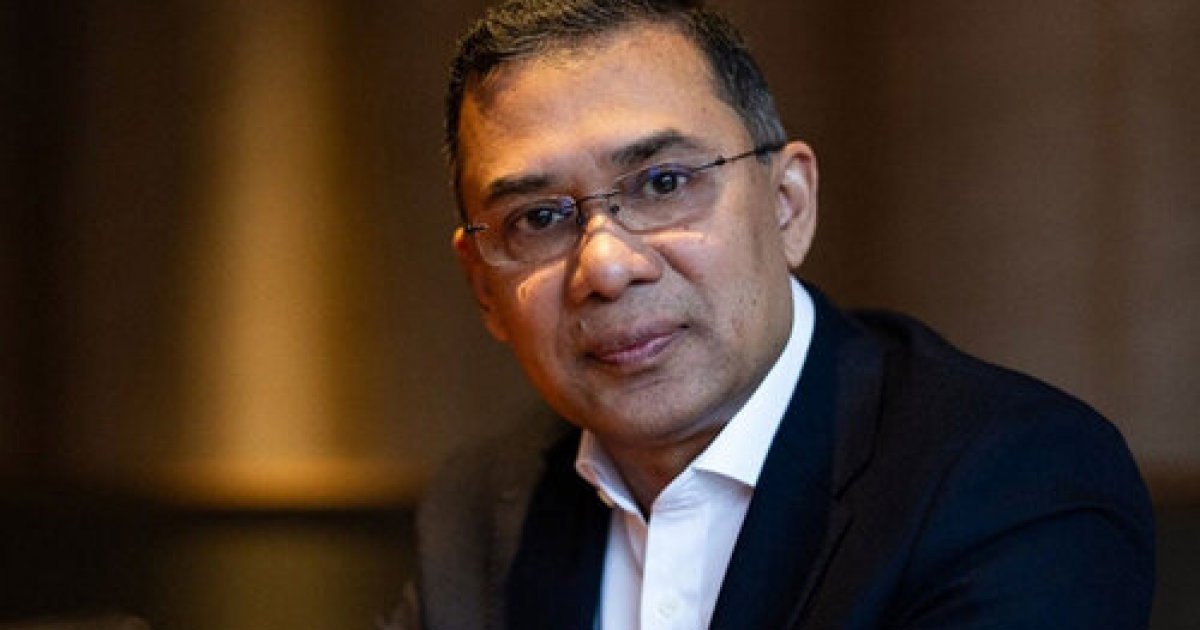
Despite his mother’s deteriorating health, the party’s acting chairman Tarique Rahman, has not returned to Bangladesh, raising renewed questions within political circles. Speculation continues over who holds decision-making authority, what constraints exist, and why he has yet to set foot in the country.
Adding to the debate, Foreign Affairs Adviser Touhid Hossain said on Sunday that a travel pass could be issued “within a day” if Tarique Rahman wishes to return. His remarks sparked new discussions, suggesting that Tarique may not currently possess a Bangladeshi passport, as travel passes are generally issued only when a citizen lacks a valid passport.
When asked about the matter, BNP Standing Committee member Salahuddin Ahmed said: “The adviser may have expressed his goodwill in saying so. We do not think there will be any issues with either a travel pass or a passport, as the government also appears willing to cooperate.” However, he could not confirm whether Tarique currently holds a Bangladeshi passport.
Several senior BNP leaders cite certain “practical limitations and complexities” preventing Tarique from returning immediately. They indicate that he will return once the political climate and international considerations become favorable. The government has also stated it will offer “all possible cooperation” for his return.
After the fall of the Sheikh Hasina government during the student-people uprising on August 5, 2024, Tarique Rahman was acquitted in several cases filed during both the Awami League administration and the preceding military-backed caretaker government. As a result, no visible legal barriers remain.
To ensure security upon his eventual return, BNP has already purchased two bulletproof vehicles and applied for firearms licenses. Legally and security-wise, no immediate obstacles appear to stand in his way. However, party insiders say the international diplomatic dimension is now the most influential factor. According to them, a few powerful countries have expressed reservations about his return.
While it remains unclear which countries conveyed these messages and in what form, these “sensitive diplomatic suggestions” appear to be affecting the timing of his decision.
When contacted, Tarique Rahman’s adviser and BNP spokesperson Mahadi Amin said: “He has already explained his position. Once all circumstances align, he will return quickly.”
BNP Chairperson’s Press Wing member Shamsuddin Didar added: “Tarique Rahman will certainly return to the country. He is deeply concerned about his mother’s critical condition and has asked everyone to pray for her. Once the required circumstances are in place, he hopes to come back to Bangladesh as soon as possible.” However, a BNP vice-chairman, wishing to be anonymous, said: “Internal party dynamics, the current political environment, the role of international stakeholders, and personal security concerns have created a complex situation. Naturally, his decision to return is taking time.”
Political analysts argue that the uncertainty surrounding Tarique’s return—despite Khaleda Zia’s critical condition—is creating a vacuum in BNP leadership and leaving the party’s future strategy in suspense. Many believe the matter extends beyond family considerations and involves regional diplomacy, security, and internal power equations.
Professor Kazi Mohammad Mahbubur Rahman of Dhaka University’s Political Science Department said: “Tarique Rahman’s return is not a personal or family issue; it is a political matter—highly sensitive in nature. In such circumstances, exerting pressure on him or the party is not appropriate. We all understand the psychological strain a son faces when his mother is critically ill.”
Law adviser Asif Nazrul told reporters: “To my knowledge, there are no legal barriers preventing his return. Even if there were, we would extend full cooperation. We will also provide maximum support regarding his security.”
Not yet a registered voter
The interim government has announced national elections for February. BNP has already submitted its list of candidates for 237 seats, which includes Tarique Rahman. However, Election Commission Secretary Akhtar Ahmed stated on Monday that Tarique is not yet a registered voter—a requirement both for voting and for contesting parliamentary elections.“If the commission decides, he may be given the opportunity to register as a voter and contest the election after returning to the country. Legally, the EC has that authority,” he said. EC officials confirmed that BNP recently requested arrangements for Tarique to become a voter upon his return.
Arrested on corruption charges during the military-backed caretaker government in January 2007, Tarique Rahman spent 18 months in jail before being released on September 3, 2008. BNP later alleged that he was subjected to “inhumane torture” during remand. He left Dhaka for London with his family on September 11, 2008, and has lived there ever since.