
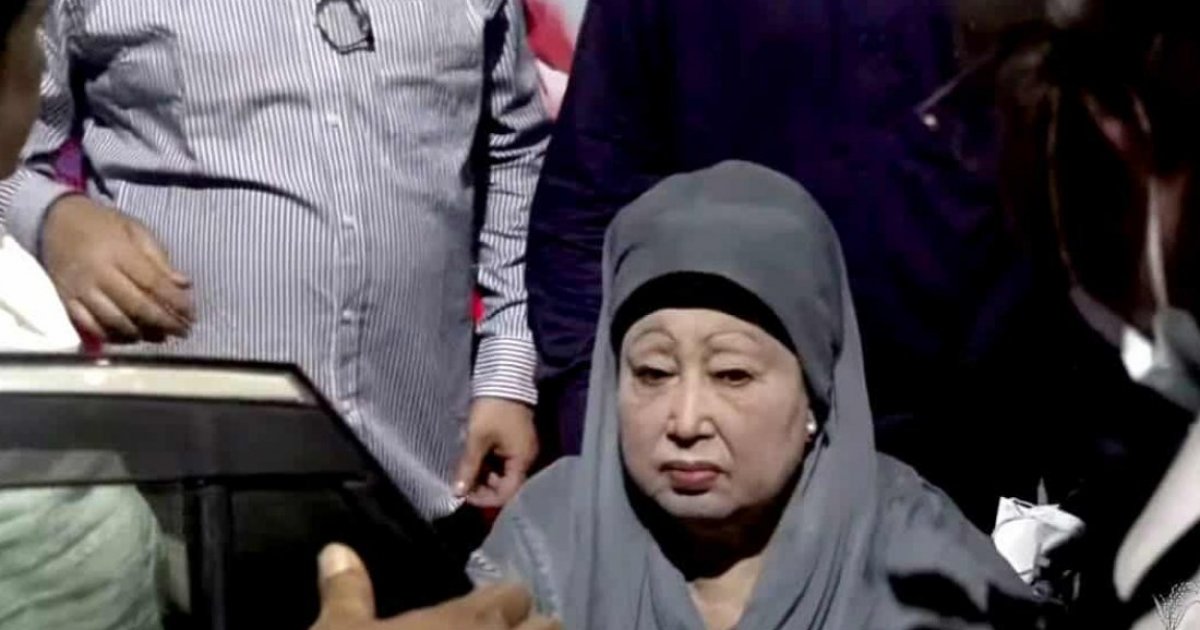
BNP Chairperson and former prime minister Begum Khaleda Zia remains hospitalized in critical condition at Evercare Hospital in Dhaka, under the care of both local and foreign specialists in the hospital’s Coronary Care Unit (CCU).
Her personal physician and BNP Standing Committee member AZM Zahid Hossain said Khaleda Zia may be taken abroad once her condition stabilizes. “If she becomes transferable—if the medical board deems it necessary—she will be taken abroad for advanced treatment,” he said.
Meanwhile, the government has declared the former prime minister an “Important Person (VVIP).” The Chief Adviser’s Office issued an official notification on Monday night. Following the declaration, members of the Special Security Force (SSF) were deployed at Evercare Hospital from Tuesday afternoon, alongside additional police personnel.
Under Section 2(a) of the Special Security Force Act 2021, Khaleda Zia has been designated a VVIP, with the order effective immediately. Previously, ahead of the 2008 national election, the then army-backed caretaker government had temporarily declared both BNP chief Khaleda Zia and Awami League chief Sheikh Hasina as VVIPs.
Speaking after a special meeting of the Advisory Council on Tuesday morning, Adviser Wahiduddin Mahmud said the decision considered her health, the need for uninterrupted hospital treatment, the possibility of sending her abroad if required, and her status as a former prime minister.
Nearly 80 years old, Khaleda Zia has long suffered from chronic illnesses, including heart disease, diabetes, arthritis, liver cirrhosis, and kidney complications. She was rushed to Evercare Hospital on November 23 after experiencing breathing difficulties. Doctors later reported infections in both her heart and lungs, and her condition worsened during treatment.
Earlier this year, in January, she traveled to London for advanced medical care. After nearly four months abroad, she returned to Dhaka on May 6. During her stay in London, she received treatment both at a hospital and at the residence of her son, Tarique Rahman.
Tarique left Bangladesh with his family in 2008 following his release during the 1/11 (2007–08) political upheaval and has not returned since. Following the July uprising last year that ousted the Awami League from power and the subsequent annulment of verdicts in several cases against him, discussions about his possible return have intensified. Although BNP leaders say he will return “soon,” no date has been confirmed.
Amid Khaleda Zia’s critical condition, rumors circulated last Friday that Tarique Rahman was preparing to return immediately. Responding on his verified Facebook page, he wrote: “In such a grave moment, the longing to receive my mother’s affection is no different from that of any son. But the opportunity to act on that desire is not entirely within my personal discretion or control.”
Government officials have stated there are “no obstacles” to his return. Regarding Tarique’s security, Home Adviser Lt Gen (Retd) Md Jahangir Alam Choudhury said on Monday, “No one in Bangladesh faces any security threat. The government is committed to ensuring everyone’s safety.”
Will Tarique Rahman receive SSF protection?
Following Khaleda Zia’s designation as a VVIP, discussions have emerged on whether the same privileges might extend to Tarique Rahman upon his return.
Retired Major General Fazle Elahi Akbar, the BNP chairperson’s security adviser, said they are considering proposing to the government that SSF protection be extended to Tarique, depending on security needs. Several BNP leaders argue that VVIP security arrangements should logically include designated members of the individual’s immediate family.
Bangladesh categorizes special individuals into three groups: VVIP, VIP, and CIP. The president and prime minister are the country’s top two VVIPs, protected respectively by the President Guard Regiment (PGR) and the Special Security Force (SSF). The SSF also provides protection to anyone designated as a VIP by the state.