

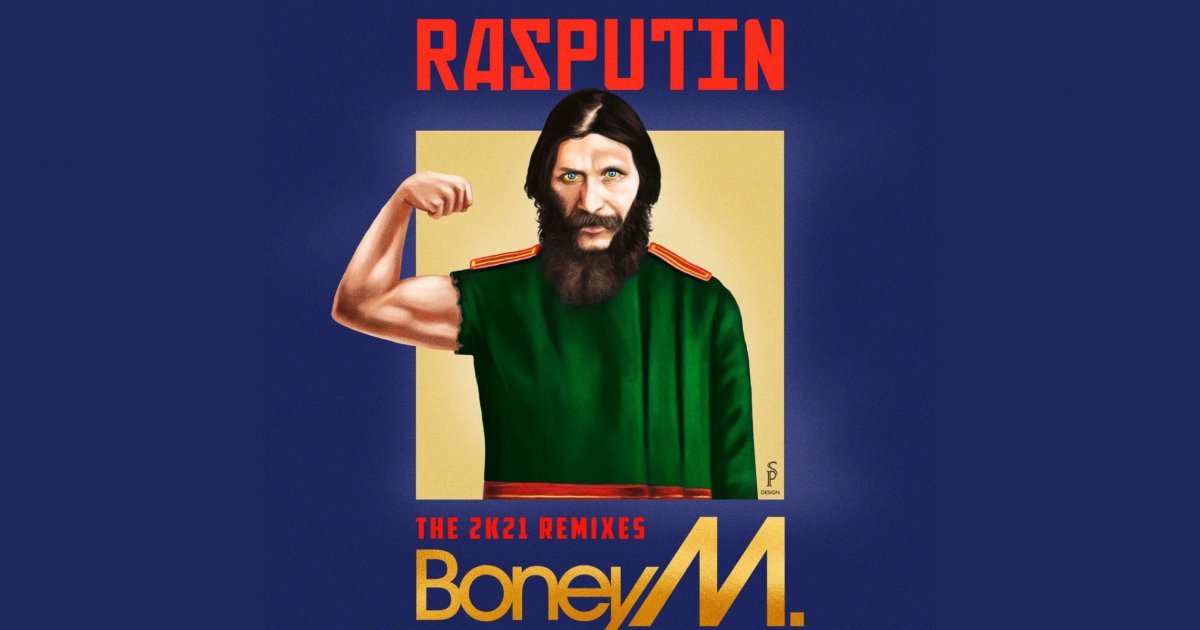
It was August 17, 1979, a humid summer night in communist Poland, when a disco band from the West rewrote the rules of censorship with a single song.
At the Sopot International Song Festival, the biggest musical event behind the Iron Curtain, 15,000 people packed into the Forest Opera Amphitheatre, expecting glitter, fun and forbidden rhythms.
What they got was a moment of pop-culture rebellion that would echo across the entire Soviet bloc.
Boney M — the German-Caribbean disco phenomenon of Bobby Farrell, Liz Mitchell, Marcia Barrett and Maisie Williams — had been warned.
Their global hit Rasputin was banned. Completely.
Polish and Soviet authorities considered its lyrics — “Ra-ra-Rasputin, lover of the Russian queen” and “Russia’s greatest love machine” — historically false and politically insulting.
State officials told the band bluntly: If they performed the song, the entire festival broadcast would be cancelled.
But the band had other plans.
They opened with the safe hits: Daddy Cool, Rivers of Babylon, Ma Baker.
The crowd swayed, screamed and surrendered to the groove.
Then Bobby Farrell paused, leaned into the microphone with his trademark grin, and declared what no one expected to hear: “And now we’re going to sing a song that is banned in this country — RASPUTIN!”
The amphitheatre exploded.
And Boney M delivered every lyric, every beat, every mischievous “Oh, those Russians!” with electrifying defiance.
The audience roared as if witnessing history, because they were.
Polish state television cut the performance entirely from the next day’s broadcast. But it was too late.
The song went out live on Polish radio. Millions across Eastern Europe heard it.
Western journalists reported it widely, turning Rasputin into something more than a dance-floor anthem — it became a symbol of playful but daring protest against Soviet censorship.
A disco song had just pierced the Iron Curtain.
Decades later, the legend of that night continues to grow.
The 1979 Sopot performance, uploaded to Boney M’s official YouTube channel just 10 years ago, has already amassed nearly 720 million views.
Search “Boney M Rasputin Sopot Festival 1979” today and the video still crackles with the same illicit thrill — Bobby Farrell dancing like a spark of rebellion, the crowd losing its mind.
Ironically, Rasputin is no longer banned in Russia.
After the fall of the Soviet Union, it transformed from forbidden satire into nostalgic classic.
Bobby Farrell’s final performance in 2010 was in St Petersburg, the very city where Rasputin was murdered, and audiences welcomed him with affection.
What remains today is the myth.
The memory of a disco band that stood on an authoritarian stage and sang anyway.
And every time someone belts out “Ra ra Rasputin,” they revive that moment — the night the beat was louder than the ban, and the dance floor became a quiet rebellion.