
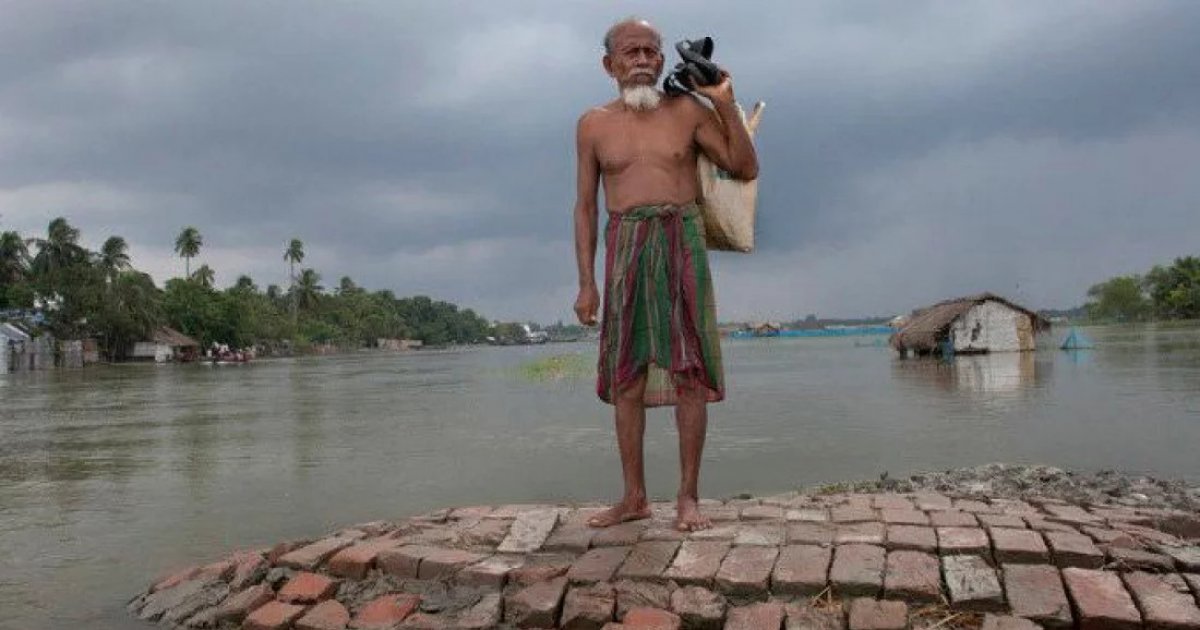
That nearly five million Bangladeshis now live as internally displaced persons due to natural disasters like floods, cyclones, and river erosion, according to the International Organization for Migration’s first nationwide assessment, is a cause for significant concern, and must not be treated lightly.
Of course, the primary reason for this displacement, and for these natural disasters to get worse every year, is climate change. That the speed of displacement looks to be increasing exponentially every year — 12% of the total number have been displaced since April 2024 — shows that when it comes to climate change and its adverse effects, things are only getting worse.
It is also worth remembering that Bangladesh contributes, and has contributed, next to nothing when it comes to the global emissions that have brought about the climate crisis. Yet, we suffer disproportionately from this crisis that has been caused and exacerbated by industrialized nations’ historical pollution.
The recently concluded COP30 in Brazil was for the most part a disappointment, but we must continue to speak up for our own survival. The Global North’s commitments towards developing, climate-vulnerable nations such as ours must not be forgotten, and robust climate finance is one of the only viable and just solutions.
With that said, we as a nation must also urgently enhance disaster preparedness and climate adaptation capacities. While internal displacement is a reality we, and other nations such as ours, must deal with now, there is at least the hope that more resilient infrastructure and appropriate investment into capacity building can mitigate future displacements to a certain extent.
The fight against climate change for us continues. However, we must not stay silent, and continue raising our voices.