

Bangladesh has a habit of misunderstanding warning signs. We treat them like random noise, then act surprised when the country starts shaking.
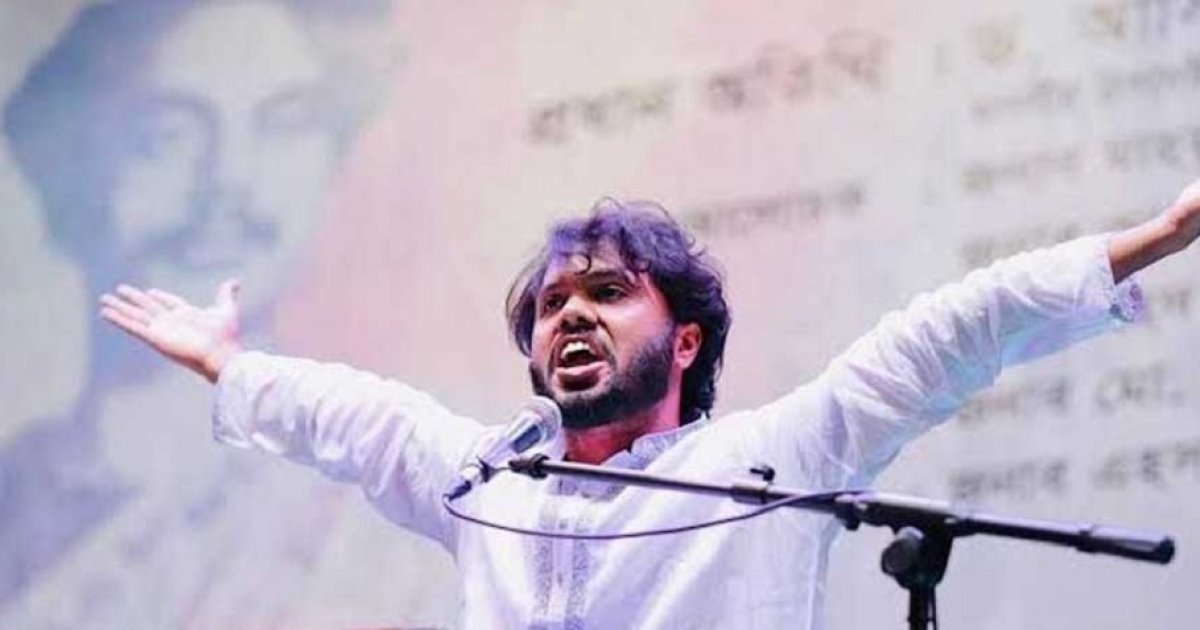
The attack on Sharif Osman Hadi feels like one of those signs.
Not because he is flawless or beyond criticism, but because of what his targeting represents in this moment in time. When a visible political voice is attacked in broad daylight, right as the election season heats up, it is never only about that person. It is about fear, control, and the message it sends to everyone else.
I do not see the attack on Sharif Osman Hadi as an “isolated incident.” It looks like a message. And the message is simple: If a voice becomes influential, but does not have the direct protection of a major party machine, it is easier to hit. Lower risk, higher political return.
According to initial reports and witness accounts, the incident took place on December 12, 2025 in the Bijoynagar Box Culvert area under Paltan police station, during daylight, after Friday prayers. The assailants reportedly arrived on a motorcycle, opened fire, and fled. Hadi is known as a spokesperson of Inquilab Mancha, and he had also been politically active in Dhaka-8, presenting himself as an independent candidate. Reports also said he was moved from Dhaka Medical to Evercare for treatment.
The most important political point here is timing. When something like this happens within a day of the election schedule being announced, calling it “ordinary crime” becomes a convenient way to avoid a bigger truth.
The country is looking toward the February 2026 election, and this is exactly the kind of moment when destabilization becomes a strategy. Shooting a known face does many things at once: It increases public anxiety, deepens suspicion across camps, hardens language, and heats up the street. In pre-election Bangladesh, few tools are more effective than creating a sense of chaos.
This is also why Hadi makes sense as a target. He is not a public, official operative of a major party like BNP or Jamaat. Inquilab Mancha positions itself as a separate platform, and Hadi has kept that identity in front. So if he is attacked, no single party immediately deploys a full-scale political machine as a direct response.
But public reaction can still be massive. And that is the point.
Over the last year and more, Hadi became highly visible. His language was strong, often aggressive, sometimes controversial. People argue with him, people criticize him, but people listen.
He gathered attention and supporters, partly because he presented himself as a sharp anti-India voice and because he positioned himself against anything he believed was tied to the Awami League or pro-India politics.
Love him or dislike him, he became a political signal. And when someone becomes a signal, they also become a target.
There is another uncomfortable truth here. In Bangladesh, “neutral” can sound glamorous, but it can also be dangerous. If you are not under a party umbrella, you may have more freedom, but you also stand more alone.
Security, organization, discipline, the ability to apply pressure, the ability to mobilize, all of these weaken when you do not have a big structure behind you. Hadi’s case shows both sides of that reality.
So the question comes back to the state. Where was the state, and where is it now?
After the government fell on August 5, 2024, Bangladesh entered a long transition. On August 8, Dr Muhammad Yunus took oath as Chief Adviser of the interim government. Many people hoped this would mean a return of stability, a break from the cycle of fear, a credible election, and a clean transfer of power to an elected government.
Instead, the public has repeatedly heard reassurance while repeatedly seeing uncertainty on the ground. An attack like this, in daylight, the day after the schedule announcement, exposes that gap in the harshest way.
Yes, official reactions came quickly. The Chief Adviser’s office reportedly instructed rapid investigation and arrests. Police spoke about active operations. But the problem is not only about issuing directives. The deeper problem is trust.
People do not feel safe because a statement is made. People feel safe when the street becomes safe. People watch who can move freely in the pre-election environment and who cannot.
This is where the larger political danger sits.
Bangladesh right now is caught between two hard impulses. One side wants the “total defeat” of the Awami League. The other side wants a path back into politics. When these impulses speak in the language of revenge, the government’s job is not to take emotional shortcuts. The government is supposed to stand in the middle like a guardian.
But over the last year and a half, we have watched the state get pulled by popular passions instead of leading with control and restraint.
The demolition of the house at Dhanmondi 32 is one example. When a symbolic site is destroyed and the state fails to prevent it, the country does not become freer. It becomes more polarized. One side receives a powerful symbol of victimhood. The other side receives an adrenaline rush of revenge politics.
Both outcomes are dangerous.
Now, the attack on Hadi risks becoming another symbol. If his condition worsens, the impact on people who identify with the July movement could be massive. Many of them may turn him into a memory of sacrifice.
And just like that, grief becomes fuel. The Awami League side already has its symbol. The anti-Awami League July movement side could receive one too. Then each camp will weaponize sorrow, as we have seen so many times, and the country will slide further into a politics where nobody wants coexistence, only victory.
This is how nations enter violent spirals. Not from one event alone, but from repeated events that are allowed to become symbols, slogans, and excuses.
I fear another factor too. This happened at a time when election tension is already high, mistrust between parties is deep, and the suspicion “who wants to derail the election” is floating everywhere.
If the first major shock of this tense phase looks like this, it is not unrealistic to fear worse incidents ahead.
So my argument is simple.
Do not turn this into a long theatre in the name of investigation. This is not only about catching criminals. This is also about proving state capacity. The government must do a few things immediately.
First, it must communicate investigation progress regularly and credibly, so rumours do not fill the vacuum.
Second, it must take visible steps to protect candidates and political workers. Not on paper, on the ground.
Third, to prevent escalation, it should open informal, high-level communication with the top leadership of major parties. The goal is not to create a fake unity. The goal is to agree on basic restraint and coordinate on keeping the election environment calm, whatever provocations emerge in the coming days.
Fourth, and most important, the government must stop performing neutrality and start practicing it. When the state feeds one camp’s emotions, it always comes back as a crisis for the state itself.
That leaves the final question.
Did the gunfire after the election schedule announcement hit only one man, or did it hit the election, public peace, and the country’s chance to return to democratic normalcy?
For me, the answer is not complicated. This was an attack on Bangladesh’s democratic path. And if the state responds with the old habit of saying “everything is fine,” then the darkness waiting ahead will not be stopped by slogans, speeches, or wishful thinking.
Asif Bin Ali is a teacher, researcher, and independent journalist. He currently works at Georgia State University in the United States.