
The history of the 1971 Liberation War is not merely the story of a nation’s birth; it is an epic of sacrifice, resistance and extraordinary courage.
Written in blood across the map of Bangladesh are countless untold stories of ordinary people who rose to extraordinary heights.
Many of those stories still live on today through the voices of freedom fighters.
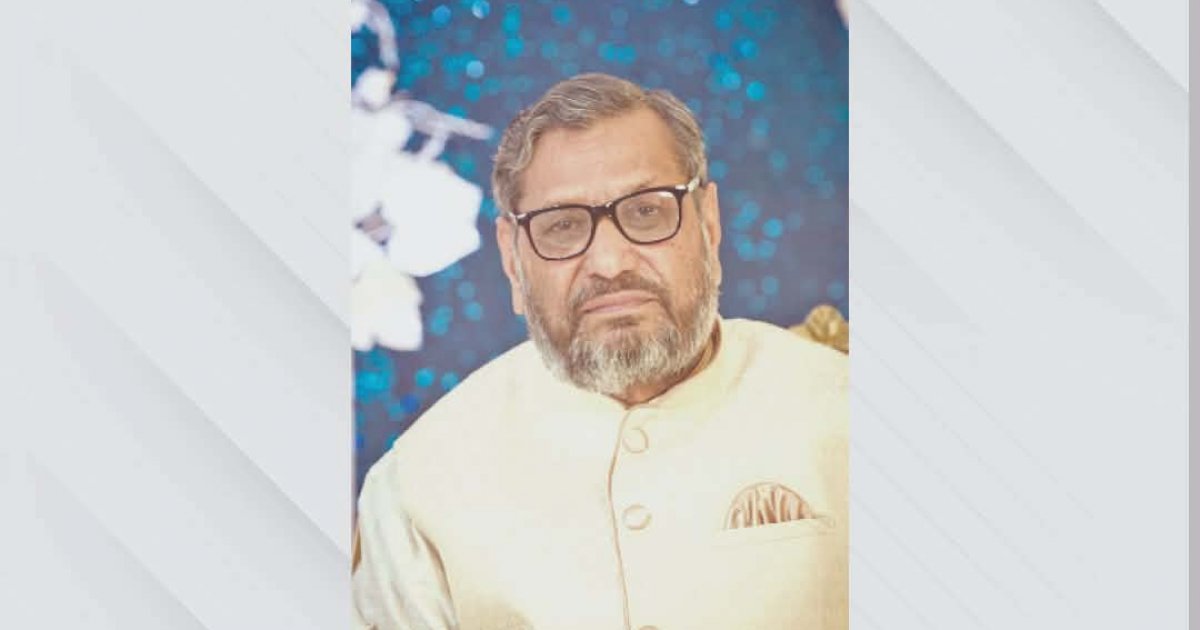
One such voice belongs to Golam Mostofa Bacchu, a courageous son of Bhandaria, who stood on the front lines of history – hoisting the flag, confronting the enemy, and helping illuminate the nation with the light of independence.
Political awakening
Bacchu was a student of Jhalakathi BM College and became politically active during his student years. His leadership qualities emerged early.
In 1967, he took charge as the founding general secretary of Bhandaria Thana Chhatra League.
By 1970, he was serving as the secretary of the election management committee for the Bhandaria–Kathalia constituency of the Awami League in the provincial council elections, while also holding the post of senior vice-president of the Pirojpur District Chhatra League.
As political tensions intensified, Bacchu assumed a crucial role in the freedom movement.
In 1971, he became the convener of the Bhandaria Thana Swadhin Bangla Chhatra Sangram Parishad, mobilizing students and youth for the impending struggle.
Hoisting the flag of resistance
On March 2, 1971, the first flag of independent Bangladesh, green with a red circle at the center bearing the country’s map, was hoisted atop Dhaka University’s Arts Faculty building, marking a historic declaration of the nation’s struggle for freedom.
Inspired by this historic moment, Bacchu took a bold and defiant step just days later.
On March 6, he publicly announced independence in Bhandaria, burned the Pakistani flag, and hoisted the flag of Bangladesh before thousands of people.
The moment became a turning point for the locality.
Streets echoed with slogans demanding independence as people marched in unity.
That courageous act ignited the spirit of resistance in Bhandaria and strengthened the freedom movement at the grassroots.
For this act of defiance, Golam Mostofa Bacchu and then Thana Chhatra League president Delwar Hossain Faruk were tried by the Pakistani military administration in Barisal.
Colonel Atiqur Rahman sentenced both men to death.
Building resistance after March 7
Following Bangabandhu Sheikh Mujibur Rahman’s historic March 7 speech at the Ramna Race Course Maidan, a de facto declaration of independence, a freedom fighter camp was established in Bhandaria.
Built with bamboo, cane and straw, the camp became a centre for training, planning and resistance.
Fighters gathered there to listen to radio broadcasts, discuss strategies, and prepare for war.
Around 20 freedom fighters stayed at the camp at a time.
Soon after, Bacchu joined the Liberation War with 60 Chhatra League leaders and activists under the Sundarbans sub-sector of Sector No 9.
Fighting against all odds
In May 1971, when freedom fighters faced an acute shortage of food, Bacchu played a decisive role in sustaining the resistance.
Along with fellow fighters, he collected nearly 1,000 maunds of wheat and rice from the Bhandaria government food warehouse.
In the official ledger, he boldly wrote: “We will bear the responsibility – Golam Mostofa Bacchu and Delwar Hossain Faruk.”
The retaliation was swift and brutal.
Pakistani forces burned their houses and businesses. Yet, the fighters did not retreat.
In August, Bacchu took part in a daring operation in which 24 freedom fighters surrounded the Bhandaria police station and seized weapons, significantly strengthening their combat capacity.
Pakistani soldiers raided Bacchu’s home twice in an attempt to arrest him.
When they failed to find him, they set the house on fire.
His uncles, Abdul Barek Howlader and Abdul Karim Howlader, were captured, brutally tortured, and sent to Barisal jail.
Journey through danger to victory
In the first week of September, Bacchu and 59 other freedom fighters set out for India by boat, travelling through waterways near Madarshi Bazar in Bhandaria.
Near the Sundarbans, Pakistani gunboats launched an attack.
The fighters sought refuge deep inside the forest before joining the Sundarbans Sub-Sector Command of Sector No 9, which was already operating there.
In November, Pakistani forces intensified their assault, bombing the area repeatedly from helicopters.
The freedom fighters often spent entire nights hiding in canals, sometimes going days without food.
Despite facing death at every turn, they pressed on.
“There was no hope of returning alive from the battlefield,” Bacchu recalled.
“I fought with death in my arms.”
On December 16, he returned to camp after an operation and learned of victory through the wireless set.
Exhausted yet overjoyed, he joined fellow fighters as celebrations and victory processions swept through the camp.
By the end of December, he returned home victorious – to the embrace of his mother and a free homeland.
A legacy for generations
Golam Mostofa Bacchu is the father of two children, and his family life has been shaped by the ideals of the Liberation War.
His elder brother Manik Howlader and younger brother Iqbal Hossain were also freedom fighters.
Together, their contributions form a proud and enduring chapter in the history of Bhandaria.
The story of Golam Mostofa Bacchu is more than the tale of a single freedom fighter.
It reflects the courage, sacrifice and indomitable will of an entire nation.
His fearless act of hoisting the flag, his resilience in the camps, and his bravery on the battlefield continue to inspire generations.
His life reminds us that freedom is never gifted, it is earned through sacrifice.
“That moment of independence was the greatest achievement of my life,” Bacchu said.
“We liberated the country with our blood.”