
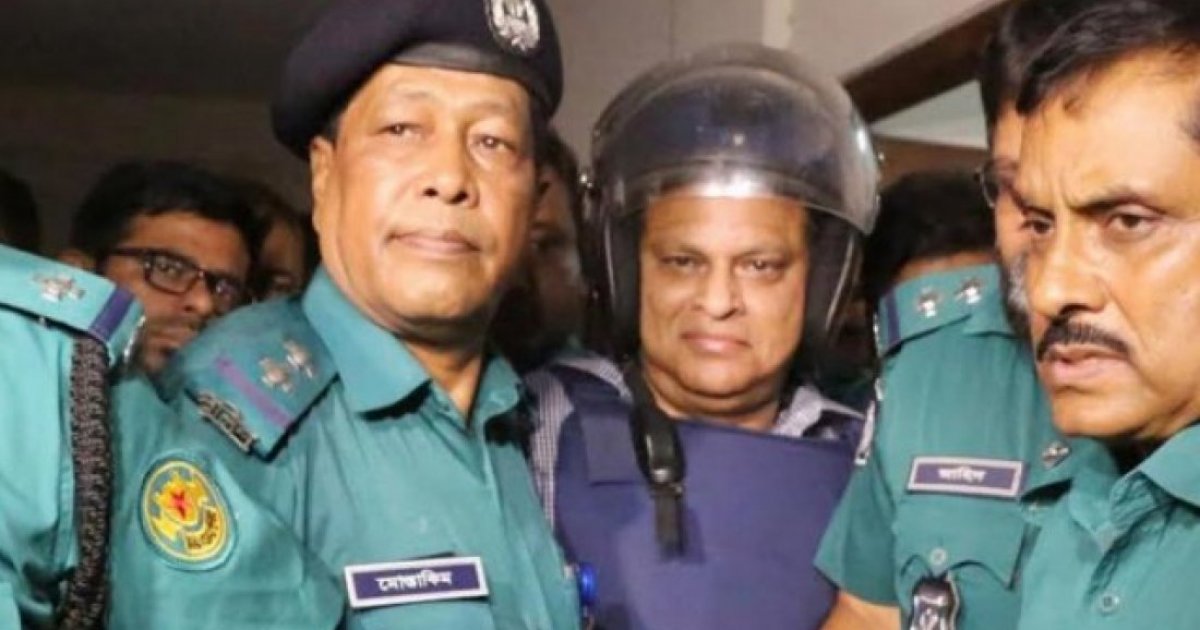
The International Crimes Tribunal (ICT) on Wednesday formally took cognizance of charges against Major General (retd) Ziaul Ahsan in a case involving crimes against humanity over more than 100 enforced disappearances and killings during the prolonged rule of the Awami League.
The prosecution submitted three formal charges, alleging Ziaul Ahsan’s direct involvement in the enforced disappearance and killings of over 100 people. A hearing on framing the charges was scheduled for December 21.
According to the prosecution, after being posted to the intelligence wing of the Rapid Action Battalion (RAB) as a Major in 2009, Ziaul Ahsan became a highly trusted officer of then-prime minister Sheikh Hasina. As a result, he never returned to the Bangladesh Army until his compulsory retirement as a Major General in 2024. During this period, he served in different forces and agencies under the Ministry of Home Affairs.
The charges stated that, despite lacking required courses, training, or experience commanding any battalion, brigade, or formation, Ziaul was promoted to Major General—an unprecedented occurrence in the professional history of the Bangladesh Army.
Between 2009 and 2016, while serving as director of RAB’s intelligence wing and ADG (operations), he allegedly directly participated in or authorized numerous enforced disappearances and extrajudicial killings.
Charge 1: Killing of Sajal and two others in Gazipur
On the night of July 11, 2011, around 11:30pm, Ziaul and his team allegedly took Sajal and three to four other detainees, illegally held at RAB headquarters, toward Gazipur. On various spots along the Dhaka Bypass Road, the detainees were sequentially shot while blindfolded and with hands tied. Several victims were allegedly shot by Ziaul himself. The bodies were later dumped by the roadside or in canals. Police recovered two bodies, and only one was identified as Sajal.
Charge 2: Killing of at least 50 people in Baleshwar River, Barguna
According to the prosecution, Char Duani in Patharghata, Barguna, and the estuary of the Baleshwar River were key hotspots for killings under Ziaul Ahsan’s direction. Detainees were allegedly taken late at night in trawlers or boats to the middle of the river, shot in the head or chest with a pillow pressed over them, and their bodies weighted with cement blocks and sunk. This method was reportedly conducted under the code names “Gestapo” or “Gulf.” At least 50 people, including former BDR members Nazrul Islam Mallick and Alkas Mallick, were killed.
Charge 3: Killings in Sundarbans under pretext of combating forest bandits
So-called operations against forest bandits were conducted in the Sundarbans. Previously detained and disappeared individuals were labelled as bandits, taken to designated locations at night, and killed to simulate gunfights. Selected RAB personnel participated in these operations, and Ziaul Ahsan himself was often present. Operations such as “Operation Nishankhali,” “Operation Mora Bhola,” and “Operation Kotka” allegedly resulted in at least 50 killings.
Other allegations and ongoing investigations
Investigations also linked Ziaul to the killing of at least 200 people in the Buriganga and Shitalakshya rivers from 2010 to 2013; enforced disappearances of BNP leaders Chowdhury Alam, Ilias Ali, Sajedul Islam Sumon, Salahuddin Ahmed, and many others; and the killing of at least 61 unarmed civilians during the crackdown on Hefazat-e-Islam’s rally on May 5, 2013. Separate investigations were ongoing for these incidents.
Chief prosecutor’s statement
Chief Prosecutor Mohammad Tajul Islam said: “Three specific charges have been brought against the former military officer: killing three people in Gazipur, killing 50 in Patharghata, Barguna, and staging gunfights in the Sundarbans under the pretext of combating forest bandits. Additionally, information links him to the disappearance and killing of over 300 people. Investigations into these charges are ongoing.”