

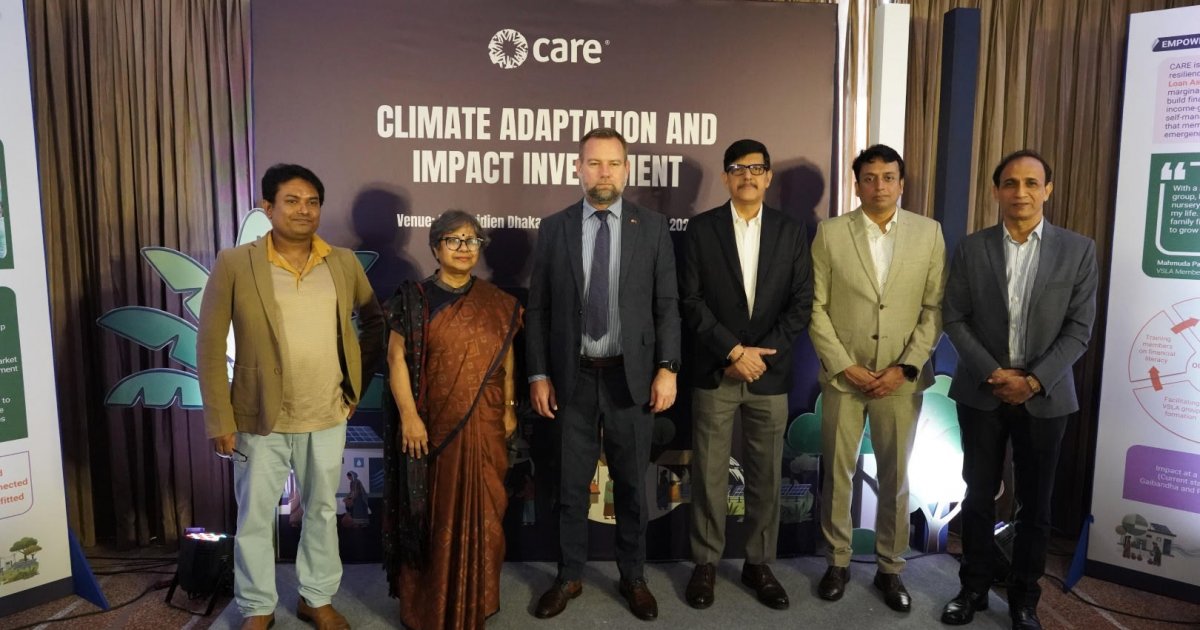
CARE Bangladesh has called for a shift from traditional humanitarian aid to long-term, investment-driven climate solutions, hosting a national dialogue in Dhaka on Wednesday held at a city hotel focused on climate adaptation and impact investment.
The event brought together government officials, private sector leaders, development partners, civil society representatives, media, and community leaders to explore new pathways for climate resilience—particularly for vulnerable communities.
The dialogue showcased CARE Bangladesh’s latest climate adaptation initiatives and emphasised the emerging role of commercial capital in addressing climate risks, as the country faces rising threats linked to floods, riverbank erosion, salinity, and cyclones.
The discussion centred on moving beyond grant-based assistance toward “revenue-generating, self-sustaining, and commercially scalable models”—a direction organisers said is essential for attracting impact investment and ensuring durable community outcomes.
Danish Ambassador to Bangladesh Christian Brix Møller, attending as special guest, highlighted Bangladesh’s global reputation for resilience and innovation in climate response.
“Denmark will continue to share its knowledge, technology, and experience with Bangladesh,” he said. “But we are also here to listen and learn from a country that has consistently demonstrated how resilience, combined with innovation, can transform even the toughest challenges into pathways of hope.”
Ram Das, in his opening remarks, echoed that sentiment, stressing the need to rethink how climate finance is mobilised and utilised.
“We have begun engaging with major private sector entities across the country,” he said. “We are actively advocating a shift away from a grant-based, one-time relief approach toward a more sustainable financing model to support long-term national development.”
A key feature of the programme was an interactive segment, where community representatives shared direct insights into grassroots adaptation practices. Participants engaged in dialogue around livelihoods, climate-smart agriculture, disaster preparedness, and women-led resilience initiatives—areas where organisers said investment could rapidly scale impact.
Speakers also underscored the importance of enabling policy, cross-sector partnerships, and private capital to drive climate innovation, noting that traditional aid alone is no longer sufficient to keep pace with escalating climate threats.
In closing, Kaiser Rejve, Director of the Humanitarian & Resilient Futures Program at CARE Bangladesh, thanked attendees for their engagement and reaffirmed the organisation’s long-term commitment to climate-resilient development.
He called for continued collaboration between government, businesses, and development partners to accelerate investment-driven solutions that can withstand the pressures of a changing climate.
“We look forward to working together to drive impact at scale,” he said. “Our shared goal is a climate-resilient Bangladesh.”