

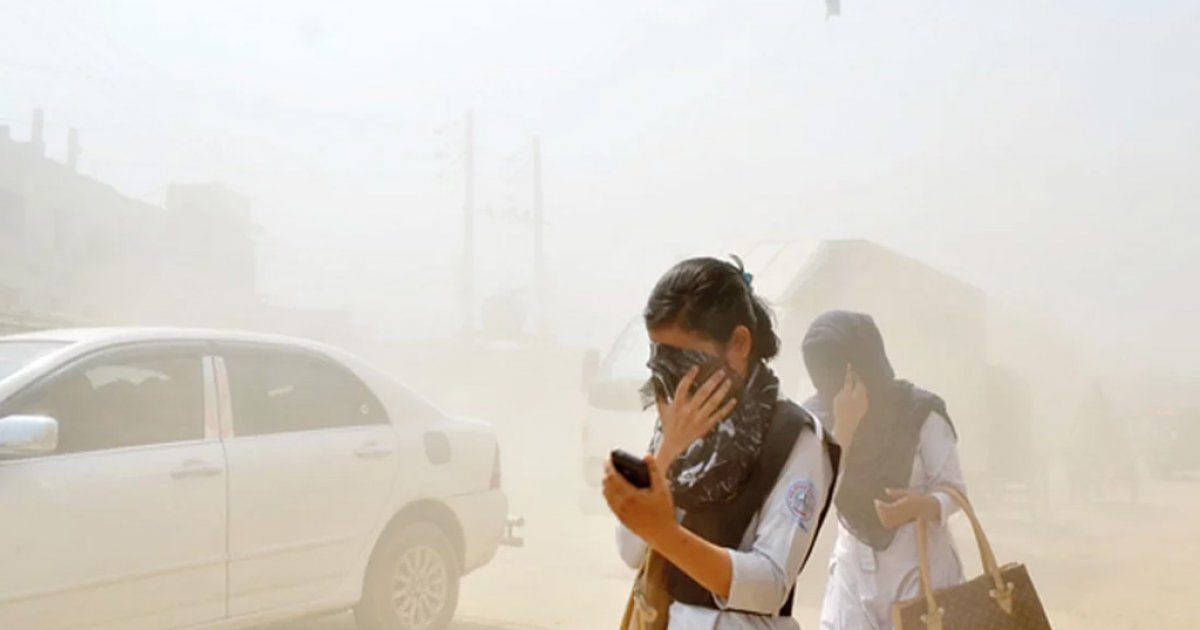
All school going children in Bangladesh are now exposed to air pollution levels beyond the hazardous threshold, according to a new World Bank report that has raised alarm over deteriorating air quality across South Asia.
The report finds that 100% of primary and secondary school students in Bangladesh are exposed to unsafe levels of fine particulate matter (PM2.5), exceeding the threshold of 35 micrograms per cubic metre (µg/m³).
This marks a sharp deterioration over time: in 1998, an estimated 86% of students were exposed to hazardous ambient air, compared to universal exposure today.
The findings form part of a broader assessment of air quality in the Indo-Gangetic Plains and Himalayan Foothills (IGP-HF) region, which spans Bangladesh, Bhutan, India, Nepal and Pakistan.
According to the report, nearly one billion people in the region breathe unhealthy air, contributing to around one million premature deaths every year and economic losses estimated at nearly 10% of regional GDP annually.
While air pollution remains severe across the region, Bangladesh emerges as the most affected in terms of student exposure.
The report notes that 95% of schoolchildren in Pakistan, 93% in Nepal, 79% in India, and 13% in Bhutan are exposed to hazardous air pollution – compared with 100% in Bangladesh, leaving no child spared from the health risks associated with polluted air.
Titled “A Breath of Change: Solutions for Cleaner Air in the Indo-Gangetic Plains and Himalayan Foothills,” the report was released on Monday by the World Bank.
It identifies air pollution as one of South Asia’s most pressing development challenges, with far-reaching consequences for public health, education, productivity and economic growth.
The report attributes pollution in the IGP-HF region to five major sources: household use of solid fuels for cooking and heating; inefficient industrial burning of fossil fuels and biomass without adequate filtration; polluting internal combustion vehicles; agricultural practices such as crop residue burning and poor manure and fertilizer management; and the open burning of waste by households and firms.
Despite the scale of the problem, the World Bank notes that solutions are achievable.
Recommended interventions include electric cooking, electrification and modernization of industrial boilers, furnaces and kilns, expansion of non-motorized and electric transport, improved crop residue and livestock waste management, and better waste segregation, recycling and disposal.
The report groups clean-air actions into three mutually reinforcing areas.
The first focuses on emission abatement across key sectors.
The second emphasizes protective measures, including strengthening health and education systems to safeguard children and vulnerable populations during the transition to cleaner air.
The third highlights the need for strong institutions, supported by regulatory frameworks, market-based tools and regional coordination.
“This report shows that solutions are within reach and offers a practical roadmap for policymakers to implement coordinated, feasible and evidence-based solutions at scale,” said Martin Heger, senior environmental economist at the World Bank.
He added that there are strong economic and financial incentives for households, businesses and farmers to adopt cleaner technologies, with governments playing a critical enabling role.
To operationalize the recommendations, the report outlines the “Four I’s”: Information, Incentives, Institutions and Infrastructure.
“Achieving cleaner air will require sustained financing, strong implementation and continued collaboration at local, national and regional levels,” said Ann Jeannette Glauber, World Bank practice manager for Environment, South Asia.
“By acting together, governments can save millions of lives and deliver cleaner air for future generations.”