

Our nation mourns the untimely death of Osman Hadi, who breathed his last in Singapore after being shot earlier last week in broad daylight. That such an incident was allowed to happen is nothing but a collective failure, and is a tragedy that demands immediate accountability.
Identifying and bringing to justice those responsible for this heinous crime should be the immediate expectation; anything less would be akin to a betrayal, and the people of this country have a right to feel frustrated and angry.
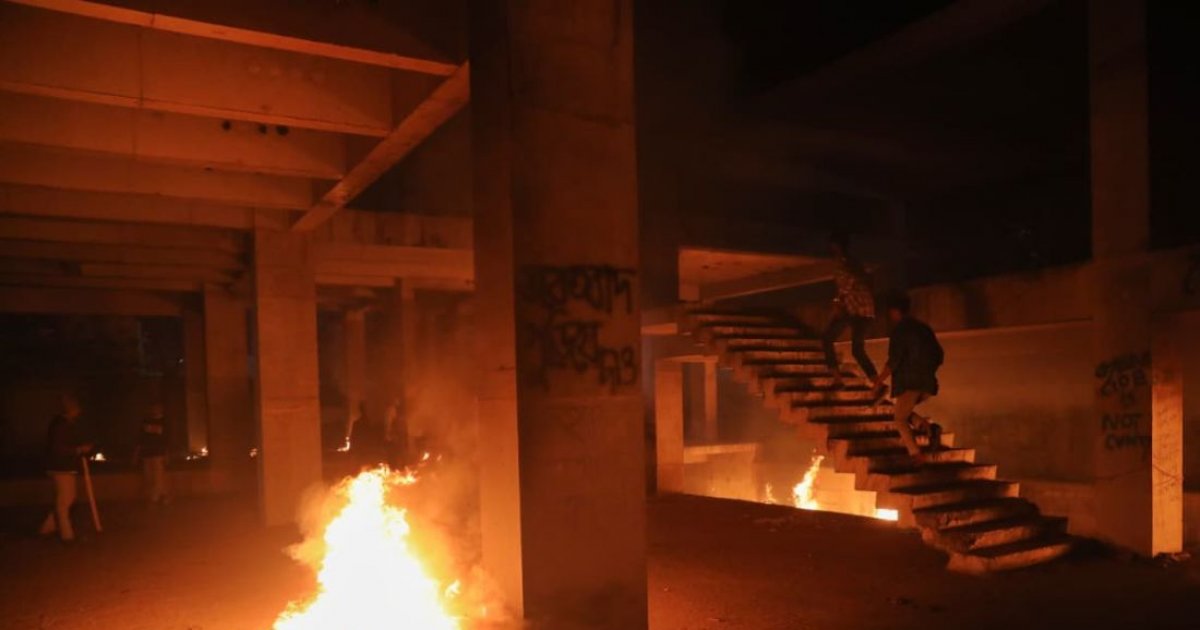
Yet, despite the understandable anger and frustration and, above all, grief that the nation is collectively experiencing currently, the violence that erupted across the country, with the offices of The Daily Star and Prothom Alo, alongside cultural institutions such as Chhayanaut in Dhanmondi vandalized and set ablaze by what can only be called a violent mob was, beyond being shocking and tragic, simply disappointing.
Indeed, such an assault is nothing if not a direct attack on the very institutions that safeguard our democracy, culture, and collective memory. To target newspapers and cultural organizations in the wake of Hadi’s death is to trample upon everything he, his platform, and his followers say they stand for: Freedom of expression, cultural resilience, and the right of citizens to live without fear.
The most important question in all of this that must be asked is this: Where was the state?
Why were precautionary measures not in place to prevent such violence? The absence of pro-active security in moments of heightened tension is beyond simple negligence at this stage.
The country deserves answers as to how and why mobs were allowed to gather, organize, and unleash destruction in a matter of what seemed minutes, and to do so with such ferocity. This failure to anticipate and prevent such attacks — attacks we have seen plenty of over the past year or so — reflects a shockingly dangerous absence in governance.
Equally troubling is the trend that has become all-too-familiar: The media and journalists bearing the brunt of violence and hatred. That a senior journalist of the stature and respect of New Age Editor and President of the Editors’ Council Nurul Kabir could be assaulted during these attacks is a chilling reminder that those among us, who have given their lives to speaking truth to power, are often the ones most vulnerable.
It is worth repeating, over and over again, that the press is not an enemy of the state but its very conscience. Yet time and time again, journalists are left with little to no protection from the very state tasked with safeguarding them.
It is time now for the interim government to do its job. Beyond its task of bringing to justice those who are responsible for the murder of Hadi, it is imperative that they also identify and prosecute those who led the charge in these violent mobs. These were not spontaneous outbursts but organized assaults on institutions integral to our nation’s democratic and cultural fabric.
In addition, journalists and media houses must be protected from such heinous attacks. Freedom of the press is a cornerstone of democracy, and to allow mobs to terrorize media workers is to go backwards as a country — and against everything the events of the Monsoon Revolution and leaders such as Hadi espoused.
Osman Hadi’s death should have been a moment of solemn reflection and unity for the entire nation. Instead, it has been reduced to events marred by violence that do nothing for his legacy, nor bring to justice the true perpetrators that were responsible for his untimely death. This is not what justice looks like.