
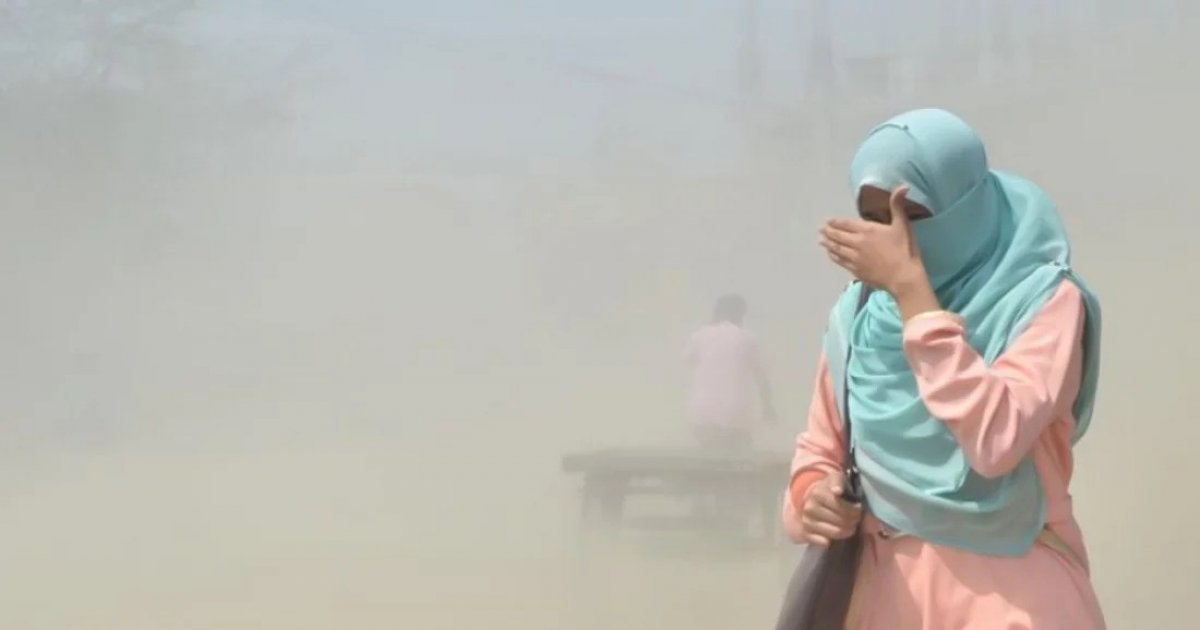
In spite of poor air quality being an unfortunate reality of the nation, the World Bank’s recent warning that school-going children in Bangladesh are exposed to dangerous levels of air pollution is extremely unsettling.
The report reveals that all primary and secondary school students in Bangladesh are breathing air contaminated with fine particulate matter at levels considered unsafe.
It is even more concerning, perhaps, as it is a rude awakening to the fact that our children are being stripped of the chance to be in an environment that is conducive to their healthy growth.
This is clearly no longer an environmental concern that will only manifest itself as a risk in the future — it is an immediate detriment to our children’s health, learning capacity, and long-term prospects.
It is time to face the facts — air pollution has become so normalized in Bangladesh that it rarely triggers urgency unless it becomes a crisis, despite the overwhelming evidence of how polluted air damages lungs and increases respiratory illnesses.
The threat is magnified for children, whose bodies and minds are still forming, as they stand further risks of impaired cognitive development and long-term chronic illnesses.
Bangladesh’s struggle with air quality is often depicted as an unfortunate cost of development — and that is the very mindset that needs to change if we are to see any improvement.
Cleaner air is achievable through stricter emission control, better urban planning, and enforcement that goes beyond words on paper — as supported by the World Bank’s suggestions, and the numerous other developing nations achieving positive results.
What we are missing is not knowledge, but the resolve required to tackle a poison so persistent.
This is not an optional environmental agenda, but a moral obligation for the nation’s present and future. We must prioritize implementing remedial measures, so we can stop denying future generations the right to air that does not kill them slowly.