
Child marriage remains a critical issue in Bangladesh, with nearly half of all girls still married before reaching the age of 18, despite a modest decline in recent years, according to new survey data.
Findings from the Multiple Indicator Cluster Survey (MICS) 2025, conducted by the Bangladesh Bureau of Statistics (BBS) in collaboration with UNICEF, showed that the national child marriage rate declined slightly from 60% in 2019 to 56% in 2025. However, the practice continues to affect a significant number of girls, particularly in rural areas and among disadvantaged populations.
According to the survey, 47% of women aged 20–24 were married before the age of 18, while 13% were married before they turned 15, underscoring the persistence of early marriage across the country.
Rural girls remain at higher risk, with 59% of women in rural areas married before the age of 18, compared to 50% in urban areas.
The survey also highlighted significant regional disparities. Child marriage rates remained alarmingly high in Rajshahi, where 67% of women were married before 18, and in Khulna, at 65%. In contrast, Sylhet recorded a considerably lower rate of 29%.
Socioeconomic factors continued to play a decisive role. Women with no formal education were twice as likely to marry before 18 compared to those with secondary education. The data further show that 65% of women from the poorest households were married before 18, compared to 41% among women from wealthier households.
Intervention halts child marriage
A recent intervention highlighted by Save the Children illustrates how timely action can prevent child marriage.
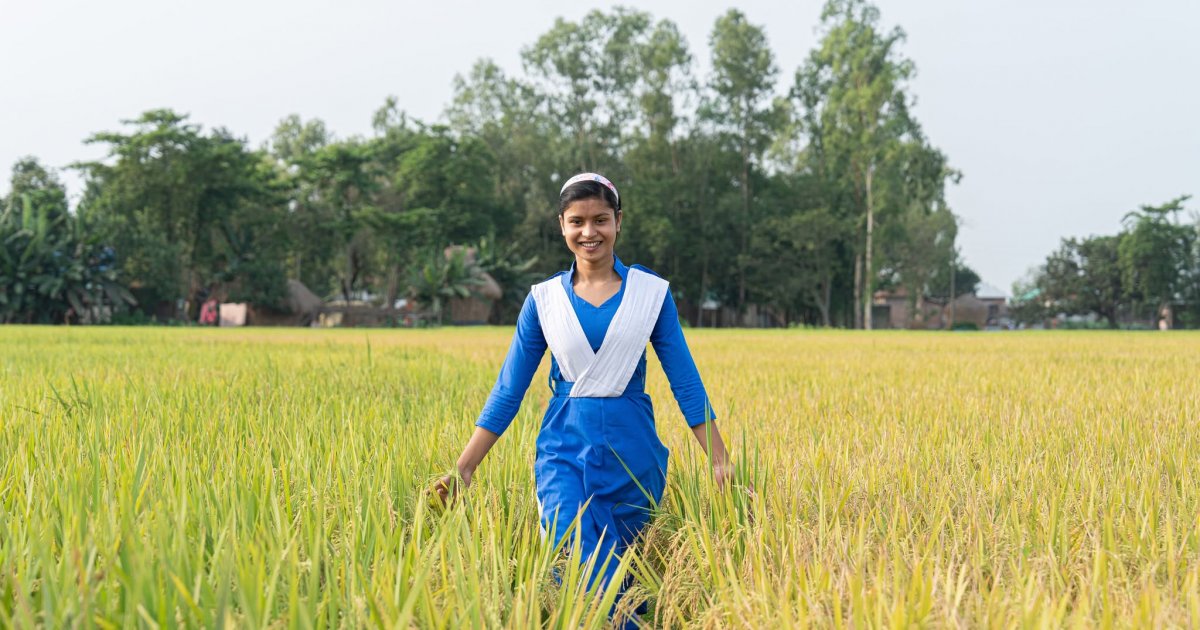
Hasna Hena, a 14-year-old girl, sought help after learning that her family planned to marry her off. “I called the Jononi Upazila officer for support because I was determined not to have this marriage imposed on me. My health, education, and future would be my choice and opportunity,” she said.
Her call reached Rubel, a local officer, who responded immediately. “We must act fast when a girl like Hasna Hena reaches out for help,” Rubel said. “It’s our responsibility to step in quickly and stop child marriages before they happen.”
He said the effectiveness of such interventions depends on coordination among authorities and communities. “Our actions are effective because we build and maintain a responsive network. Regular campaigns, awareness sessions, and connections with local authorities keep our support system active and effective,” Rubel added.
In Hasna Hena’s case, authorities arrived at her home at around 11pm following her call. “After calling Rubel, the authorities arrived at 11pm. The ward members and the village officer responded so quickly that it put my family in a frenzy,” she recalled.
Local upazila administrative focal persons, along with community influencers, held her father accountable. The marriage was halted, he was fined, and he agreed not to discuss her marriage until she reaches the legal age.
Economic and social drivers
Economic hardship, entrenched social norms, and limited access to education remain the primary drivers of child marriage in Bangladesh. In rural and impoverished communities, early marriage is often perceived as a means to reduce financial burdens or ensure social stability.
Limited educational opportunities further reinforce the cycle, restricting girls’ chances for economic independence and social mobility.
Reflecting on the intervention, Hasna Hena said it strengthened her belief in her right to choose her future. “When help arrived, I didn’t feel like anyone would silence me,” she said. “Child marriage is common among poor families because we don’t realize that educating daughters is an investment.”
Urgent need for action
Despite the decline in national child marriage rates, the practice continues to pose serious risks to girls’ education, health, and overall well-being.
Early marriages often lead to early pregnancies, reducing girls’ access to education and contributing to higher rates of maternal and child mortality. Child marriage also entrenches cycles of poverty and reinforces gender inequality.
Ending child marriage is essential not only for protecting girls’ rights but also for Bangladesh’s broader development goals. UNICEF Representative in Bangladesh Rana Flowers emphasized that “ending child marriage is essential to protect girls’ rights and achieve SDG 5.3, which aims to eliminate harmful practices against girls worldwide.”
Hasna Hena, now a class nine student, said she hoped to become a teacher. “I want to be an educator who teaches girls that education puts their future in their hands. They need to prioritize dreaming of a life that is completely of their choice,” she said.
Her story highlighted the impact of education and community intervention in helping girls overcome the barriers of child marriage.
What needs to be done
Experts say eliminating child marriage requires a multifaceted approach, including expanding access to education for girls in rural and underprivileged areas, challenging social norms that perpetuate early marriage, and addressing the economic pressures that drive families to marry off their daughters.
“This is a moment of both hope and deep concern,” Flowers said. She stressed that investing in social services such as education, health care, and women’s economic empowerment is critical for lasting change.
Flowers also noted that Bangladesh’s public spending on education, at 1.7% of GDP, and health, at 0.7% of GDP, remains among the lowest globally, undermining progress in preventing child marriage.