
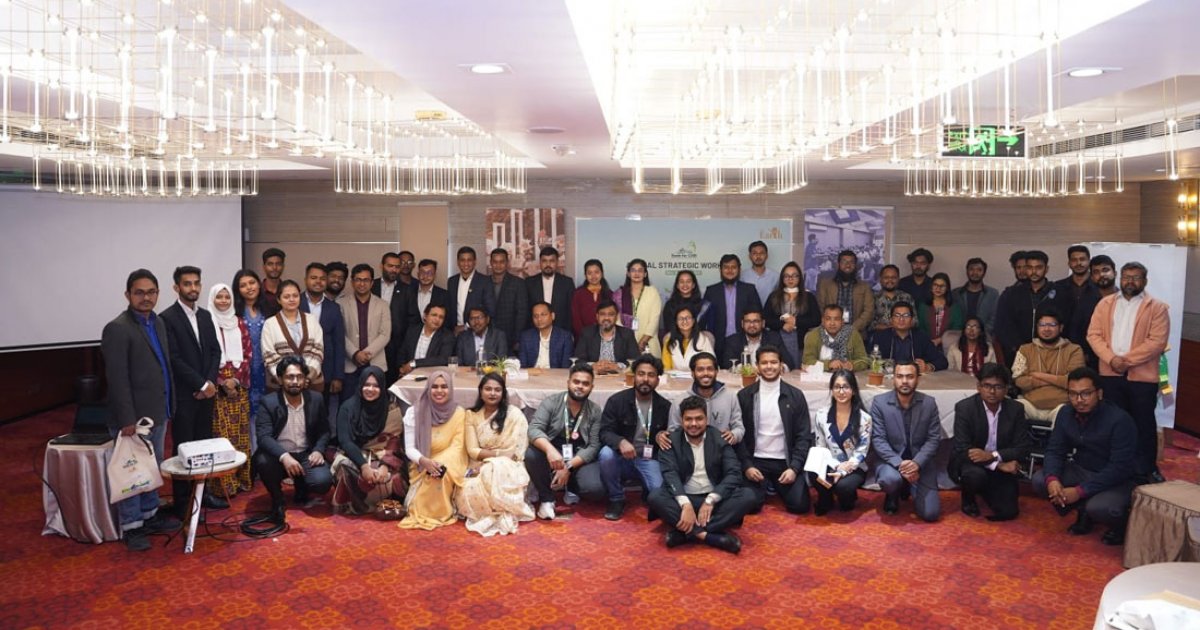
The Annual Strategic Workshop 2025 of the Youth for Clean Air and Renewable Energy (CARE) advocacy campaign was held at City Hotel in the capital on Wednesday, bringing together policymakers, researchers, youth leaders, development partners, journalists, and climate activists to assess progress and chart priorities for the year ahead.
Organised by The Earth Society, the workshop showcased the growing impact of the national youth platform Youth for CARE, which for the past three years has mobilised youth organisations across Bangladesh to advocate for clean air, renewable energy, and the enactment of a Clean Air Act.
Through collaboration with civil society organisations, academic institutions, and research bodies, Youth for CARE has been working to strengthen youth capacity on air pollution, renewable energy, and evidence-based policy advocacy.
Its community partners include Youth Ending Hunger Bangladesh, Bangladesh Debate Federation, We Can Cox’s Bazar, YouthNet, Green Savers, Lal Sabuj Society, Mission Green Bangladesh, Shouharda Youth Foundation, Eco-Network Global, and the Bangladesh Medical Students’ Society.
As Bangladesh moves towards its target of generating 20% of its energy from renewable sources by 2030, participants reviewed key achievements under the CARE Project.
These included youth-led initiatives, public awareness campaigns, community engagement activities, and policy dialogues, alongside discussions on existing gaps and strategic actions required in the coming year.
Speaking at the event, Md Sohel Rana, deputy secretary to the Government of Bangladesh and deputy project director (MRT Line-5 South) and general manager (Planning) of DMTCL, underscored the importance of reversing brain drain and fostering stronger collaboration among youth, academia, and industry to accelerate progress on clean air and renewable energy.
Tanjid Jisan, fellow at Youth for CARE, emphasised the need for all stakeholders — policymakers, NGOs, CSOs, and youth — to work under a single, coordinated platform to maximise impact.
Meanwhile, journalist Shamsuddin Illius highlighted the role of independent journalism in ensuring accountability and strengthening public discourse on clean air and renewable energy issues.
The workshop concluded with a renewed commitment from participants to advance youth-driven advocacy and cross-sector collaboration in support of a cleaner, more sustainable energy future for Bangladesh.