

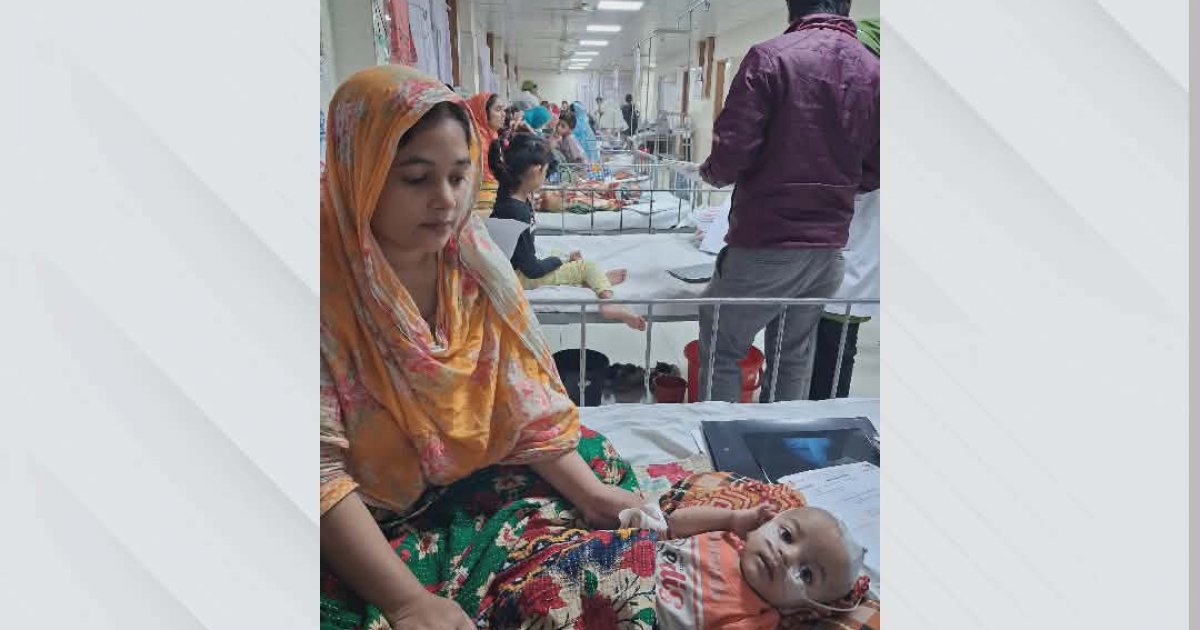
With winter setting in, hospitals across Dhaka are witnessing a sharp rise in cold-related illnesses, with newborns and children bearing the brunt. Dry weather, increasing air pollution, and dust particles are contributing to a surge in respiratory and seasonal diseases, prompting doctors to urge parents to remain extra cautious.
Children are being affected more than adults during this period, as their immune systems struggle to cope with sudden temperature changes. Fever, cold, cough, breathing difficulties, and allergic complications have become common complaints.
Professor Prabir Kumar Sarker of the Department of Pediatric Respiratory Medicine (Pulmonology) at Bangladesh Shishu Hospital and Institute said winter leads to a significant rise in flu, cold, cough, and pneumonia among children.
“Parents need to be especially careful during this season,” he said.
He added that while regular bathing is necessary, premature newborns should be bathed later and with extra caution to prevent exposure to cold. Newborns should always be kept warm, and children who can eat should not be given outside food or open juices.
“Many parents give packaged drinks even when a child has a runny nose. Such practices can worsen illness,” he warned.
Doctors also cautioned against administering antibiotics without medical advice. “Most winter illnesses are viral. If a child develops fever, cough, or breathing difficulty, seeking timely medical care is crucial,” Dr Sarkar said.
A visit to the pneumonia ward of a city children’s hospital revealed that no beds were vacant, while hundreds of children are visiting outpatient departments every day. Physicians said patients are often kept under observation after initial treatment and, depending on the severity of their condition, admission is advised. However, many seasonal illnesses can be prevented through increased awareness and timely care.
Hospital data show that between December 18 and December 22, a total of 261 children received treatment for pneumonia, of whom 63 required hospital admission. During the same period, 157 children were treated for diarrhea. Additionally, 816 children sought treatment for common cold-related illnesses, while 121 were treated for asthma.
At Agargaon Shishu Hospital, 1,234 children received outpatient treatment on Tuesday alone. Among them, 260 were treated in the emergency department, 792 in the medicine department, and 182 in the surgery department. Within 24 hours, 253 children were treated for cold and cough, 46 for pneumonia, 23 for asthma, 153 for scabies, 223 for other skin diseases, and 54 for diarrhea.
The pressure on hospital wards is reflected in the condition of young patients. Three-month-old Supta has been battling cold-related illnesses since birth. She was hospitalized for nearly 15 consecutive days in October. After being discharged, she fell ill again within three days and had to be readmitted. Her mother said pneumonia was detected during the second admission. Supta has now been hospitalized for nearly 25 days during her third admission, including several days in the ICU.
Newborns are also increasingly affected by diarrheal diseases. Five-day-old Anaf was taken to a children’s hospital following a caesarean delivery. His mother said the baby had been suffering from diarrhea since birth. After three days of hospitalization, his condition has improved, and doctors are expected to discharge him soon.
Similarly, one-year-old Nusaiba has been hospitalized for three days. Her mother said the child had been suffering from cold and a runny nose for nearly a week, refusing food and crying constantly, before developing breathing problems. Doctors advised hospital admission, and the child is currently receiving nebulization. While she initially required tube feeding, she has now started taking food orally as her condition improves.
Experts noted that globally, pneumonia claims one life every 13 seconds, and a child every 43 seconds. They urged parents to avoid unnecessary outdoor exposure for children during winter, protect them from dust and infections, and never use antibiotics without a doctor’s prescription.