

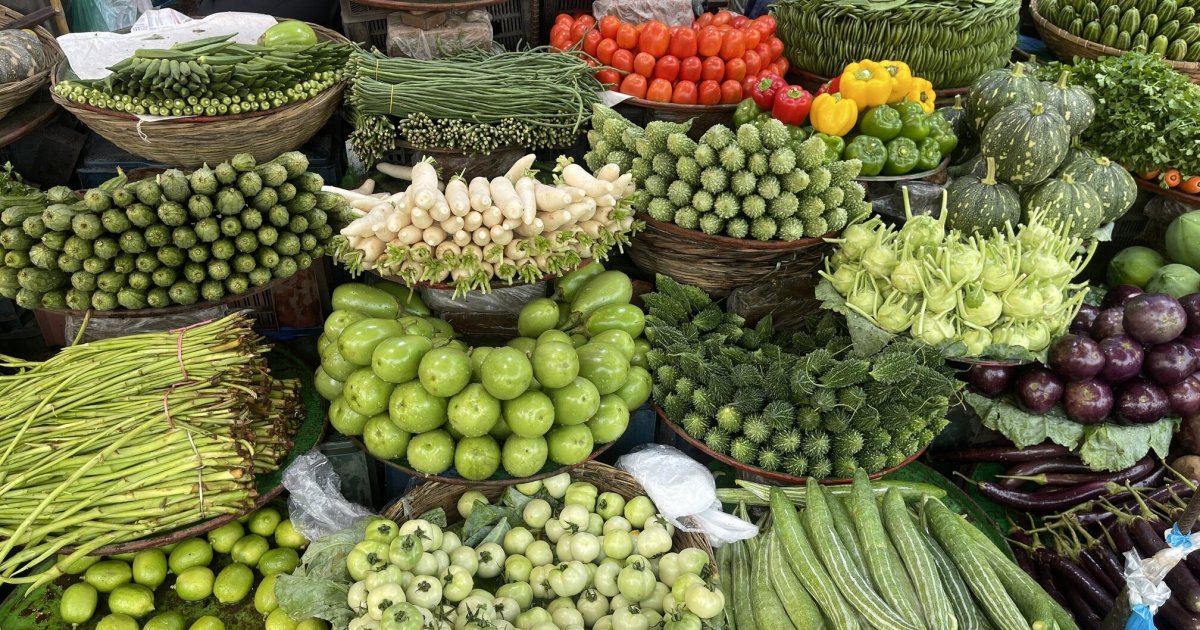
Winter vegetable prices have started to ease in the capital’s fresh markets, bringing some relief to consumers, while grocery rates remain largely unchanged. Onion prices, in particular, have nearly halved over the past two to three weeks, providing respite for middle- and lower-income buyers. However, prices of fish, meat, and other essential groceries have remained stable.
A survey of various markets in Dhaka, including Ray’s Saheb Market, on Friday morning showed that winter vegetable supplies are now plentiful. Prices of new potatoes, beans, and tomatoes have fallen significantly compared to last week.
New onions are selling at Tk60-70 per kg, while imported onions are priced at Tk70-75 per kg — nearly half the cost of two to three weeks ago. This has brought some relief to consumers, although chicken, eggs, fish, and other grocery items remain stable.
No significant changes were observed in fish, meat, eggs, and essential spices. Rui-Katla fish is priced at Tk400, Pangash Tk200, poultry chicken Tk170 per kg, eggs Tk120 per dozen, goat meat Tk1,300, and beef Tk750 per kg. Shopkeepers confirmed that these prices have remained steady.
The price of Pakistani chicken, however, has dropped by Tk20-30 per kg, from over Tk300 to Tk280. Pakistani chicken seller Jabbar attributed the fall to increased supply in the market.
Among vegetables, tomato prices have fallen by Tk20 per kg from Tk120, while bottle gourd sells at Tk50 per kg, beans Tk40, potatoes Tk30, eggplant Tk50, cauliflower Tk30, and cabbage Tk50 per kg. Zainal, a vegetable seller at Ray’s Saheb Market, said prices of these vegetables have decreased by Tk10-20 compared to recent weeks.
Due to the cold weather, the number of buyers in the markets is slightly lower. Sellers said that footfall is expected to increase as the day progresses. Vegetable vendors noted that increased winter vegetable supplies have made prices more accessible, giving consumers relief.
Markets now feature neatly arranged new vegetables in every shop, and buyers are able to purchase as needed. Chattar Ali, a regular customer at Ray’s Saheb Market, said: “Last year, vegetable prices were high almost all the time. Vegetables below Tk60 per kg were not available. Now, many vegetables are sold at Tk30-40 per kg. Buying Tk100 worth of vegetables is enough for two to four days.”
The price of winter beans has also dropped. Newly arrived “Bichiwala” beans are sold at Tk60 per kg, while other varieties range from Tk30-40 per kg. New potatoes, previously sold at Tk100-120 per kg, are now Tk20-25 cheaper. Radishes are sold at Tk30-40 per kg. Eggplants have dropped Tk10 per kg, now selling at Tk40-60.
Ripe tomato prices have decreased but remain relatively high at Tk60-80 per kg. Leafy vegetables are now cheaper, with spinach, red amaranth, and radish leaves selling for Tk10-15 per bunch.
Regular customer Kader said: “Vegetable prices have slightly dropped over the past few days. Today I bought all my necessities for around Tk1,000, whereas normally it costs Tk1,200-1,300.” He added that prices should fall further to bring real relief. Another buyer, Sajib, told Dhaka Tribune: “It’s difficult to tell if overall prices have decreased. Only some items have fluctuated. Real relief will come if the government reduces prices of essential items like rice, lentils, and oil.”
Despite slight drops in fresh vegetable prices, essential groceries remain largely unchanged. Packaged soybean oil is priced at Tk198 per liter, loose soybean oil Tk190, ghee in cans Tk1,450-1,550, loose ghee Tk1,250, packeted sugar Tk110, loose sugar Tk95, 2 kg flour Tk130, 2 kg wheat flour Tk120, and loose mustard oil Tk220 per liter. Spices include cardamom Tk4,750, cinnamon Tk500, cloves Tk1,280, white pepper Tk1,350, and black pepper Tk1,180 per kg.
Rice and lentil prices are also stable: packeted Polao rice Tk155 per kg, loose Polao rice Tk90-130, small lentils Tk155, large lentils Tk90, large mung beans Tk140, small mung beans Tk170, Khesari lentils Tk100, beans Tk115, chickpeas Tk110, Mashkolai lentils Tk180 per kg.
The increase in winter vegetable supply has made many products more affordable, especially onions and new potatoes, reducing expenses for low-income families. Consumers, however, say that lowering the prices of only a few items does not provide complete relief. They believe that stricter market monitoring and reduction in prices of rice, lentils, oils, and other essential groceries would benefit all income groups.