

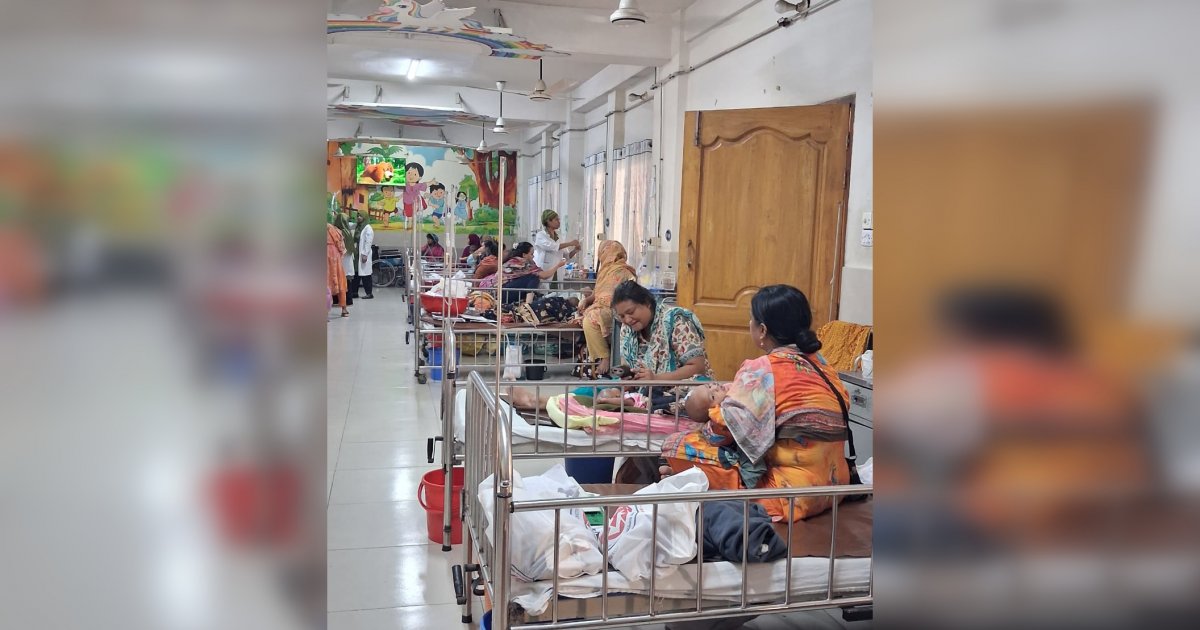
With the onset of winter, hospitals in Dhaka are witnessing a sharp rise in patients suffering from cold-related illnesses, with new-borns and children bearing the brunt.
Doctors attribute the surge to dry weather, rising air pollution and dust, warning that parents need to be extra cautious during the season.
Physicians say children are being affected more than adults as their immune systems struggle to cope with sudden temperature changes. Fever, cold, cough, breathing difficulties and allergy-related complications have become increasingly common among young patients.
A visit to the pneumonia ward of the Bangladesh Shishu Hospital and Institute in Agargaon found all beds occupied, while hundreds of children were seen at the outpatient department daily.
Doctors said many children are initially treated and kept under observation, with hospital admission advised if their condition worsens. They added that greater awareness and timely treatment could prevent many seasonal illnesses.
Hospital data shows that between December 18 and December 22, a total of 261 children were treated for pneumonia, of whom 63 were admitted. During the same period, 157 children received treatment for diarrhoea, 816 for common cold and cough, and 121 for asthma.
On December 23 alone, 1,234 children received outpatient treatment at the hospital. Of them, 260 were treated in the emergency department, 792 in the medicine department and 182 in the surgery department.
In a 24-hour period, 253 children were treated for cold and cough, 46 for pneumonia, 23 for asthma, 153 for scabies, 223 for other skin diseases and 54 for diarrhoea.
The extent of suffering among children in hospital wards is stark. Three-month-old Supta has been battling cold-related complications since birth. She was first hospitalised for about 15 days in October, fell ill again within days of discharge, and was later diagnosed with pneumonia. She has now spent around 25 days in hospital following a third admission, including several days in the ICU.
New-borns are also being admitted with diarrhoea. Five-day-old Anaf was hospitalised following a caesarean delivery. Her mother said the baby had been suffering from diarrhoea since birth but has improved after three days of treatment and is expected to be discharged soon.
One-year-old Nusayba was hospitalised for three days after suffering from a cold and runny nose for about a week. Her mother said the child had stopped eating, cried constantly and had difficulty breathing. After admission and nebulisation, his condition improved and he is now able to eat normally.
Professor Dr Prabir Kumar Sarkar of the Department of Paediatric Pulmonology at the Bangladesh Children’s Hospital and Institute said winter sees a significant rise in flu, cold, cough and pneumonia among children.
“Parents should be especially careful during this time,” he said, advising that while regular bathing is important, premature newborns should be bathed cautiously and kept warm at all times. He also warned against giving children open food or juice from outside.
“Many parents give packaged drinks even when a child has a runny nose. This can worsen the illness,” he added.
Doctors also cautioned against the use of antibiotics without medical advice. “Most winter illnesses are viral. If a child has fever, cough or breathing difficulty, medical attention should be sought immediately,” Dr Sarkar said.
Experts noted that pneumonia remains a major global health threat, with one person dying every 13 seconds worldwide and a child every 43 seconds. They urged parents to avoid taking children outside unnecessarily during winter, protect them from dust and infections, and never use antibiotics without consulting a doctor.