

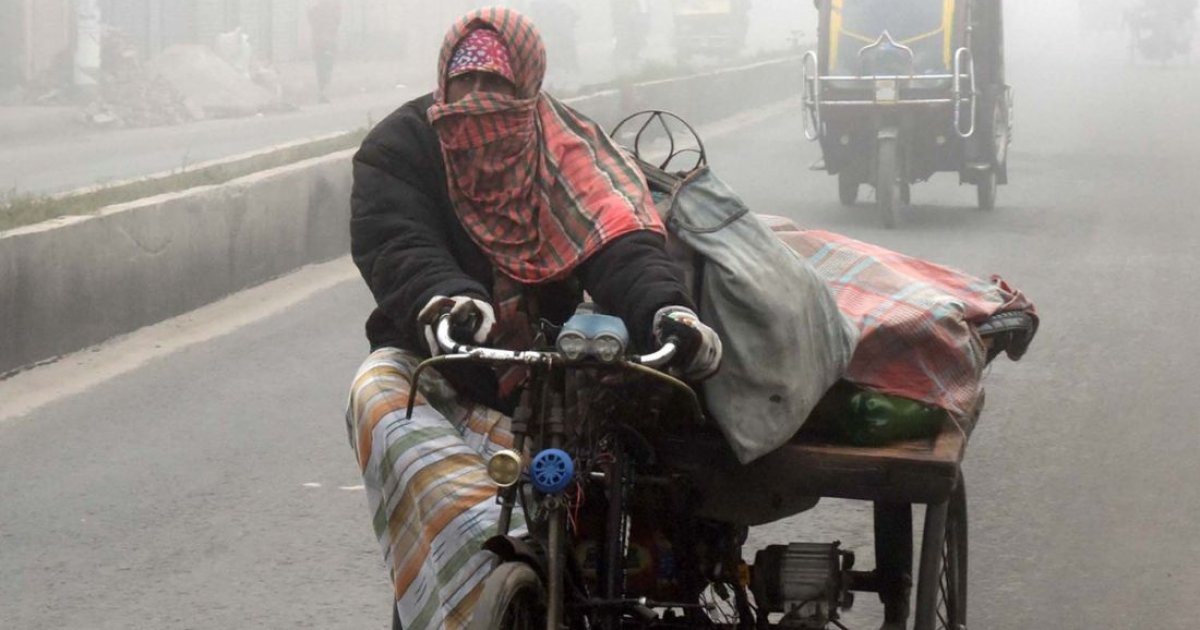
A sudden cold wave has tightened its grip across Bangladesh, dashing expectations of a mild start to winter as temperatures dropped sharply across much of the country, particularly in northern and western districts.
According to the Bangladesh Meteorological Department (BMD), a mild to moderate cold wave is currently sweeping over Jessore, Chuadanga, Gopalganj, Rajshahi, Pabna, Sirajganj, Nilphamari, and adjoining areas. The cold spell is expected to persist at least until Saturday, with further declines in nighttime temperatures likely.
Panchagarh’s Tetulia recorded its lowest temperature on Saturday morning, with the mercury dropping to around 9°C In the southwest, Jessore registered an even lower minimum of 8.8°C over the past 24 hours, marking one of the coldest readings of the season.
In contrast, Teknaf in Cox’s Bazar recorded the country’s highest temperature at 31°C, underscoring sharp regional variations in winter conditions.
“This is the first cold wave of the current winter season,” said Shahnaj Sultana, a meteorologist at the BMD. “Temperatures may decrease further over the next few days, and the intensity of cold, along with fog, is likely to increase.”
The cold wave has also reached the capital. Dhaka recorded its lowest temperature of the season at 13.5°C on Friday, according to the BMD.
Over the past five days, temperatures in Dhaka and many other parts of the country have fallen sharply—by nearly 8°C in some areas—signaling a rapid shift toward peak winter conditions.
Meteorologists attribute the intensifying cold to an extended sub-continental high-pressure system over West Bengal and adjoining regions, allowing cold and dry northerly winds to flow into Bangladesh. At the same time, seasonal low pressure over the southern Bay of Bengal, with its extension reaching the northeast Bay, is maintaining dry and stable weather.
These conditions are conducive to nighttime heat loss, prolonged cold spells, and the formation of dense morning fog, particularly during clear nights.
In its 120-hour forecast, the BMD warned that moderate to dense fog may develop across different parts of the country, especially from midnight to morning hours, with fog in some areas likely to persist until noon.
Dense fog poses risks to air, river, and road transportation. Aviation authorities have been advised to remain alert, while river routes and highways—particularly in northern and river-basin areas—may face reduced visibility, slower traffic, and an increased risk of accidents during early morning hours. Drivers and transport operators have been urged to use fog lights, reduce speed, and avoid unnecessary travel during peak fog periods.
The abrupt onset of intense cold has caused the greatest hardship in northern districts, where residents are often less prepared for sudden temperature drops. Daily wage earners, agricultural laborers, rickshaw pullers, and the homeless are facing growing difficulties as work opportunities decline and exposure to cold increases.
In many areas, residents have been seen lighting open fires or using makeshift coverings made from plastic sheets and sacks to stay warm. Local communities report shortages of winter clothing, particularly affecting children and the elderly.
Healthcare providers across the country have also reported a rise in cold-related illnesses, including respiratory infections, pneumonia, colds, and fever. Children and older adults remain the most vulnerable. Doctors advise wearing layered clothing, limiting outdoor exposure during early mornings and late nights, and avoiding cold-water bathing during peak cold days.
According to the BMD’s five-day outlook, foggy and dry conditions are expected to continue. From December 27 to 28, weather is forecast to remain partly cloudy and dry, with moderate to dense fog from midnight to morning. Fog is likely in river-basin areas on December 29 and 30, accompanied by a slight fall in night and day temperatures. On December 31, weather is expected to remain dry, with temperatures largely unchanged.
Meteorologists cautioned that additional cold spells cannot be ruled out if the prevailing atmospheric conditions persist.
As winter sets in earlier and more sharply than anticipated, experts emphasized the need for early preparedness, including timely distribution of warm clothing and increased public awareness to protect vulnerable populations.
Tetulia’s near-freezing morning temperatures and Dhaka’s coldest day of the season signal that winter has arrived in earnest—and may intensify further in the days ahead.