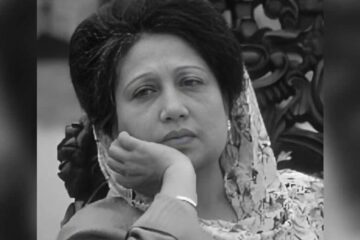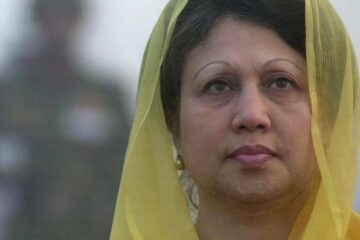


Khaleda Zia entered politics following the assassination of BNP founder and former president Ziaur Rahman, and within just two and a half years rose to the top of the party’s leadership.
She completed 41 years as chairperson of the Bangladesh Nationalist Party (BNP) in May, a period during which the party formed the government three times under her leadership.
According to the BNP’s official website, Khaleda Zia took primary membership of the party on January 3, 1982.
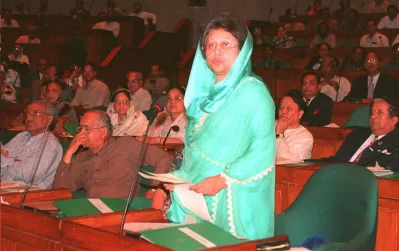
In March 1983, she was elevated to the position of senior vice-chairperson.
On January 12, 1984, she was appointed acting chairperson of the BNP, and on May 10 the same year, she was elected chairperson unopposed.
Khaleda Zia went on to serve as BNP chairperson for more than 41 years.
During this time, she led the party to victory in three parliamentary elections, becoming prime minister after the fifth, sixth and eighth general elections in 1991, 1996 and 2001 respectively.

She never lost a parliamentary election she personally contested.
In 1991, Khaleda Zia became Bangladesh’s first female prime minister and the second woman to serve as head of government in the Muslim world.
In recognition of her role in women’s education and empowerment, Forbes magazine ranked her 29th on its list of the world’s most powerful women in 2005.
The most challenging phase of Khaleda Zia’s political career came during the previous Awami League government, when she was convicted and sentenced in two corruption cases.
After spending more than two years in prison, her sentence was suspended by executive order in March 2020 amid the Covid-19 pandemic, allowing her conditional release.
The suspension of her sentence was subsequently extended through six consecutive applications.
Following the fall of the Awami League government during the July mass uprising, Khaleda Zia was released by executive order on August 5, 2024.
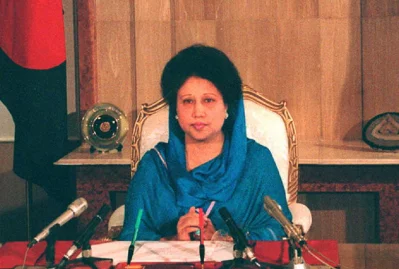
She later travelled to London on January 7, 2025, for advanced medical treatment.
After spending 117 days undergoing treatment in the United Kingdom, she returned to Bangladesh on May 6.
Since her return, Khaleda Zia has been hospitalized several times due to various physical complications, marking a period of continued health struggles in the final phase of her long political life.