
Bangladesh must urgently place young people with disabilities and youths affected by leprosy at the centre of its rural development agenda to achieve inclusive and sustainable growth.
This was the core message from government officials, development experts, and civil society leaders at a high-level roundtable in Dhaka, who noted that despite strong laws and national commitments, systemic gaps, social stigma, and weak service delivery continue to exclude many youths with disabilities from development processes.
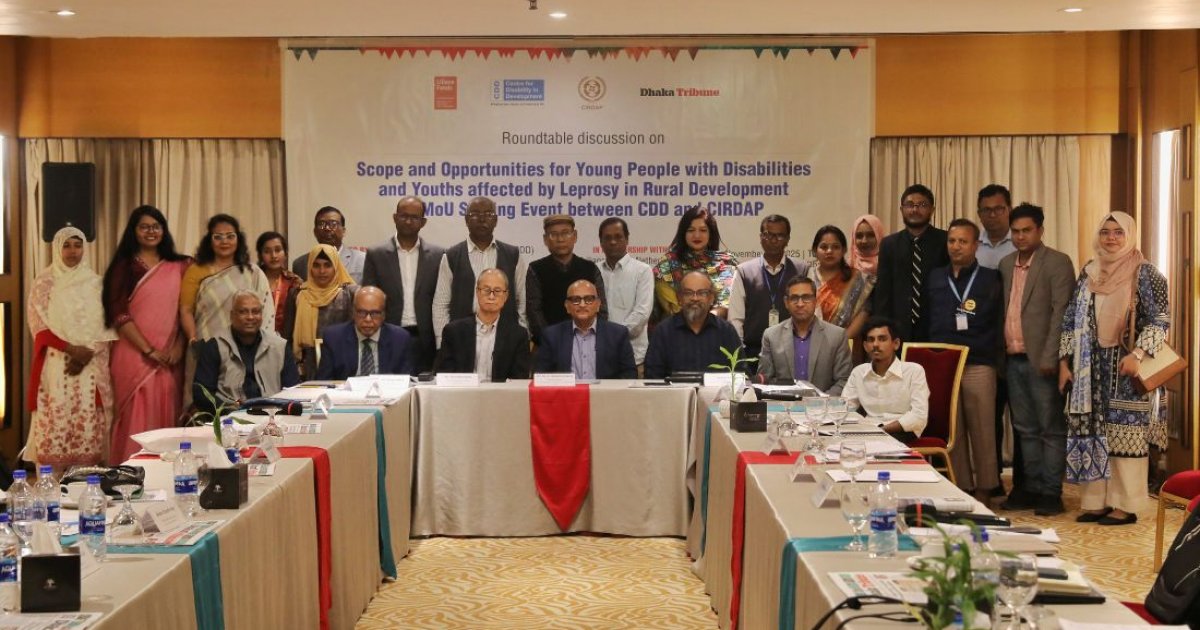
The roundtable, titled “Scope and Opportunities for Young People with Disabilities and Youths Affected by Leprosy in Rural Development,” also marked the signing of a memorandum of understanding between the Centre for Disability in Development (CDD) and the Centre on Integrated Rural Development for Asia and the Pacific (CIRDAP). The partnership aims to accelerate disability-inclusive rural development in Bangladesh and across the Asia-Pacific region.
Organized by CDD in association with CIRDAP and supported by Liliane Fonds, Netherlands, the event highlighted the scale of the challenge.
Presenting the keynote, Rakhi Barua, senior coordinator at CDD and a CIRDAP expert, said 12.6 million people in Bangladesh live with disabilities, most in rural areas where poverty and service gaps are more acute. She noted that rural poverty stands at 24.57%, disproportionately affecting youths with disabilities who face barriers in education, skills training, healthcare, mobility, and digital access. Her proposed roadmap included strengthening personal and social development, social and emotional wellbeing, supporting positive youth leadership, early detection and rehabilitation, and stronger linkages with government rural development programmes.

Bari, in his welcome speech, highlighted the importance of the meaningful engagement of persons with disabilities for inclusive rural development emphazing the needs to address multifaceted dimensions of the barriers that limit inclusion through effective and comprehensive interventions.
He noted that persons with disabilities must be at the forefront of these interventions, as they are best positioned to inform and advise on solutions to overcome exclusion.
He further added that investment in empowering youth with disabilities is essential, stating that their potential and capacities must be recognized, and that they should be considered contributors to development rather than merely recipients.
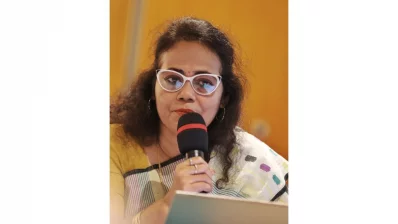
Barua stated that 12.6 million people in Bangladesh live with disabilities, the majority of whom reside in rural areas where poverty is deeper and access to essential services is limited. Highlighting the 41% NEET rate, representing 12.9 million youth, she noted that this burden “falls disproportionately on young people with disabilities,” perpetuating exclusion and inequality.
To improve the economic and social wellbeing of youths with disabilities in rural areas, she outlined a pathway to ensure meaningful youth participation. This includes support for social and emotional wellbeing; engagement in culture, sports, and community activities; participation through youth clubs; access to TVET; mental health support; access to sexual and reproductive health care and rights; access to rehabilitation, and assistive technologies; and stronger linkages with government livelihood schemes in rural areas.

Joardder called for disability inclusion to be mainstreamed across all development planning, framing disability as a constitutional right rather than an act of charity. He emphasized that the inclusion of persons with disabilities must be addressed by all ministries and government departments. He praised parents, especially mothers, for their resilience and encouraged creative economic models, including display spaces for products made by persons with disabilities at BRDB’s main branch.
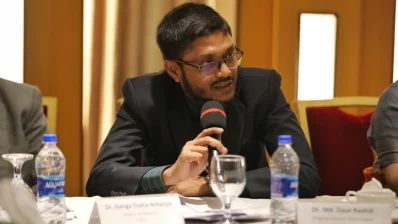
Rashid described persons with disabilities as highly vulnerable, especially during crises when laws fall short. He stressed empathy, improved coordination between government and NGOs, and stronger rural service delivery. Citing the JICA-supported Link Model, he said it offers a practical platform for essential services at the union level . He stressed about the needs of disability-disaggregated data for effective planning and collaboration between various nation-building departments and development partners. Rashid also noted that the past experiences of BRDB and CDD in Ramu could be explored for replication and consideration within policy frameworks.

Sazzad observed that despite strong national commitments and obligations under the Rights and Protection of Persons with Disabilities Act, 2013, significant service gaps remain. A DDRC survey in Chittagong revealed that many eligible children and youths with disabilities are not receiving disability allowances. He noted that schools lack accessibility and that many TVET programmes exclude persons with severe or sensory disabilities.
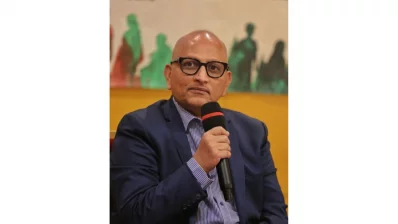
H.E. Dr. P. Chandra Shekara, emphasized that disability inclusion must go beyond the mandate of a single ministry and be embedded across all sectors. He appreciated the presence of three youths with disabilities as discussants, acknowledging their valuable contributions in sharing lived experiences.
He reiterated the need for a unified, 360-degree approach that combines regular sensitization and awareness-building, skills development, promotion of youth-led initiatives, and investment in technology, incubation centres, and mentorship.
Dr. Shekara shared that CDD is a recipient of the prestigious Azizul Haque Medal for Rural Development, awarded by CIRDAP in 2024, alongside other organizations from Asia and the Pacific
Referring to the recent UN declaration of 6 July as World Rural Development Day, which also marks the foundation day of CIRDAP, he described it as a significant opportunity to highlight disability issues within rural development.
He highlighted the importance of producing credible, disaggregated disability data, along with documentation and dissemination of success stories for upscaling, while citing good practices from across the globe in the field of rural development
Recalling Mahatma Gandhi’s statement, “Be the change you wish to see,” Dr. Shekara reminded everyone of their individual responsibility as members of society.
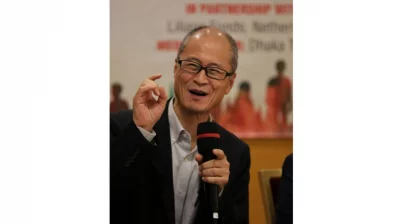
Munakata said that JICA’s work focuses mainly on infrastructure development and that accessibility should be adequately considered in all infrastructure projects. JICA is prioritizing climate change, gender, and ICT. He noted that local committees in every upazila ensure stakeholder representation and can help identify the needs of persons with disabilities. He also expressed JICA’s willingness to support youth-led, inclusive development at the grassroots level.

Manika said that strong policies alone are not enough; government, NGOs, and development partners must work in a coordinated manner for disability inclusion to reach the local level. Projects will eventually end, but sustainability depends on institutionalisation and government representation initiatives. Disability inclusion advances more effectively when local government institutions, NGOs, and development partners work together with shared responsibility.
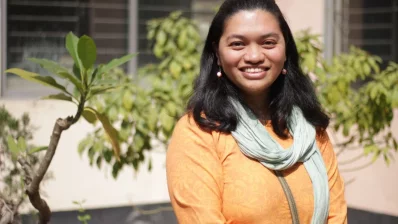
Santos described the organization’s vision to ensure each child and youth with disabilities reaches their potential through Community Based Rehabilitation (CBR). Sharing examples of Ramson and Shahida, she highlighted the transformative impact of early rehabilitation, parental guidance and livelihood support. Liliane Fonds aims to scale these models through Regional Centers of Excellence to strengthen the visibility, quality, integration, sustainability, and influence of CBR/CBID as a rights-based, community-focused approach, so that children and youth with disabilities, especially those living in remote areas, thrive in inclusive societies, supported by systems that recognize and respond to their rights, leadership, and lived experiences.
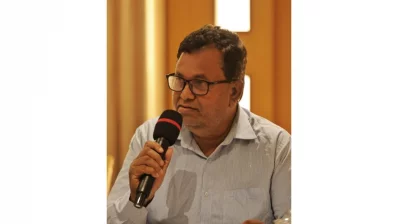
Fatme pointed to opportunities created by the National Youth Entrepreneurship Development Policy, which has enabled youth with disabilities to become entrepreneurs, computer operators and agent bankers. He stressed that skills training must be paired with counselling, healthcare and community acceptance. Inclusion, he said, must move from charity to long-term socio-economic empowerment.
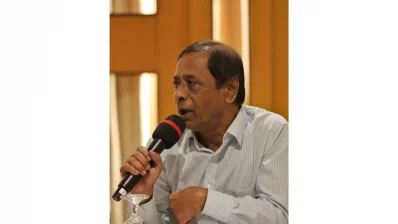
Based argued that empowerment, not assistance, is driving progress. PAPRI’s computer training and laptop support have helped many secure jobs in Union Parishads, schools and banking services. Accessibility has improved due to advocacy, and groups of persons with disabilities now negotiate directly with officials. The real success, he said, is autonomy and growing leadership among persons with disabilities.

Borna shared her experiences of stigma, limited mobility and restricted access to health information as a woman with a disability. Early marriage and gender discrimination, she said, continue to marginalize rural women. Determined to pursue higher education and become a banker, she called for stronger community and institutional support so women with disabilities can live with dignity and equal opportunity.
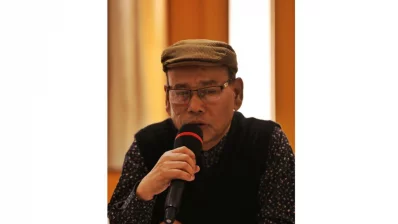
Roy said societal attitudes remain the biggest obstacle, not impairments of persons with disabilities. Citing examples such as exclusion of Santal community members from tea shops, he urged empathy, awareness and community engagement to dismantle prejudice. DIPSHIKHA’s work with rural people shows communities become supportive when informed, he added.
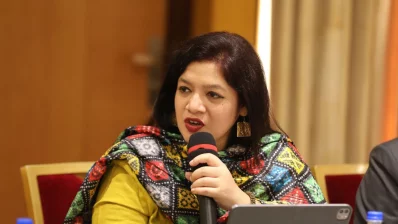
Hurain noted that disability remains misunderstood in both rural and urban contexts. She cited Asia-Pacific examples of youth with disabilities leading enterprises, digital services and community projects. Inclusion, she said, must begin at home and expand through supportive policies. Viewing persons with disabilities as partners strengthens families, economies and rural development.
Soren said leprosy is fully curable but remains stigmatized, causing many to hide their condition and delay treatment. Early detection, treatment, physiotherapy and community education are central to his work. He said youth involvement is effective in identifying cases and encouraging treatment in the rural communities. A leprosy-free Bangladesh by 2030 is possible if communities treat patients with dignity.
Nazrul said legislation has advanced disability inclusion, but practical implementation remains limited. Ensuring access to education and employment, especially for girls with disabilities, is vital. Early intervention, leadership by local officials and community engagement can prevent exclusion and abuse. Misconceptions about leprosy also persist, he noted, despite its curability.
Alif described his journey growing up with a disability in rural Bangladesh with limited awareness and services. His youth club works with district education offices to strengthen inclusive education, digital literacy and communication skills. Collaboration among government agencies, NGOs and communities, he said, is essential to building equity.
Acharya said disability remains a neglected area in rural development because of cultural and social barriers. Welcoming the CIRDAP–CDD MoU, he argued that the partnership can model effective inclusion for the region. Implementation gaps must be addressed through strong data systems, policy action and local ownership.
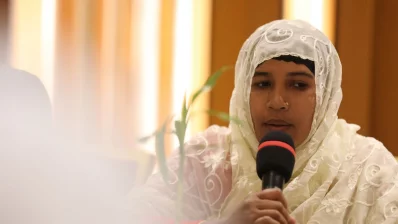
Banu shared the journey of her daughter Mimi, who has bilateral deafness. With hearing aids, Mimi is now thriving in college. Banu reaffirmed her commitment to her daughter’s independence and rejected limiting expectations. She urged greater investment in early intervention and inclusive opportunities for children with disabilities.

Mimi recalled how isolated and excluded she felt because she could not communicate effectively with her friends or during classes due to her loss of hearing. Her father considered stopping her education, but she was determined to continue. After receiving hearing aids, she was able to hear better and communicate more meaningfully.
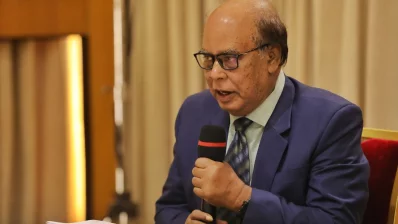
In his closing remarks, Khan underscored the value of long-term collaboration and CDD’s work in identification, education, and capacity building. He called for recognition of caregivers, systematic follow-up, and practical approaches to ensure that persons with disabilities can access government services and participate equitably in rural development.