

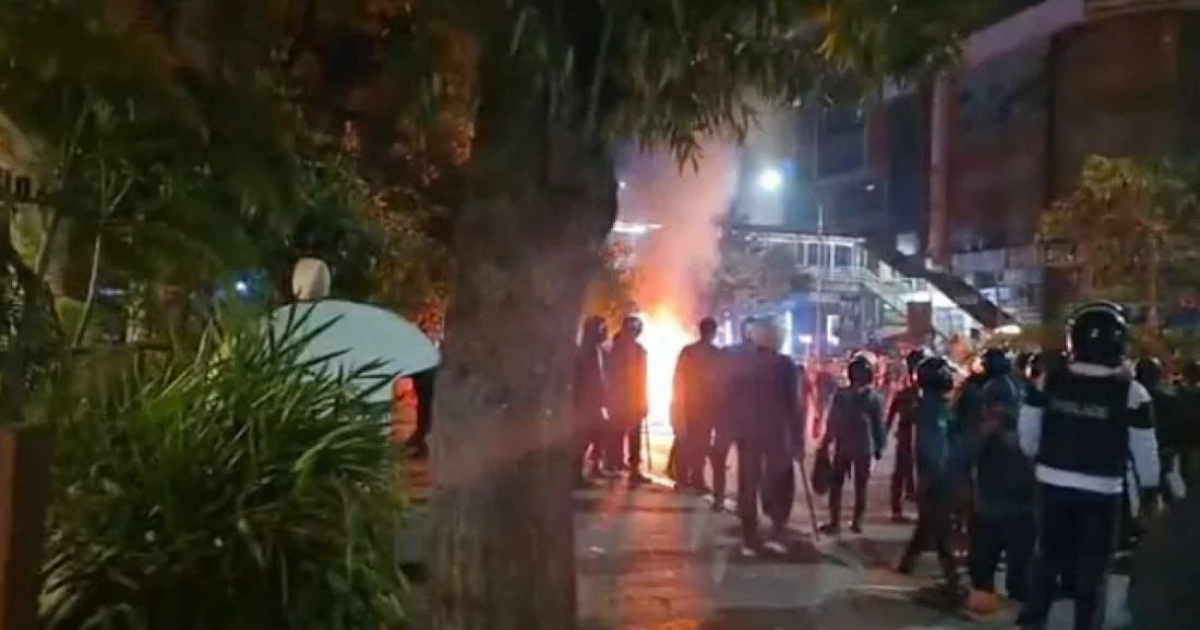
Despite some commendable initiatives by the interim government, incidents of mob violence and human rights abuses have surged in Bangladesh over the past year, raising serious concerns among activists and organizations both domestically and internationally.
Human rights groups say the government has largely failed to control killings and attacks linked to mob violence. Analysts also warn that election-related political violence has escalated ahead of the 13th National Parliament election scheduled for February 12, posing a significant threat to democratic processes and civil liberties.
According to human rights organization Ain o Salish Kendra (ASK), at least 197 people were killed in mob violence between January 1 and December 31, 2025, up from 128 in 2024—a one-year increase of 69 deaths. During the interim government’s tenure, at least 293 citizens fell victim to mob attacks. Women, men, religious minorities, and marginalized groups were among those affected, while media outlets and other key institutions faced assaults and vandalism.
ASK’s analysis also noted that, despite a change in state power, old patterns of repression continue in new forms. “Repressive governance, lack of accountability, and discriminatory practices have left the human rights environment unstable and alarming,” the organization said.
The Human Rights Culture Foundation (MSF) reported a rise in political violence, mob beatings, deaths in custody, discovery of unidentified bodies, and attacks on journalists. In 2025, 5,604 people were affected in 599 incidents of political violence, including 86 deaths and 5,518 injuries, 97 of which involved gunshot wounds. Among the deceased, 65 were BNP members, 8 from Awami League, 3 from Jamaat-e-Islami, and 10 ordinary citizens with unknown political affiliations.
Nur Khan Liton, member of the government-formed Enforced Disappearance Commission, said the qualitative improvements expected after August 5 have not materialized. “Although crossfire or enforced disappearance incidents have not occurred—which is positive—new forms of violence and organized terror against citizens have increased alarmingly,” he said.
Liton highlighted repeated incidents of mob violence affecting ordinary citizens, media, and cultural organizations. These include attacks on the offices of Prothom Alo and The Daily Star, assaults on cultural institutions, repeated attacks at 32 Dhanmondi, four deaths during an army patrol in Gopalganj, and multiple killings in Chittagong.
He also said that invisible terrorist forces appear to be controlling parts of the situation, and the government has failed to take consistent, effective action. Liton added that 15 years of previous Awami League rule, which often put law enforcement in direct confrontation with citizens, damaged both public trust and the morale of security forces. He stressed that political will, accountable governance, and genuine reform of security agencies are essential to improving human rights conditions.
ASM Nasiruddin Alan, director of human rights organization Odhikar, said the interim government has taken some important steps, including signing long-pending international human rights instruments and issuing the enforced disappearance ordinance, creating frameworks to protect detainees.
Alan warned that deaths from political violence and mob attacks have increased sharply. Law enforcement agencies often failed to intervene effectively despite proximity, and poor coordination between police and joint forces, along with improper use of army magisterial powers, further complicated the situation.