
There are all those times when the lives and careers of politically powerful men are under scrutiny, in an almost incessant and necessary way. It is quite often forgotten that they are part of families as well, that they have spouses, that each one of them has had her share of good fortune and bad with her ambitious and social and political climber of a husband.
Fundamentally it is the story of couples long married and caught in the vortex of politics which sometimes makes us wonder. The wonder is about the woman in that union. How did she fare? How happy or depressed was she? To what extent was she able to act as a moral compass for her husband? And where did she falter?
You remember Pat Nixon, the woman who stood by Richard Nixon through all his travails without complaint. Not much of an extrovert, she stayed largely indoors even when she was First Lady. It is a testimony to her moral integrity that President Nixon was able to fall back on her in his darkest hours. The one moment when we observe Pat Nixon get emotional in public is in those eyes glistening with tears as her husband delivers his farewell speech before the White House staff in August 1974.
Pat was not Jacqueline Kennedy, the beautiful and glamorous wife of John F Kennedy. But they had something in common: Both suffered quietly. Jackie knew of her husband’s infidelities and put up with them uncomplainingly. It was to her that JFK came back after all the clandestine affairs. Hers was a dignified image at the funeral of President Kennedy in November 1963.
Not all political wives have been quiet symbols of suffering, though. Madame Nhu, the beautiful and influential wife of Ngo Dinh Nhu, brother of Ngo Dinh Diem, called the shots in South Vietnam in the times when her brother-in-law was president. It is a tragedy when beauty comes to be associated with corruption. And that precisely was what came to pass in Madame Nhu’s life. She was forced into exile after the assassination of Nhu and Diem in 1963.
Another beautiful woman, albeit more diplomatic than the South Vietnamese Madame Nhu, was Madame Chiang Kai-shek. In the years when her husband was engaged in a mighty struggle against Mao Zedong’s Communists, a struggle he was eventually to lose, the lady travelled the world meeting the good and the great in her campaign of soliciting support for Chiang. She remained active even after the Chinese Nationalists were forced into seeking shelter in Formosa and running their government from there.
There have been the good wives whose calm presence and indeed poise went a long way in the advancement of their husbands’ careers. Begum Fazilatunnessa Mujib remains a shining instance of a perennially suffering and lonely political wife who nevertheless turned those factors into strengths, which in turn enabled Bangabandhu Sheikh Mujibur Rahman to pursue his nationalist politics without impediment.
One other strong political spouse was Zohra Tajuddin, whose fortitude in the aftermath of her husband’s murder in prison is an undying testament to her determination not to give in to the forces of darkness. She kept the banner of the Awami League raised high and fluttering through the late 1970s and early 1980s when the party was under some of the darkest of clouds in its history.
Nusrat Bhutto and Nahid Mirza, for different reasons, suffered in the long shadow of their husbands. Both women were Iranian, but elsewhere their lives took different routes. Nusrat pursued a life with Zulfikar Ali Bhutto despite the many infidelities the latter indulged in all his life. She bore stoically the pain which came of seeing her husband lose his life on the gallows in April 1979 and then went on to hold the Pakistan People’s Party together before passing it on to daughter Benazir.
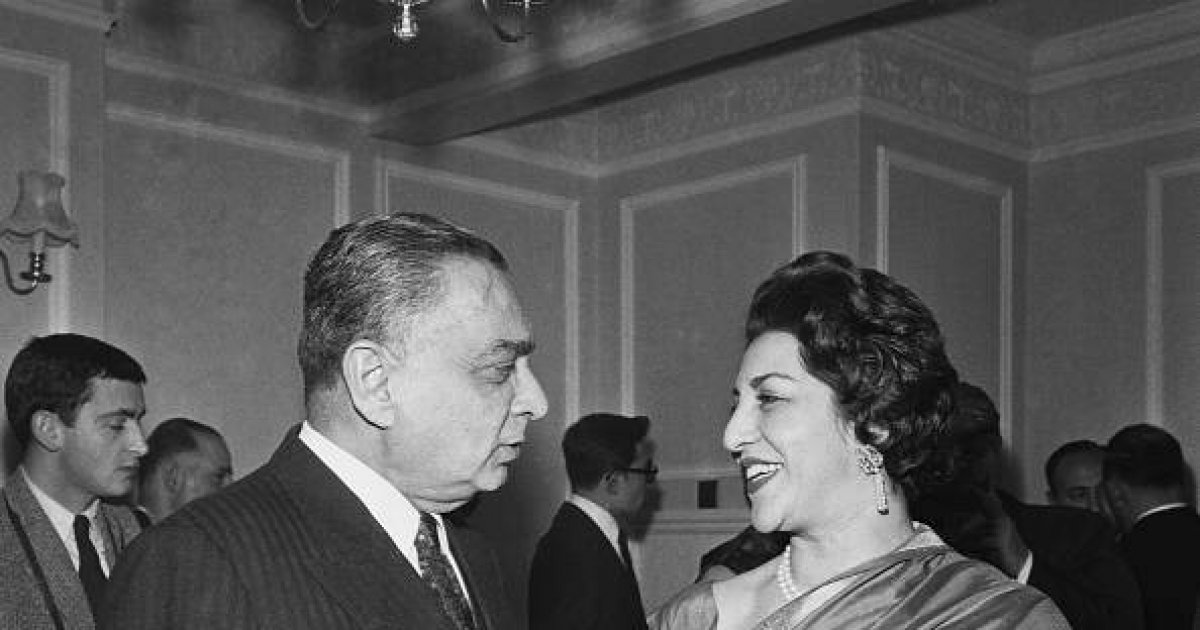
Nahid Mirza, having divorced her husband, the Iranian naval attaché in Karachi, married Iskandar Mirza, who already had a wife and with whom he had had children. Her desertion of her first husband and marrying Pakistan’s first president did not endear her to people. She was packed off into exile with her husband by Ayub Khan in October 1958. The couple spent their final years together in Britain.
A political wife who was treated extremely badly by her spouse was Argentina’s Zulema Yoma. Married to President Carlos Menem, at one point she found herself locked out of the presidential palace in Buenos Aires by her husband. Divorce followed and the insensitive Menem went on to marry a younger woman.
For Kasturba Gandhi, life with Mohandas Karamchand, in those early stages in South Africa, was clearly a torment. She managed to adjust herself to Gandhi’s political and moral principles in time, bearing him a good brood of children in the process.
An unfortunate political wife was Kamala Nehru, who was prevented by recurrent illness from sharing the travails and the glories increasingly gone through by her husband. Kamala died a decade before Jawaharlal Nehru led India to its tryst with destiny.
Politicians have often found themselves burdened with wives too assertive or too inclined to romance outside marriage. Margaret Trudeau’s marriage with Pierre Trudeau collapsed essentially because she was young and too independent-minded to play second fiddle to her husband. It was the Rolling Stones which claimed her attention.
At another end, Harold Macmillan knew for years that his wife Dorothy was in an affair with another politician. Despite her wishes to be free of her marriage with Macmillan, who served as Britain’s prime minister from 1957 to 1963, her husband was not willing to let go of her. In the event, her marriage and her affair ended with her death in 1966.
China’s Chairman Mao married four times, but by far the strongest of his wives, in political terms, was Jiang Qing. She was a force during the Cultural Revolution between the mid 1960s and mid 1970s and after Mao’s death attempted to seize power with support from other extreme leftwing politicians. Her career collapsed when she and her three colleagues were removed from power and demonized as the Gang of Four. Jiang Qing died unlamented.
The spouse of Pakistan’s military leader Ayub Khan stayed largely in the background. It was their daughter, Nasim Aurangzeb, who usually accompanied her father on his forays abroad. Indonesia’s Ahmed Sukarno, again a much-married leader, was nevertheless infatuated with his youngest wife Ratna Sari Dewi. She made a splash wherever she went, though whether she was able to influence government policy has not quite been remarked on.
One of the strongest of political wives in our times has been Hillary Rodham Clinton. She has been head of her husband’s initiative on health care, has withstood with courage his many liaisons with other women, has gone on to become a senator before reinventing herself as America’s most powerful diplomat in her capacity as secretary of state. And then she almost made it to the White House on her own.
Winnie Mandela offers a new perspective on the lives of politician-husbands, which is that political wives are studies of endurance as also human frailties. They shine in resistance to atrocious regimes or live in quiet grace or in obscurity. Winnie was a pillar of strength for the incarcerated Nelson Mandela.
Syed Badrul Ahsan is a writer.