

The metro rail accident that killed a pedestrian on October 26 was caused by a faulty design and the use of substandard bearing pads, Road Transport and Bridges Ministry Adviser Fouzul Kabir Khan said on Thursday.
Speaking at a press briefing at the Secretariat after receiving the probe committee’s report, the adviser said the investigation found no evidence of sabotage.
He said preliminary findings showed that the hardness, compression set and neoprene content of the displaced bearing pad did not meet standard specifications, although further testing at overseas laboratories is required for confirmation.
The bearing pad was also installed at a slight slope of 0.8%, which may have contributed to its displacement, the adviser added.
The committee found that no transition curve was used between the straight and curved sections of the viaduct, pointing to a possible design flaw. No separate model or analysis was conducted for the curved alignment, as the design relied solely on analysis of the straight section.
Investigators also noted that while a mass-spring neoprene damper system is used under tracks at curved alignments and nearby stations, rigid tracks were installed at the accident site. The committee believes the damper system could have reduced vibrations.
Outlining the recommendations, the adviser said urgent technical measures must be taken at curved alignments to protect bearing pads.
The committee also called for a detailed review of the viaduct and track design by an independent third-party consultant, along with a comprehensive safety audit of the metro rail project, Fouzul Kabir said.
It further recommended establishing a robust structural health monitoring system, strengthening the metro rail authority’s technical capacity, and ensuring effective technology transfer from foreign consultants to local experts.
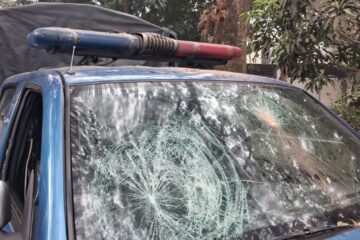
On October 26, Abul Kalam Azad, was killed when a bearing pad fell from a metro rail pillar near Farmgate station in Dhaka.
Bearing pads are specialised rubber components placed between viaducts and piers to absorb vibration and allow controlled structural movement. A five-member probe committee, led by Bridges Division Secretary Abdur Rouf, was formed to investigate the incident.
A case was filed with Tejgaon Police Station the following day.