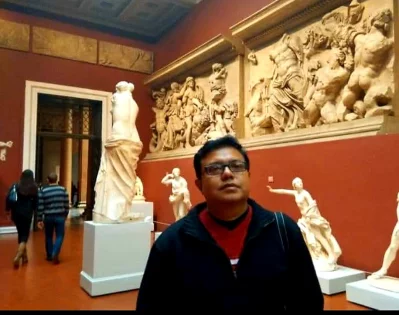

Getting the opportunity to see and appreciate masterpieces by legendary artists such as Picasso, Matisse, Van Gogh, and Cézanne under one roof was a truly rewarding experience. My visit to Moscow’s Pushkin Museum some 11 winters ago remains fresh in my memory, with seminal works by Old Masters like Goya, Botticelli, Rembrandt, and Rubens leaving a lasting impression on me. The power of art lies in its ability to evoke strong emotions, transport us through time, and become indelible parts of our soul and memory.
October weather in Moscow is distinctly autumnal, rapidly transitioning to early winter conditions by the end of the month. It is generally cool, damp, and marked by limited sunshine. I remember it was drizzling, and the weather felt unusually cold for a mid-October day in 2014. Wearing a full-sleeved black woollen sweater, I stood under an umbrella in a long queue after collecting my entry ticket to the Pushkin State Museum of Fine Arts.

The windy weather and the long wait were worth it. As a plaster cast of Michelangelo’s David greeted me at the very first step inside one of the museum’s prized halls, I felt warmth—both literal and metaphorical. It is one of several renowned plaster casts of David, alongside those at the Victoria and Albert Museum in London and the Royal Museums of Art and History in Brussels. The David at Pushkin closely resembles the original Michelangelo masterpiece and is among the oldest casts, ordered and produced in an authentic Florentine workshop around the same time the Moscow museum itself was being constructed. Pushkin’s David continues to serve its original purpose: allowing students of fine arts to study the sculpture, while also remaining on display for inspection and admiration by millions of art connoisseurs each year.
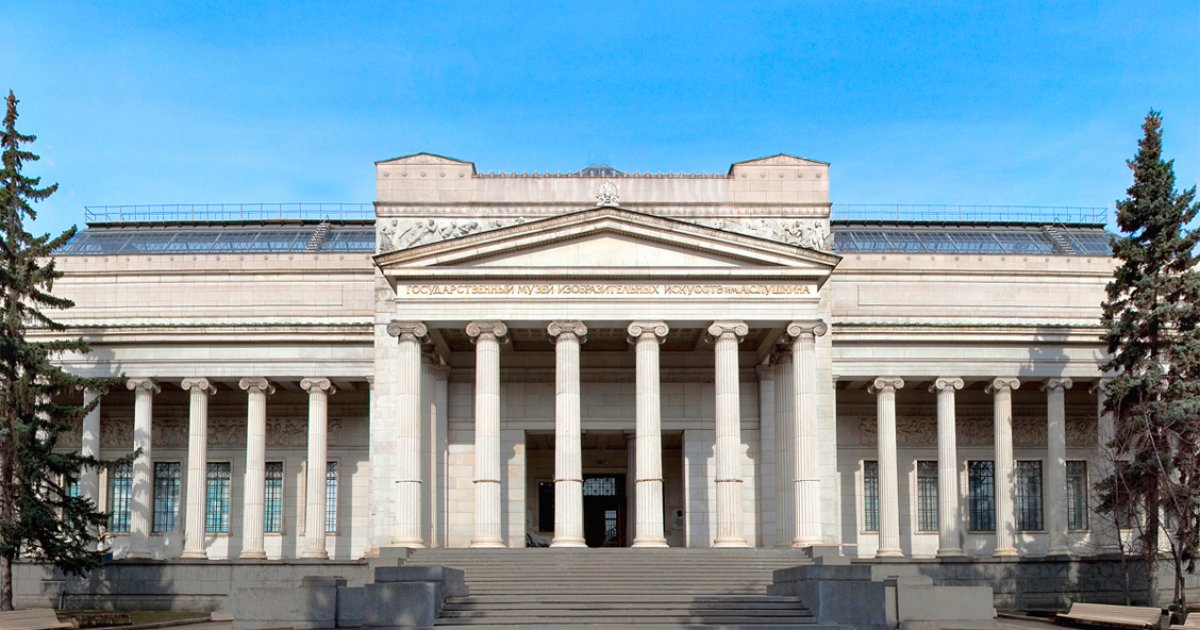
The pre-Soviet-era main museum building was designed to resemble a Classical temple, standing on a high podium with an Ionic colonnade along its façade. Its glass roof ensures ample daylight in the first-floor galleries and the two atrium courtyards.
Rich in masterpieces by globally renowned artists—especially its extraordinary collection of French Impressionist, Post-Impressionist, and early 20th-century modernists such as Van Gogh, Cézanne, Renoir, Matisse, Picasso, Monet, and Gauguin—the Pushkin Museum ranks among the world’s top 50 most visited fine art galleries. Art connoisseurs can also admire works by Russian greats like Chagall and Kandinsky.
Founded in 1912, the museum is located in the historic centre of Moscow, not far from the Kremlin. As far as I can recall, it was also relatively close to Novotel Moscow City, where I was staying. I took the metro from Vystavochnaya station, almost next door to my hotel, visited the Kremlin, and then headed towards Kropotkinskaya station, from where it was just a few minutes’ walk to the Pushkin State Museum of Fine Arts.
The museum possesses one of the world’s largest art collections, spanning from Ancient Egypt and Greece to modern times. Today, its holdings comprise around 7,00,000 works of art from different epochs. The jewel of the collection is French art of the 19th and 20th centuries—one of the most celebrated collections of Impressionist and Post-Impressionist paintings in the world.
The main building houses artworks from various countries, covering periods from antiquity to the early 19th century. This includes an extensive collection of plaster casts of sculptures from antiquity, the Middle Ages, and the Renaissance, as well as original paintings, sculptures, graphics, and decorative arts.
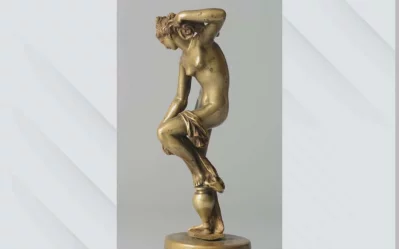
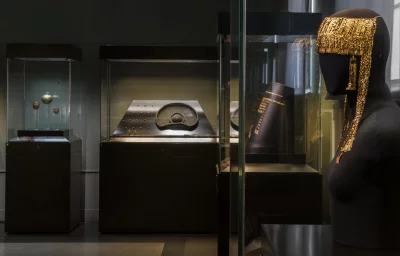
Of particular interest are the ancient Egyptian collections, including Priam’s Treasure—a collection of 259 items comprising jewellery, vessels, hammer-axes, and artefacts fashioned from rock crystal, also referred to as “Trojan Gold.” The treasure was discovered by Heinrich Schliemann during excavations at the site of Troy between 1872 and 1890.
The Pushkin Museum also displays significant works by leading European artists such as Rubens, Rembrandt, Botticelli, El Greco, Poussin, and Watteau. Some 26 of the museum’s galleries are dedicated to a wide-ranging collection of works by master painters of the 19th and 20th centuries.
It is impossible for anyone to thoroughly inspect all the fascinating paintings, sculptures, and artefacts that make up the Pushkin Museum’s rich treasure trove, though I tried to visit as many galleries as possible in a single afternoon.
I was particularly fascinated by the gems from master painter Pablo Picasso, including some of his most notable works: Old Blind Man with Boy, The Two Acrobats, Portrait of Ambroise Vollard, and Woman with a Fan. One simply cannot resist spending time in silent reflection before the masterstrokes of legendary French visual artist Henri Matisse, renowned for his use of colour and original draughtsmanship.

Spanish painter and printmaker Francisco Goya’s mysterious etching Disparate de Carnaval (Carnival) is also on display at Pushkin. Created around 1816 as part of Goya’s Disparates series but published posthumously in 1864, Carnival depicts masked figures in chaotic, dreamlike revelry, reflecting societal absurdity and human irrationality through Goya’s signature blend of social commentary and dark fantasy.
Visitors can also admire masterpieces such as Bacchanalia by Peter Paul Rubens, the most influential artist of the Flemish Baroque tradition. The bacchanalian theme refers to ancient Greco-Roman festivals honouring Bacchus (Dionysus), the god of wine, characterised by wild, ecstatic, and often drunken revelry, fertility rites, music, and dancing. Rubens painted several works depicting bacchanalian themes, but Bacchanalia (also known as Dionysian Rhapsody), dated around 1615 and housed in the Pushkin Museum in Moscow, remains the most famous among them.