

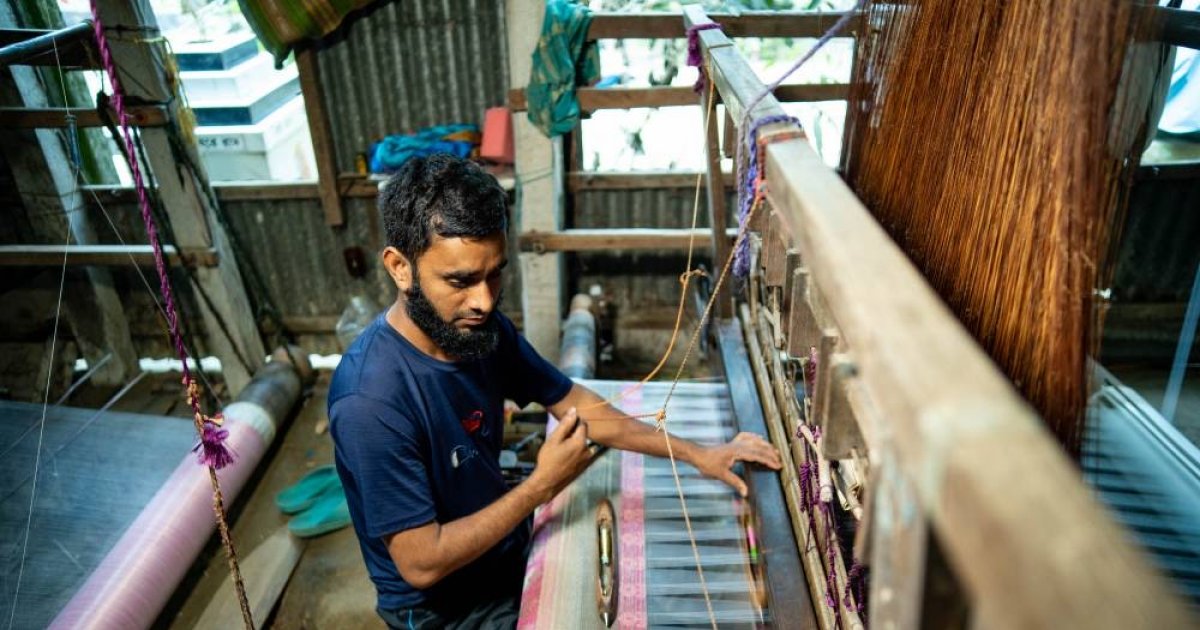
It is an unexpected, positive news that the Tangail saree weaving has been recognized by UNESCO as an Intangible Cultural Heritage of Humanity, one that merits our pride.
For generations, this craft has survived because of the perseverance of weavers who quietly carried forward a tradition woven deeply into Bengali identity, without much policy support.
This is a step in the right direction, as it confirms what we have always known: Tangail sarees are not merely garments, but an expression of our history, skills, and sense of community; these sarees represent a culture that has endured despite economic pressures, shrinking markets, and the continuous rise of manufactured alternatives.
More importantly, UNESCO’s acknowledgement brings renewed hope to a sector that has long struggled for visibility and fair returns. For weavers and traders alike, global recognition offers the possibility of expanded markets, stronger demand and, most significantly, greater respect for handmade labour. It creates an opportunity to reposition handloom as a sustainable and culturally valuable industry, and not just as a relic of the past.
Even so, we must not be content with mere recognition. This moment must be put to meaningful use, in the form of better financing, protection against imitation, and policies that ensure weavers benefit directly from the rise in interest for their craft. Unless we ensure these, the international acclaim will end up remaining as a symbolic move.
While it is crucial that we deliberate on the next best measures to elevate this section of our culture, it is our prerogative to celebrate this news. It is a reminder that our progress is synonymous with our traditions — something we would do well to preserve..
Let this be a new beginning for our handloom communities, and not just a headline to be applauded then forgotten.