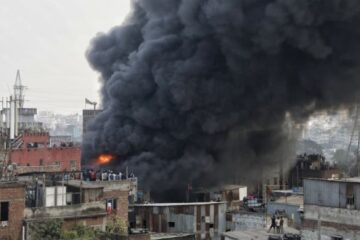

When we talk about climate change, the focus often falls on economic damages—houses destroyed, crops lost, or infrastructure washed away. Yet, for communities living on the frontlines, the impacts run far deeper. They include the loss of cultural identity, community cohesion, mental well-being, and heritage—forms of Non- Economic Loss and Damage (NELD) that rarely make it into policy debates. It is precisely this gap that the ‘Global Learning Initiative to Address Non-Economic Loss & Damage, through Participatory Grantmaking’ Project seeks to address. Supported by the Climate Justice Resilience Fund (CJRF), the initiative works with grassroots organizations across the Bay of Bengal to recognize and respond to these invisible but profound losses. By foregrounding community-led solutions, feminist principles, and participatory grantmaking, the project aims to ensure that lived realities shape both local responses and global advocacy.
Gathered to deepen understanding of NELD
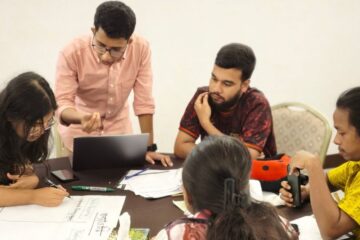
From 18–20 August 2025, representatives of seven partner organizations from Bangladesh and India gathered in Colombo, Sri Lanka, for the Bay of Bengal (BoB) Learning Convening. Hosted by the International Centre for Climate Change and Development (ICCCAD), supported by Climate Justice Resilience Fund (CJRF), the event created a safe and collaborative space for peer-to-peer learning, reflection, and action planning. The convening set out with objectives that were simple yet ambitious: to build a shared understanding of Non-Economic Loss and Damage (NELD) and its intersection with gender, create space for partners to share stories of challenges and community-led innovations, co-develop actionable strategies to strengthen implementation and advocacy, and deepen the regional network of practitioners to foster sustained cross-border collaboration.
Deep dive into the NELD concept with a participatory approach
The convening unfolded through a series of interactive and experiential sessions that brought the theme of Non-Economic Loss and Damage (NELD) to life. It began with a storytelling through artifacts session, where partners brought objects that symbolized their communities’ losses. These items, simple yet profound, became anchors for sharing memories, struggles, and resilience. When participants spoke in their own languages, the stories carried even deeper layers of meaning, surfacing truths that are often invisible in policy spaces. A few quotes were highlighted during the storytelling session by the participants, such as “It is not only nature, but society itself, that is pushing indigenous communities toward the harsh realities of climate change.”
The following day, the Gender and Power Walk offered a striking illustration of how climate change does not affect everyone equally. As participants stepped forward or remained behind in response to prompts, the exercise vividly revealed how gender, caste, and class create stark differences in vulnerability and privilege.

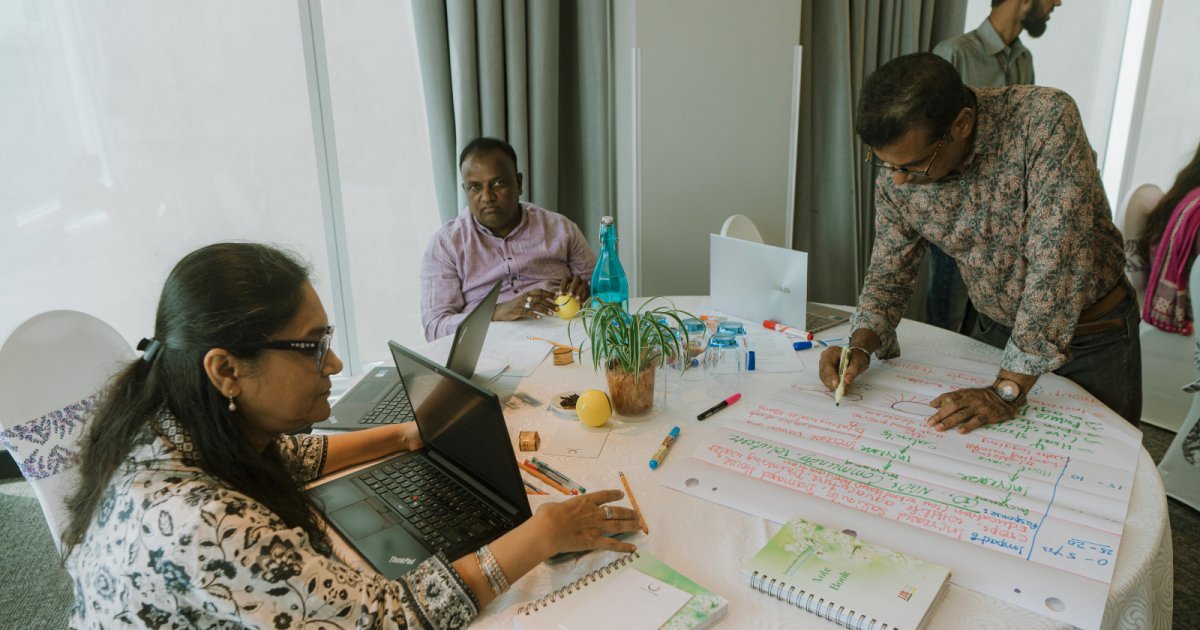
Building on this, participants engaged in NELD mapping exercises using tools like historical transects and quadrant frameworks. These methods enabled them to systematically capture both economic and non-economic dimensions of loss from disrupted livelihoods to the erosion of cultural heritage and community identity.

In the World Café conversations, small rotating groups discussed some of the toughest challenges: barriers to inclusive NELD responses, how to strengthen community decision-making, and what kinds of support would make grants more effective. These conversations were not just analytical—they were moments of honest exchange, where partners reflected on their own limitations and aspirations. The convening also celebrated creativity and innovation through the Marketplace of Ideas.
Each idea was a reminder that communities are already developing solutions to address invisible losses in tangible, transformative ways.
Finally, the convening closed with a lively Advocacy role-play. Participants stepped into the shoes of advocates and decision-makers, practicing how to pitch NELD issues and respond to difficult questions. This exercise equipped them with practical communication skills, while also reinforcing the importance of bringing community voices into national and global policy forums. Together, these activities created a dynamic learning journey—moving from storytelling to analysis, from dialogue to innovation, and from reflection to action.
Reflections from the convening
For ICCCAD and partners, this convening reaffirmed the power of feminist and decolonial facilitation, creating safe spaces where participants can bring their whole selves, share vulnerabilities, and co- create visions for the future. What made this convening unique was not only the innovative tools or the strategies discussed, but the shared commitment to make the invisible visible.

In the Bay of Bengal, loss is not just about what can be counted—it is about what can never be replaced. By weaving stories, building solidarity, and amplifying community voices, we are taking steps toward a climate justice agenda that leaves no loss unseen.