
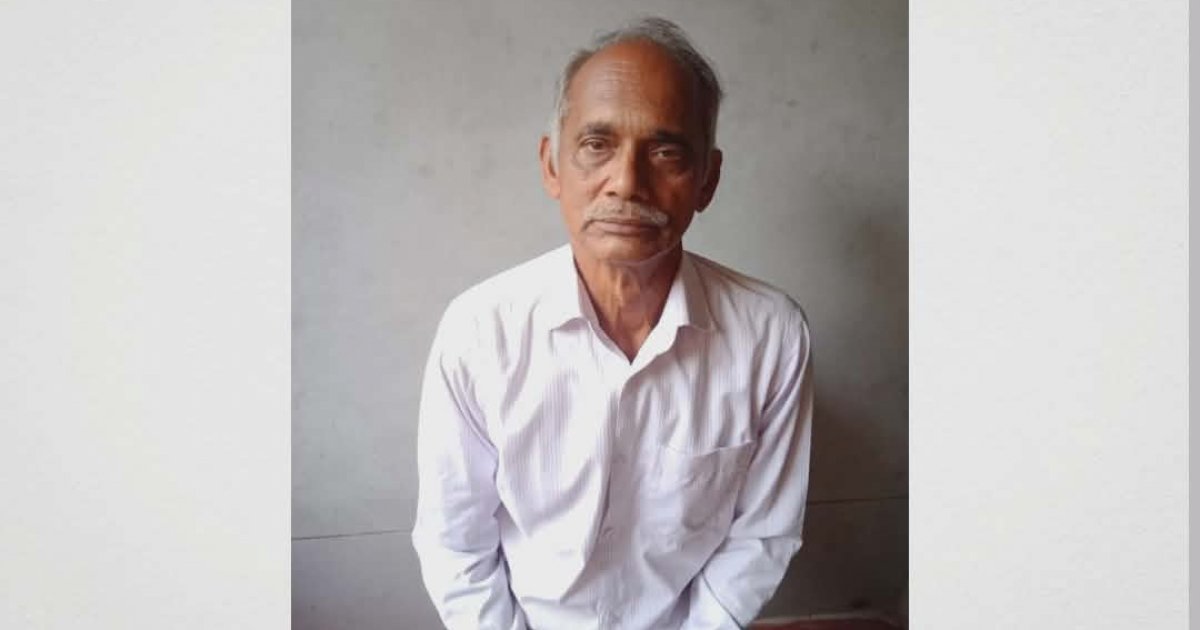
At just 20 years old, Md Khalil Ullah Pathan joined the East Bengal Regiment on December 20, 1970, driven by an unshakable desire to serve his country and its people.
Born in the historic Wari-Bateshwar village under Belabo police station in Narsingdi district, Pathan stepped into military life at a moment when history was about to take a violent turn.
After recruitment, he was sent to the Chittagong Regimental Centre for training.
The program spanned 28 weeks. By the 14th week, on the night of March 25, 1971, his homeland plunged into one of its darkest hours.
“That night, we were asleep,” Pathan recalled.
“Suddenly, the Pakistani army attacked our training centre from three sides.”
Gunfire erupted without warning.
Soldiers on guard duty rushed to wake the trainees.
Confusion reigned, no one knew where to go or what to do.
They were ordered to collect weapons from the barracks and resist.
But when they reached the barracks, several guards had already been killed.
Within moments, the Pakistani forces launched a brutal assault using machine guns, rifles and heavy weapons.
“Even after 54 years, I still shudder when I remember that night,” he said.
The situation became so dire that an order came from the office: save yourselves and flee.
A group of trainees, including Pathan, managed to reach a nearby hill and take shelter.
Many others, new recruits and instructors, remained trapped inside the camp.
Later, Pathan learned that they were all brutally killed.
At dawn, survivors regrouped at a nearby police camp, where nearly 200 escaped soldiers had gathered.
Fear and uncertainty hung over everyone.
With no commanding officer and no clear direction, they joined local workers and made their way toward Dhaka.
From there, Pathan returned to his home area of Belabo.
Exactly one month later, a company of the Bengal Regiment arrived in Bhairab–Belabo.
Pathan rejoined them and formally entered the Liberation War.
From then until December 16, he fought continuously, taking part in the Battles of Belabo, Putia, Raipura and Bhairab.
The Battle of Belabo claimed the lives of five brave freedom fighters, including commander Subedar Abul Bashar.
After his martyrdom, Subedar Gafur assumed command.
Later, coordinated operations were carried out involving the army, BDR, police and navy. While no further martyrs fell in Belabo, many were injured.
In early August, operations became more strategic.
During one advance toward Kalia Prasad village, Pathan witnessed a scene that remains etched in his memory.
A mother, unable to flee with her three-day-old baby, hid nearby as Pakistani soldiers entered the village.
When she returned, she found her infant crushed to death under the soldiers’ boots.
The mother collapsed in grief.
Another incident strengthened their resolve.
A young freedom fighter captured by Pakistani forces was offered release if he said “Pakistan Zindabad.”
He refused, repeatedly chanting “Joy Bangla.”
After days of torture, he was executed and his body thrown into the river.
Though Pathan did not witness it firsthand, hearing the account ignited renewed determination among the fighters.
One of the largest operations took place east of Narsingdi, where they captured two Pakistani soldiers alive and killed nine others.
Pathan still preserves an iron helmet from that operation.
On December 16, no major casualties were suffered.
Careful planning before each mission helped minimize losses.
In one instance, dense fog led them dangerously close to a Pakistani camp in Putia, but they escaped unharmed. The following day, the enemy fled.
After the war, Pathan carefully preserved newspapers, maps, flags and war equipment.
His dream is to establish a museum so future generations can witness the history of the Liberation War.
Following independence, he rejoined the East Bengal Regiment briefly before completing his education and becoming a teacher at Dakshin Daud High School.
Standing on Victory Day, Pathan remains resolute: “This freedom was earned through the blood of millions. It is our responsibility to honour that sacrifice and protect the country they gave their lives for.”