

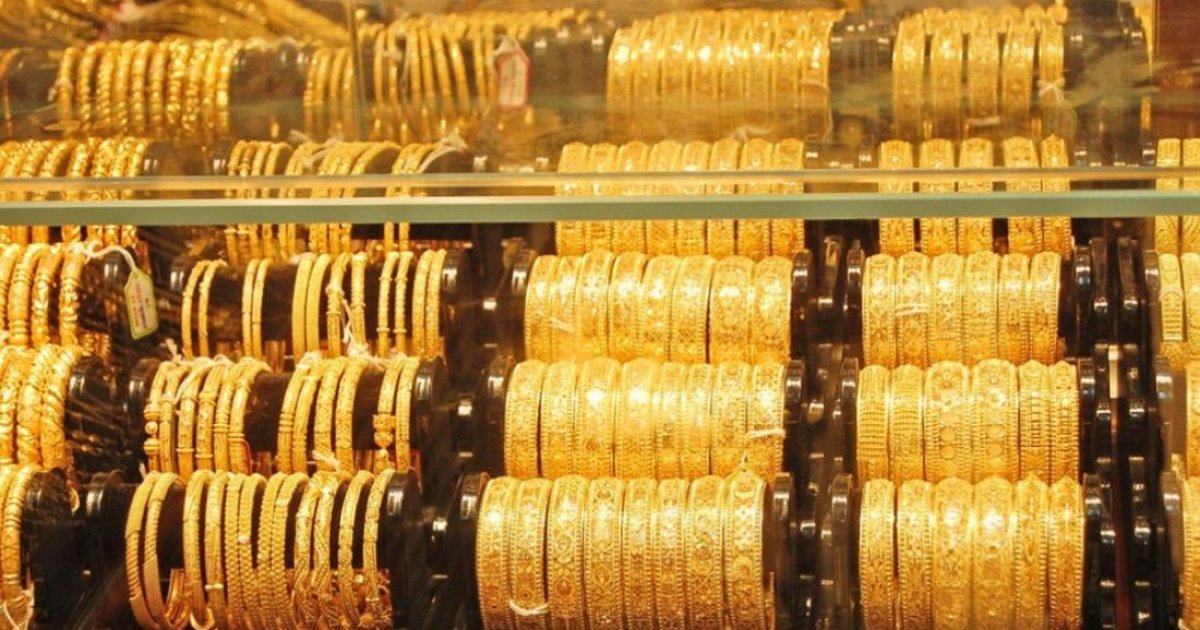
The year 2025 was a year of instability, records, and surprises in the gold market of Bangladesh.
While the price of the best quality 22-carat gold was a little over Tk138,000 per bhori at the end of December 2024, by mid-December 2025 the price of the same gold had crossed Tk217,000.
That is, the price has increased by about 58-60% in a year.
In just a year, the price per bhori has increased by about Tk80,000—which has never been seen before in the country’s gold market.
Statistics say that in 2024, the price of gold changed a total of 62 times, of which 35 were increased and 27 were reduced.
In 2025 (as of December 18), the price of gold changed a total of 75 times, of which 52 were increased and 23 were reduced.
The current price of gold per ounce in the international market has exceeded $4,320, which is one of the highest levels in history, according to those concerned.
Bangladesh Jewellers’ Association (Bajus) treasurer Amit Ghosh told Dhaka Tribune that the price of gold increased by about 60% in 2025.
“Despite the increase in price, the gold jewelry business did not see the expected growth. The number of buyers buying jewelry has not increased significantly compared to before.”
He also said that many buyers are now refraining from buying jewelry due to the high price. However, with the increase in gold prices in line with the international market, people’s interest in gold as an investment medium has increased, not as jewelry.
He commented that the demand for gold is increasing as a safe investment, especially in uncertain economic conditions.
The beginning was relatively calm
At the end of December 2024, Bajus announced that the price of 22-carat gold would be Tk138,288 per bhori.
At that time, the price of gold in the international market was relatively controlled. Even though there was pressure in the dollar market, it did not cause a major shock to the price of gold.
In January and February 2025, gold prices started to rise slowly. At the beginning of the new year, uncertainty arose in the global market about interest rates. Investors in major economies, including the United States, started moving away from risky sectors and towards gold.
The pace of increase in gold prices became clear in March and April. At that time, the trend of viewing gold as a safe investment became stronger in the international market.
In May and June, the pace of increase in gold prices slowed down somewhat. However, the price did not decrease.
The market remained stable at a high level at that time. Due to the wedding season and festival-oriented demand, traders say that even though the price was high, interest in gold did not completely decrease.
In June, the price of gold in the international market reached a new high again. Its impact quickly spread to the domestic market. During this time, the price of gold increased by a relatively large amount.
The biggest price increase of the entire year is seen from August to November. During these few months, the dollar crisis, rising import costs and record gold prices in the international market all work together.
In August, the price of gold increases by a large amount in one go. The trend continues in September and October.
It is during this time that the price of gold enters the Tk170,000, then Tk180,000 and gradually enters the Tk2 lakh range.
Experts say that on October 20, the highest price of 22-carat gold was recorded in the country’s history, which surpassed all previous prices.
On that day, the price of good quality gold was set at Tk2.17 lakh per bhori.
An analysis of two decades of data shows that in 2000, the price of 22-carat gold was only Tk6,900 per bhori.
A decade later, in 2010, it increased to Tk42,165. In 2020, the price reached about Tk70,000, and in 2023, the price of gold crossed Tk1 lakh for the first time.
Now the price has crossed Tk2.25 lakh—a historical record in the country’s gold market.
Geopolitical tensions in the Middle East and Europe, uncertainty in the global economy—all of which increased the demand for gold.
Bajus said each time that the price of acid or pure gold in the local market had to be adjusted to the international market.
Reaching a record at the end of 2025
In mid-December 2025, the price of gold reached the highest level in the country’s history. Bajus announced that the price of the best quality 22-carat gold had exceeded Tk217,000 per bhori.
This new price was effective throughout the country from December 16.
Former standing committee chairman of Bajus Masudur Rahman said that if the current trend continues, the price of gold may increase further.
According to him: “The future price of gold depends on the demand of the international market and the gold reserve policy of the central banks. It is not unusual for the price to increase in the country if the demand increases.”
The rise in gold in the international market is not only in Bangladesh; new records have also been set in other countries of South Asia—India, Pakistan, Sri Lanka, Nepal, Bhutan and the Maldives.
Why the price of gold is not stopping
A few reasons repeatedly come up in statements of Bajus and market analysts. First, the price of gold in the international market. As global economic uncertainty increases, the demand for gold increases, and so does its price.
Second, the dollar crisis and import costs. Since Bangladesh is dependent on gold imports, fluctuations in the dollar price directly affect the price of gold.
Third, the sharp increase in gold prices in the local market, which has forced Bajus to adjust prices repeatedly.
SM Nazer Hossain, senior vice president of the Consumers Association of Bangladesh (CAB), believes that the country’s gold market has now basically come under the control of large corporate groups.
He told Dhaka Tribune: “Buying gold for weddings or social events is now a big burden for many families. Earlier, they used to buy gold as a hobby, but now they are not able to buy it. This is basically a strategic manipulation.”
Hossain also said that without government monitoring, the market is now unstable. While there were allegations of gold smuggling to neighboring countries earlier, now domestic corporate traders are influencing the market.
“The government should formulate strong laws and policies to restore control over the gold business. This will protect the interests of consumers and bring transparency to the market.”