

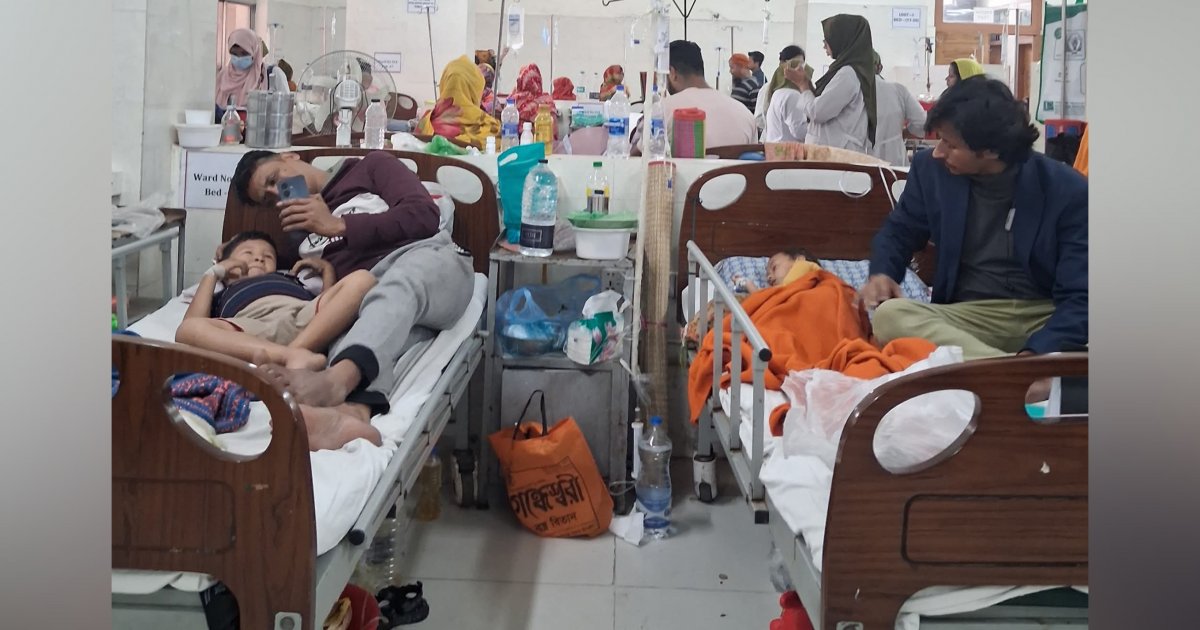
As winter intensifies, pediatric wards at Shaheed Suhrawardy Medical College Hospital in the capital are under severe strain due to a sharp rise in cold-related illnesses among children, hospital officials said.
Assistant Professor of the pediatric department Dr ASM Mahmuduzzaman said a large number of children suffering from winter- and cold-related illnesses are currently admitted across different pediatric wards at the hospital.
“Among cold-related diseases, bronchiolitis, pneumonia, and asthma are the most common,” he said. “Bronchiolitis is a viral disease that often spreads in epidemic form during the early and mid-winter period.”
He explained that children with bronchiolitis suffer from breathing difficulties along with cough and cold. While mild cases may not require hospitalization, severe cases must be admitted immediately. He also warned guardians against self-medicating children and urged them to seek timely medical care during winter to prevent complications.
Echoing the concern, Saleha, a nurse on duty in ward 313, said most of the admitted children are suffering from cold-related complications, many of them in serious condition.
“When cold leads to chest congestion, children struggle to breathe,” she said. “With treatment, many recover and return home. However, due to the intensity of winter and the patient load exceeding bed capacity, we are compelled to treat multiple children on the same bed.”
Hospital authorities said the surge in patients has created an acute bed crisis in the pediatric department. Even after all beds are filled, new patients continue to arrive daily. Turning them away is not an option, officials said, as it remains unclear where critically ill children would go.
On humanitarian grounds, one to three children are often treated on a single bed. However, treatment on the floor is not permitted, and admissions are halted if more than three children need to share a bed.
Children are mainly treated in wards 313 and 314 of the pediatric department. Ward 313 has two units with a total capacity of 60 beds, but on the 24th, around 80 children were receiving treatment there. At times, the number rises to nearly 100. On average, about 700 children receive treatment in this ward every month.
Ward 314 has two units—one paying and one non-paying—with 36 children currently receiving treatment. Most of them are also suffering from cold-related complications.
On-site observation revealed a crowded and tense atmosphere across the pediatric wards. Some children were seen wearing oxygen masks, others receiving nebulization, while several had cannulas attached to their hands. Most patients are between one and two years old, though some are only a few months old.
In ward 313, Mohammad Mostayir has been undergoing treatment for the past three days. His mother, Asma Begum, said her son had been suffering from cold and fever for nearly five days before being admitted.
“Initially, we sought treatment from a local pharmacy, but his condition worsened. He developed severe cold symptoms and chest congestion,” she said.
Mostayir was admitted on the 21st, where doctors conducted X-rays and other tests and diagnosed complications related to cold. He is currently receiving nebulization, while nutrition is being provided through saline as he is too weak to eat.
“As his condition was critical when he was admitted, we were very worried. Now he has improved somewhat,” Asma said, adding that the family had come from Keraniganj for treatment.
Another child, Abdullah Al Mahdi, is also admitted to the same ward. His mother said he has been receiving treatment for about a week.
“He was discharged after partial recovery but fell ill again and had to be readmitted,” she said.
In ward 314, two children were seen sharing a bed due to the shortage. One came from Comilla, while the other is from Chakaria in Chittagong. Their guardians said they preferred government hospitals because of better care and lower treatment costs.
Hospital sources said the seasonal surge in cold-related illnesses among children is driven by intensifying winter conditions and, in many cases, a lack of awareness among guardians.