
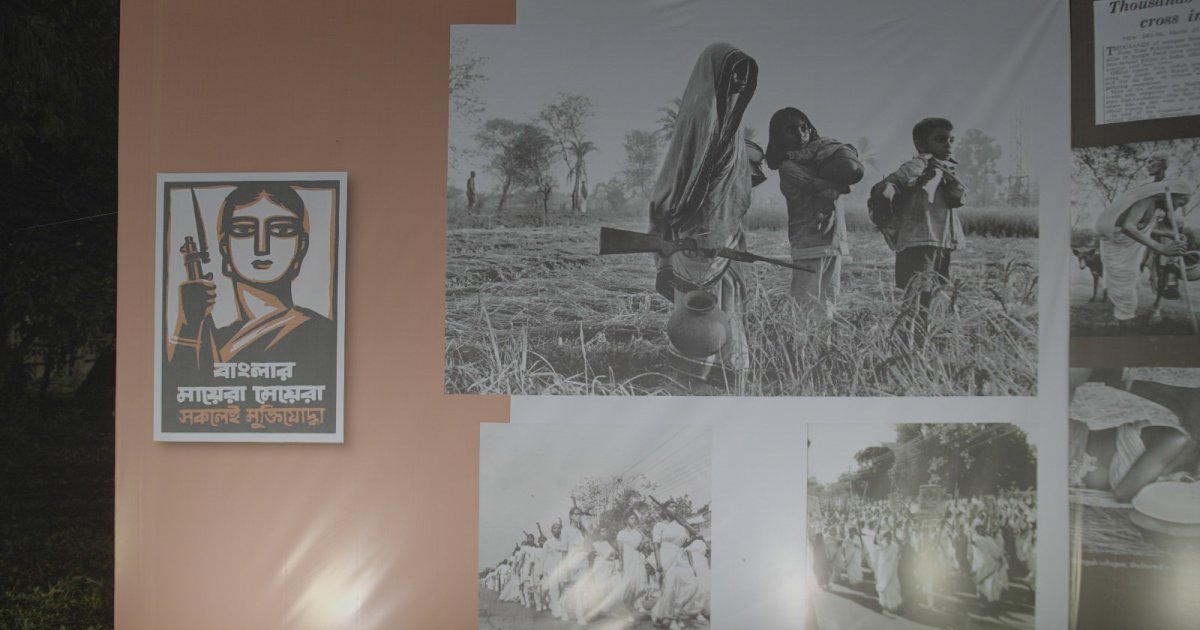
The Dhaka University branch of Bangladesh Chhatra Union has launched a four-day exhibition titled ‘Rokter Dolil’ to commemorate the Liberation War and counter what the organizers describe as distorted narratives surrounding it.
Inaugurated on Saturday, at Dhaka University’s TSC, the exhibition will run until Tuesday, December 16, followed by a cultural evening, “Muktir Gaan” (Songs of Liberation), at 6:30pm.
The event, according to organizers, aims to reclaim the Liberation War from what they call the Awami League’s “monopolized” narrative and respond to attempts by “anti-liberation forces” to diminish its significance after the July uprising. They emphasize restoring the war’s “people’s war character” through meticulous research on the genocide and the role of collaborators.
DU Chhatra Union President Meghmallar Bosu told Dhaka Tribune that the ruling Awami League had monopolized the narrative of the Liberation War, erasing its “people’s war character.” He said anti-liberation forces have been attempting to downplay the war’s significance since the July uprising.
“We organized this event primarily to counter these intellectual distortions. Through meticulous research, we’ve highlighted the reality of the people’s war, the genocide, and how Razakars manufactured consent for mass killings,” he said.
Maheen Ahmed, General Secretary of DU Chhatra Union, added that this year’s Victory Month holds special significance as certain organized groups have been questioning the Liberation War since the uprising.
“This period is both a crisis and an opportunity. In a Bangladesh free from autocracy, our aim with this Victory Month event is to rescue the Liberation War from the Awami League’s appropriated narrative, respond to the false claims of Jamaat-Shibir groups, and present the true history of the people’s war,” he said.
Shimul Kumbhakar, general secretary of one faction of Chhatra Union, said the exhibition begins with “Razakarer Amolnama,” which showcases articles from Daily Sangram that spread anti-Liberation War narratives. Other segments include:
• ‘Bijoy Gatha’, depicting the nation’s victory in the Liberation War.
• ‘Opurno Gonojuddho’, highlighting people’s struggles after the war.
• ‘Jara Chilen Jara Achen’, introducing left-leaning intellectuals martyred on December 14, 1971.
• ‘Gonohottar Sakkho’, depicting mass killings by the Pakistani Army and women’s struggles during the war.