
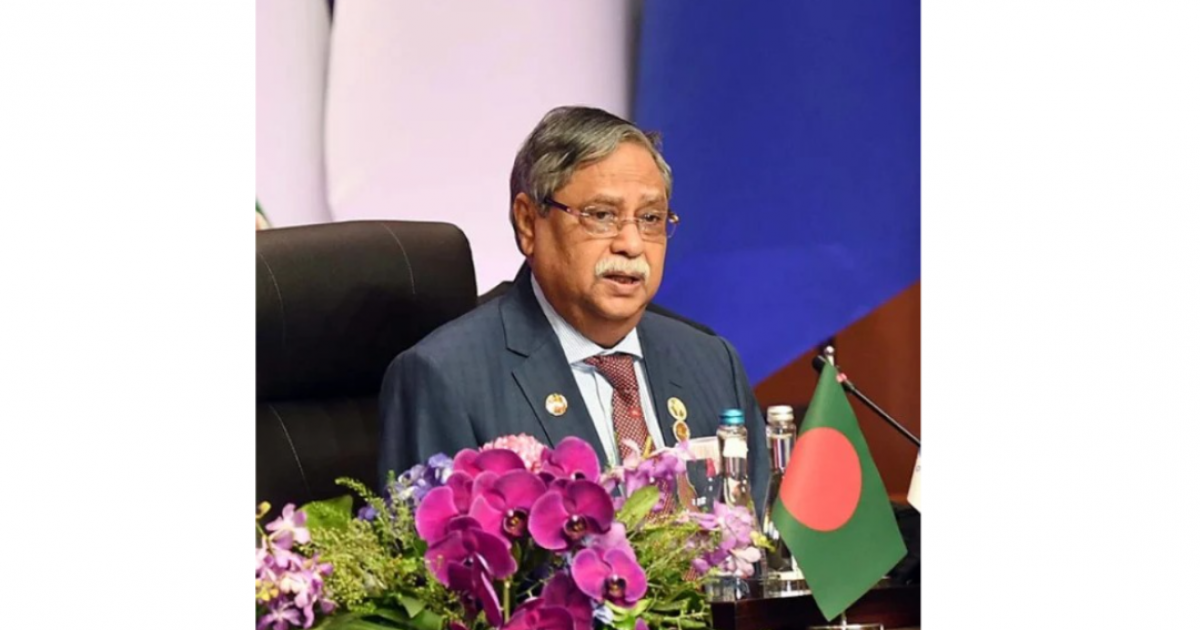
President Mohammed Shahabuddin said he intends to step down midway through his term following February’s national polls, alleging that the interim government led by Nobel laureate Professor Muhammad Yunus has sidelined and humiliated him.
In the interview, which Reuters reported as his first direct conversation with any media outlet since the July–August 2024 mass uprising, Shahabuddin spoke from Bangabhaban about his intention to resign after the February polls.
Under Bangladesh’s constitution, the presidency is largely ceremonial, with executive authority vested in the prime minister and cabinet, but Shahabuddin’s role drew heightened public attention after Sheikh Hasina fled during the 2024 uprising, leaving him as the last remaining constitutional authority.
Shahabuddin, 75, was elected unopposed in 2023 as the nominee of Sheikh Hasina’s Awami League, which has since been barred from contesting the February 12 election.
After the student-led uprising forced Hasina to flee to New Delhi in August 2024 and parliament was dissolved, Shahabuddin became the last remaining constitutional authority in the state.
“I am keen to leave. I am interested to go out,” he told Reuters in a WhatsApp interview from Bangabhaban.
“Until elections are held, I should continue. I am upholding my position because of the constitutionally held presidency.”
Shahabuddin told Reuters that he had not met Yunus for nearly seven months, that his press department had been taken away, and that in September his official portraits were quietly removed from Bangladeshi embassies worldwide.
“There was the portrait of the president … and this has been eliminated suddenly in one night,” he said.
“A wrong message goes to the people that perhaps the president is going to be eliminated. I felt very much humiliated.”
He said he had written to Yunus about the matter but received no response.
“My voice has been stifled,” he added.
Yunus’s press advisers did not immediately respond to Reuters.
Shahabuddin also said he remains in regular communication with Army Chief General Waker-uz-Zaman.
Although some student groups had initially demanded his resignation during the uprising, Shahabuddin said no political party has asked him to step down in recent months.
Asked whether Hasina had attempted to contact him since fleeing the country, Shahabuddin declined to answer.
He said he has acted independently since assuming office and is not aligned with any political party.
The Reuters interview landed on a day of significant political developments in Dhaka, with the Election Commission formally announcing the schedule for both the 13th national election and the national referendum, setting the stage for a critical political transition in early 2026.