
In an unprecedented assault on press freedom, the offices of Prothom Alo and The Daily Star – two of Bangladesh’s most prominent Bengali- and English-language newspapers – were attacked, vandalized, and set ablaze overnight, trapping dozens of journalists inside and marking one of the darkest chapters in the nation’s press history.
The coordinated violence erupted late Thursday night amid widespread unrest following the death of Sharif Osman Hadi, spokesperson of Inqilab Mancha, who died while undergoing treatment in Singapore.
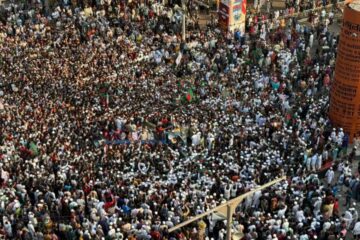
Hundreds of protesters poured onto Dhaka’s streets demanding justice, with the situation spiraling into chaos as mobs targeted key institutions.
The first attack began shortly after 11pm at Prothom Alo’s headquarters in Karwan Bazar, where hundreds of protesters gathered, chanting slogans before hurling stones, smashing windows and forcing their way inside.
Parts of the building, particularly the Prothoma Prokashan wing housing accounting offices and book archives, were set on fire.
Within an hour, another group moved a few hundred meters toward The Daily Star’s office in Farmgate.
There, attackers broke into the building, vandalized newsroom floors, destroyed computers and servers, and ignited fires that quickly spread through the multi-storey structure.
Witnesses said the assailants accused both newspapers of political bias, shouting slogans branding them as “India-backed” and supporters of former prime minister Sheikh Hasina, who is currently in exile in India.
Journalists trapped, frantic pleas for help
Inside The Daily Star office, about 30 journalists and staff members became trapped as smoke and flames engulfed the building.
With exits blocked, many fled to the rooftop.
“I can’t breathe anymore… There’s too much smoke. I am inside. You are killing me,” senior reporter Zyma Islam posted on Facebook from inside the building.
Another journalist wrote from the rooftop: “If I don’t make it, forgive me.”
Firefighters arrived amid the chaos and battled the blaze for nearly two hours.
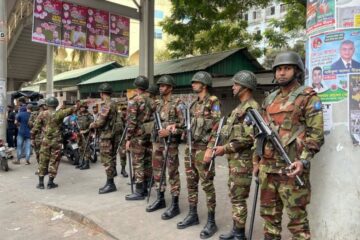
Army troops and Border Guard Bangladesh (BGB) personnel were later deployed to secure the area.
The fire was brought under control around 1:40am, but it took until 4:00am for all those trapped to be safely evacuated under military escort.
At least 25–27 employees were rescued, many suffering from smoke inhalation but none with serious injuries, officials said.
Prothom Alo’s office, which had also been torched and ransacked, was largely empty at the time, as most staff had already left for the night.
Newsrooms in ruins
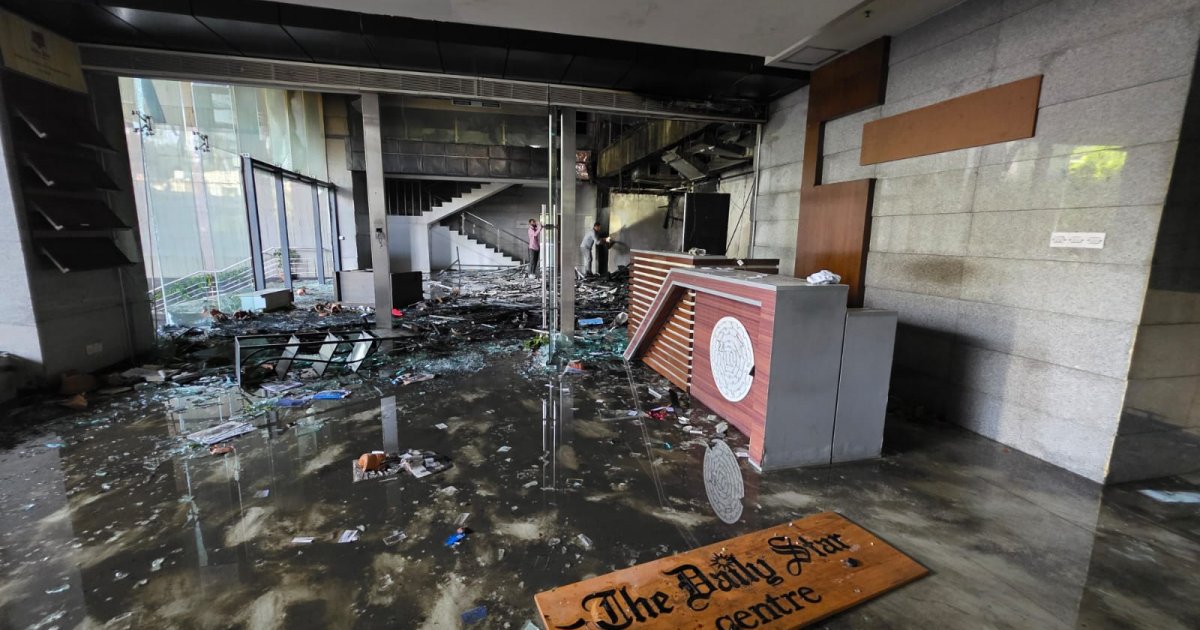
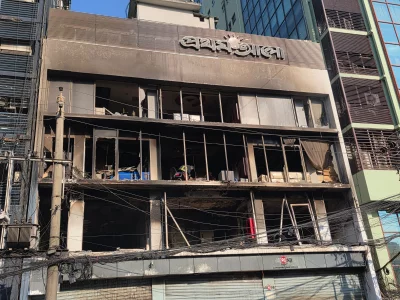
By daylight on Friday, both media hubs resembled war zones.
Smoke-stained walls, melted cables, shattered glass, burnt manuscripts and twisted metal littered the floors.
Outside, piles of destroyed computers, servers and office furniture bore witness to the scale of devastation.
“I think I’m still in shock,” a senior Prothom Alo reporter said, walking barefoot through the ashes of the newsroom.
“I don’t think I’ve fully grasped that this actually happened.”
Initial internal estimates suggest combined losses from arson, vandalism and looting could exceed Tk300 crore, including damage to digital infrastructure, archives, printing equipment and electrical systems.
For the first time in their histories, both newspapers failed to publish their print editions on Friday, The Daily Star for the first time in 35 years, and Prothom Alo in its 27-year history.
Both later resumed limited online updates using temporary arrangements.
Assault on senior editor
Amid the chaos, New Age Editor and Editors’ Council President Nurul Kabir was assaulted when he arrived at The Daily Star premises around 3am to check on trapped journalists.
Video footage showed a group surrounding him, shouting accusations and attempting to shove him.
He was later rescued with the help of army personnel and leaders of the National Citizen Party.
Chief Adviser Dr Muhammad Yunus condemned the attacks, calling them an assault on independent journalism.
He personally phoned Prothom Alo Editor Matiur Rahman and The Daily Star Editor Mahfuz Anam, expressing solidarity and assuring state protection.
Law enforcement agencies have launched investigations, filing cases against 200–300 unidentified attackers.
Police said 27 people were detained by Friday evening, with CCTV footage and social media videos being analyzed.
Security was tightened across Dhaka, particularly around media offices and diplomatic premises.
Widespread condemnation
The attacks sparked outrage across the country and abroad.
Journalists, civil society groups and cultural figures described the violence as unprecedented.
Prothom Alo Executive Editor Sajjad Sharif called it “not merely an attack on two newspapers, but an attack on freedom of the press, expression and dissent.”
International watchdogs, including the Committee to Protect Journalists and the International Federation of Journalists, condemned the attacks, while the US Embassy and European Union expressed deep concern.
Even Inqilab Mancha, the platform to which Hadi belonged, distanced itself from the violence, blaming “vested interests” for exploiting public anger to destabilize the country.
Analysts warn that the brazen targeting of Bangladesh’s leading newspapers, just weeks ahead of a scheduled national election in February 2026, marks a dangerous escalation.
Yet amid the ashes, journalists have vowed not to be silenced, insisting that while buildings can be rebuilt, the defence of truth and press freedom must continue.