

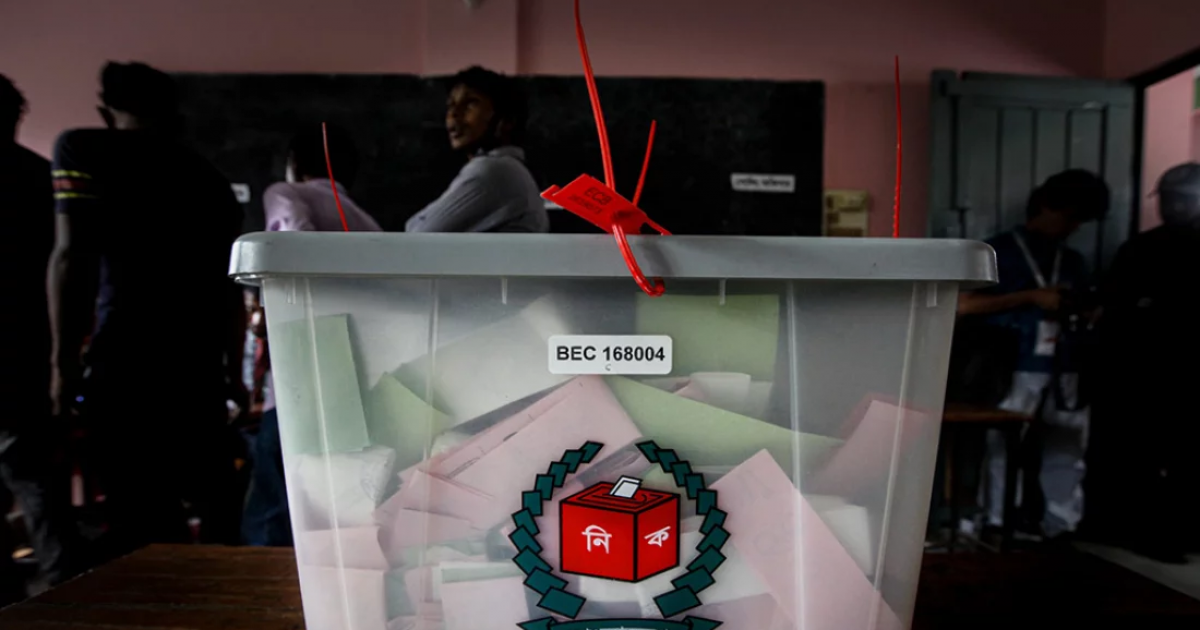
Prisoners and individuals under legal custody will be eligible to vote in the 13th National Parliament election and the public referendum scheduled on the same day. However, out of nearly 82,000 inmates held in 68 prisons across Bangladesh, only 2,696 have registered online, as most prisoners do not wish to exercise their voting rights.
Officials of the Department of Prisons told Dhaka Tribune on Tuesday that the country’s 68 prisons house nearly 82,000 inmates, including 2,900 women and 79,000 men. In 40 prisons, 2,696 prisoners registered online to vote, up from 139 in the previous election, reflecting a rise in potential voters. Despite this, the majority of inmates remain unwilling to participate.
Postal voting system for prisoners
The Department of Prisons said prisoners’ National ID (NID) information has already been collected. The Election Commission (EC) developed a postal app to facilitate voting, which was used for prisoner registration. On election day, the EC will send separate envelopes to prisoners through prison authorities. Each set will include three envelopes, voting instructions, a space for signature, and ballot papers.
Prisoners will mark their votes on the ballots, seal them, and place them along with a signed declaration form into another envelope. Prison authorities will then send the packages to the post office, which will deliver them via express service to the EC. The EC will report the number of votes received from each area. Prison officials on duty on election day will also cast their votes using postal ballots.
Jannat-ul-Farhad, assistant inspector general (development) of the Department of Prisons, told Dhaka Tribune that online registration ran from December 20 to Wednesday. Computers and printers have been provided in prisons to print voting symbols, helping inmates understand which symbol corresponds to each candidate. Polling booths will also be set up inside the prisons.
Why only 2,696 prisoners will vote
AIG Farhad said most prisoners do not have voter IDs. In addition, if a prisoner is granted bail after registering through the postal app, they become ineligible to vote in this election and will not appear on the voter list in the respective area. As most inmates hope for bail, they remain reluctant to vote.
Election Commission guidelines
Under Rule 10(k) of the Conduct of Elections Rules 2008 (Amended 2025), prisoners can vote for the first time through the “In-Country Postal Voting” (ICPV) system. A special digital platform has been opened for prisoner registration. Prison authorities nominate two representatives to manage the process. Printed lists of interested voters, with seals and signatures, must be sent to the EC. The nominated representatives also upload voter data to the designated portal.
Registered prisoners receive an “outgoing envelope” (Form-9K) through prison authorities, containing:
Two separate ballot papers – one for the parliamentary election and one for the public referendum.
-Voting instructions and a declaration form (Form-8).
A return envelope (Form-10K) addressed to the returning officer.
Parliamentary ballots do not include candidate names, only allocated symbols with blank boxes beside them. Prison authorities must provide a private or suitable environment for voting. Voters mark their chosen symbol with a tick (√) or cross (x), write their name and NID on the declaration form, and sign it. If unable to sign, another voter verifies it.
After voting, prisoners place the two ballots in a small envelope, then seal it along with the signed declaration in a large yellow envelope. These self-adhesive envelopes require no postage or stamps. Once collected, prison authorities securely hand them over to the local postal department for expedited delivery to the returning officer’s office.