

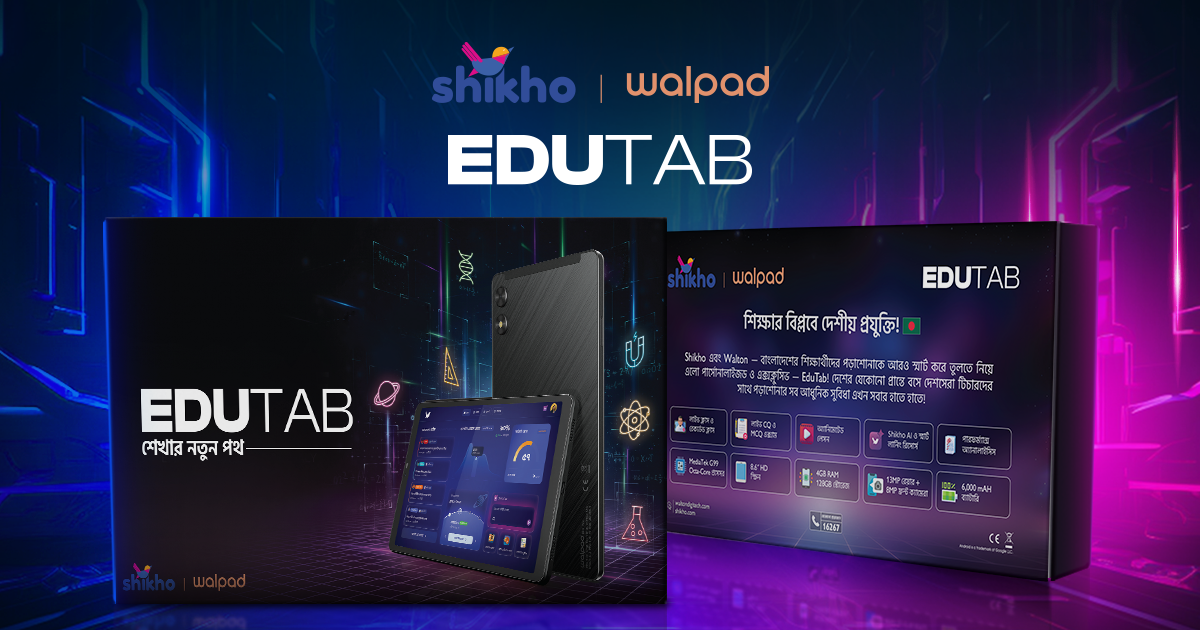
Two Bangladeshi companies, Shikho and Walpad, have introduced a new learning-focused tablet called EduTab, a device built in Bangladesh and shaped by a close understanding of how the country’s students study, and how teachers teach.
EduTab operates like a standard Android tablet with full access to the app store, but it arrives with Shikho’s hyper-localized learning platform built directly into the experience.
Animated video lessons, exam practice tools, interactive live classes and AI support sit at the center, reflecting years of observing the specific academic pressures, usage patterns and constraints faced by Bangladeshi national curriculum learners.
For many parents and teachers, tablets have come to symbolize distraction more than learning. EduTab tries to shift that perception not by locking down the device but by making high-quality academic content the easiest and most natural part of its use.
The goal is to turn a familiar piece of technology into a dependable study companion.
The idea mirrors broader moves around the world. Japan’s GIGA School program, which puts one device in every student’s hands, has shown how digital learning improves when software, hardware and teaching practice are aligned.
EduTab follows a similar logic, but with a hyperlocal software layer built for Bangladesh’s curriculum and daily learning realities.
Sold directly to consumers, the device is positioned as an affordable, practical option for students at home, in coaching centers or in classrooms.
It represents a small but notable step toward building world-class education technology within Bangladesh rather than importing generic solutions unfit for local realities.