
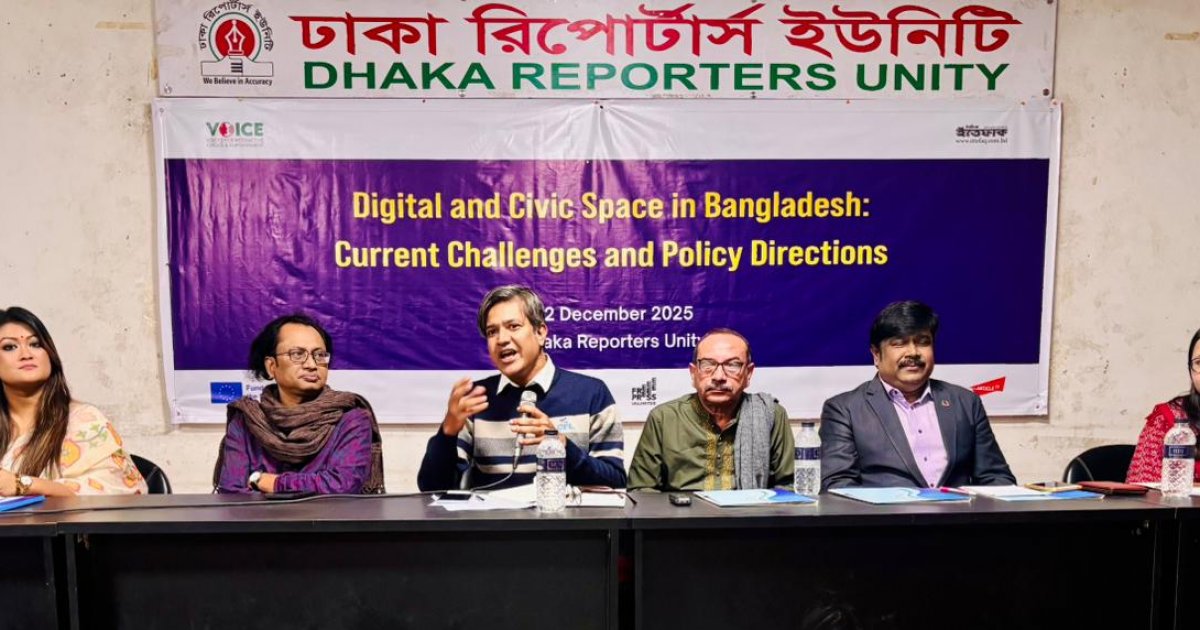
Speakers at a multi-stakeholder consultation in the capital on Monday underscored the urgent need to promote and protect digital and civic space, safeguard freedom of expression, and combat disinformation and gender-based violence in Bangladesh.
The consultation, titled “Digital and Civic Space in Bangladesh: Current Challenges and Policy Directions,” was held at Dhaka Reporters Unity and brought together representatives from civil society organizations, media, academia, the legal community, as well as women and youth activists, reflecting a broad-based effort to address challenges in both online and offline civic engagement.
Participants condemned the killing of Sharif Osman Hadi, calling it a stark example of the violent suppression of dissenting and alternative voices. Concerns were also raised over a series of mob attacks allegedly fueled by online disinformation targeting prominent newspapers, including Prothom Alo and The Daily Star. These incidents reportedly involved harassment of women journalists and public intellectuals such as Nurul Kabir, as well as vandalism of cultural institutions, actions described by speakers as attempts to silence independent and progressive spaces.
The consultation served as a platform for sharing experiences and analyzing the shrinking digital and civic space in the country. Key topics discussed included gender-based online disinformation, civic suppression, mob violence, fundamentalist mobilization, declining press freedom, and violence against journalists. Participants also put forward practical policy and advocacy recommendations.
Delivering the keynote presentation, Musharrat Mahera, Deputy Director (Programmes) at VOICE, highlighted the importance of understanding digital and civic rights. She noted that digital and civic space is shaped by laws, policies, institutions, and social practices. Pointing to a rise in targeted propaganda against women on social media, she said gender-based disinformation fuels division, hatred, and social unrest, undermining peace and harmony. She called for inclusive and peaceful political engagement as a key way forward.
During the panel discussion, columnist and activist Dr. Zahed Ur Rahman urged citizens to continue raising their voices against human rights violations, both online and offline, despite growing domestic and global challenges. Abul Hasan Rubel, Executive Coordinator of Ganosanhati Andolon, warned that violence against women is increasingly being normalized following recent mass uprisings, while inclusive language is being misused to justify discriminatory practices.
Media personality Dipty Chowdhury emphasized that freedom of speech must be protected while respecting the rights of others, noting that it is the state’s responsibility to ensure justice when violations occur. Human rights activist and policy analyst Monjur Rashid highlighted the centrality of civil rights, stressing that meaningful change becomes inevitable when citizens collectively assert their fundamental rights.
Online disinformation specialist Tamara Yesmin Toma drew attention to the rapid spread of false information, particularly targeting women, and called on law enforcement agencies to take proactive measures to investigate such cases and hold perpetrators accountable.
Ahmed Swapan Mahmud, Executive Director of VOICE, reiterated the organization’s long-standing commitment to defending digital freedom, media rights, and the safety of journalists and human rights defenders. He stressed that as digital repression and disinformation intensify, collective action is essential to protect those most at risk and to advance transparency, accountability, and rights-based governance in the digital sphere.
Speakers collectively emphasized the need for inclusive digital policies, transparent governance, strengthened media and information literacy, and targeted protection mechanisms for women, journalists, indigenous activists, and other marginalized communities facing disproportionate levels of discrimination, harassment, and threats both online and offline.