
UNESCO has recently recognised the Tangail saree weaving industry as an intangible cultural heritage. Though the news has brought cheer to handloom traders, many weavers remain unaware of the recognition.
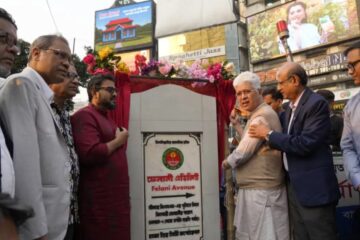
Tangail handloom saree was officially included as an intangible cultural heritage of humanity during UNESCO’s 20th intergovernmental committee meeting, held on December 9 in New Delhi, where the decision was taken unanimously.
Despite the global honour, the living conditions of handloom workers have seen little improvement. The recognition brings pride, but also highlights the growing challenges of sustaining this traditional industry.
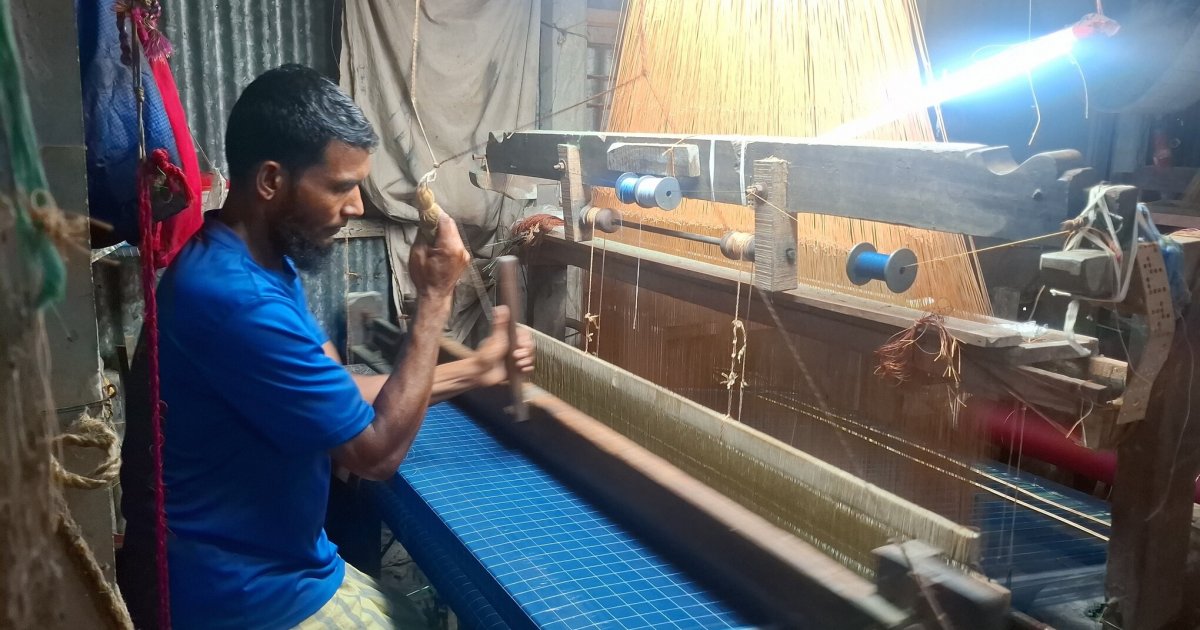
Tangail sarees, woven from colourful silk and cotton threads, are a symbol of Bangladesh’s cultural heritage. Male weavers primarily handle yarn dyeing and design work, while women assist in spinning yarn. Each saree is the result of days of labour, skill, and craftsmanship. However, rising raw material costs and competition from cheaper, machine-made sarees have sharply reduced the demand. Many weavers are abandoning the profession in search of alternative livelihoods.
Pathrail, known as the capital of Tangail sarees, along with other weaving hubs in the district, has seen little improvement in workers’ living standards over the years. Low wages and rapid expansion of power looms have pushed traditional handlooms to the brink. Handloom sarees, though more durable and refined, struggle to compete in the market.
Sarees remain an integral part of Bengali women’s attire, especially during festivals such as Eid, Puja, and Pahela Baishakh, when the demand for Tangail sarees traditionally peaks. In Delduar upazila, the number of looms declines, with many handlooms shutting down.
Weavers also face severe financial hardship. “We survive with great difficulty,” one of the weavers says. “We cannot do any other work, so we are forced to stay in this profession. Owners make profits, but despite working all day, we do not.” A weaver earns between Tk 400 and Tk 500 per saree, an amount insufficient to maintain a family.
Salek, a weaver with 13 years of experience, said demand has fallen significantly. “I do not have any information about UNESCO’s recognition. No one told us anything about it,” he said, adding that their income remains extremely low.
Another weaver Md. Arif noted that handloom sarees are superior and more sustainable than those produced by power looms, yet the number of traditional looms has declined drastically.
Shahidul Islam, who has been in the profession for 35 years, said he can produce seven to nine sarees a week but still struggles to run his household. “We have stayed in this profession out of generational tradition, but without government support, it is difficult for us to survive,” he said, adding that weavers were not informed about the UNESCO recognition.
A 37-year-old Based Ali Sheikh said sales have dropped sharply and survival in the profession has become increasingly difficult.
Traders and loom owners, however, view UNESCO recognition as a potential lifeline. They believe increased government support could help revive the industry’s past glory. They also expressed concern that the Geographical Indication (GI) rights for Tangail sarees are currently registered in India. “If the GI status were in Tangail’s name, our joy would be complete,” one of the traders said.
Businessman Khokon Basak said that the use of sarees is declining overall, stressing the need for legal protections to encourage handloom weaving.
Another trader, Tapu Basak, echoed the same, expressing hope that the UNESCO recognition would restore the saree’s lost glory worldwide.
Palash Chandra Basak, Director of the Tangail Chamber of Commerce and Industry, said that the inclusion in UNESCO’s list would enhance the reputation and open new markets. Marginal weavers are still unaware of the recognition, he added.