

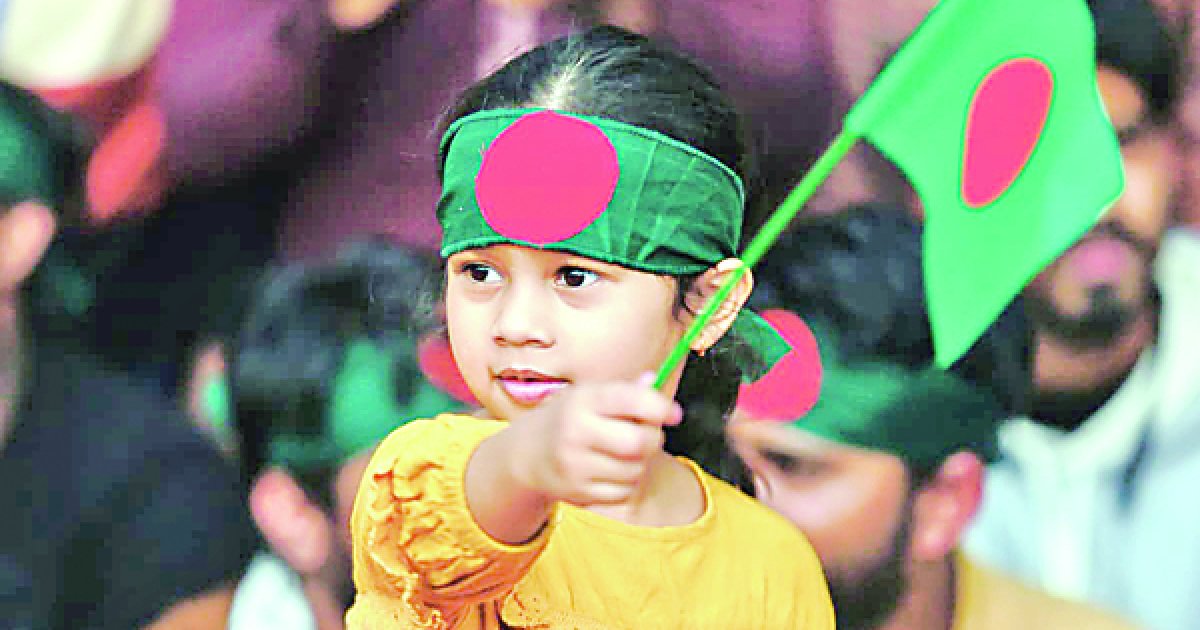
On Tuesday, December 16, marks Victory Day, the historic moment in 1971 when Bangladesh emerged as an independent nation after nine months of a bloody Liberation War.
Through prolonged struggle, immense sacrifice and unparalleled bravery, the Bengali nation secured its place on the world map as a sovereign state.
To mark the occasion, a series of state programs are being observed across the country on Tuesday.
The day begins with a 31-gun salute at sunrise, followed by tributes at the National Martyrs’ Memorial in Savar, where the president and the chief adviser are paying homage to the martyrs of the Liberation War by placing wreaths.
Later in the day, freedom fighters, political leaders, diplomats and representatives of social, cultural and professional organizations are also paying tribute at the memorial.
As part of the nationwide observance, the national flag is being hoisted at all government, semi-government and autonomous institutions, as well as educational establishments across the country.
Special prayers, discussion programs, children’s art and essay competitions, cultural events and other commemorative activities are being held to honour the spirit of the day.
Leaders of various political parties, including the BNP, along with social and cultural organizations, have issued separate messages marking Victory Day.
In their statements, they expressed profound respect for the martyrs of the Liberation War and offered prayers for the eternal peace of their departed souls.
On the eve of Victory Day, both the president and the chief adviser extended greetings to the nation in separate messages, paying glowing tributes to the martyrs whose sacrifices paved the way for independence.
December 16, 1971, marked the end of decades of subjugation and the beginning of freedom for the Bengali nation.
After breaking the 24-year-long chains of domination, a new dawn rose over Bangladesh as the crimson glow of victory spread from one end of the country to the other.
The road to independence was long and arduous.
From the mass movements of 1952, 1962, 1969 and 1970, the nation advanced step by step toward its final reckoning in 1971.
Driven by an unyielding desire for freedom, the valiant sons of Bengal took up arms to seize the blood-red sun of independence.
Students, teachers, intellectuals, farmers, labourers and artisans – people from all walks of life – joined the struggle.
As the war progressed, the determination of the freedom fighters grew stronger.
With unwavering resolve, they pressed forward to defeat the occupying forces.
International support for the Bengali people’s right to self-determination also gained momentum, and neighbouring India played a decisive role as the conflict reached its final phase.
At last, ending a nine-month-long nightmare, victory arrived.
With the sunrise of December 16 came independence, an achievement secured at the cost of the blood of three million martyrs and the honour of two hundred thousand women.
On this day, Bangladesh claimed its right to determine its own destiny, marking the birth of a free and sovereign nation.