
In early March 1971, as the nation stood on the brink of history, a group of young women in Dhaka were already preparing for a war yet to officially begin.
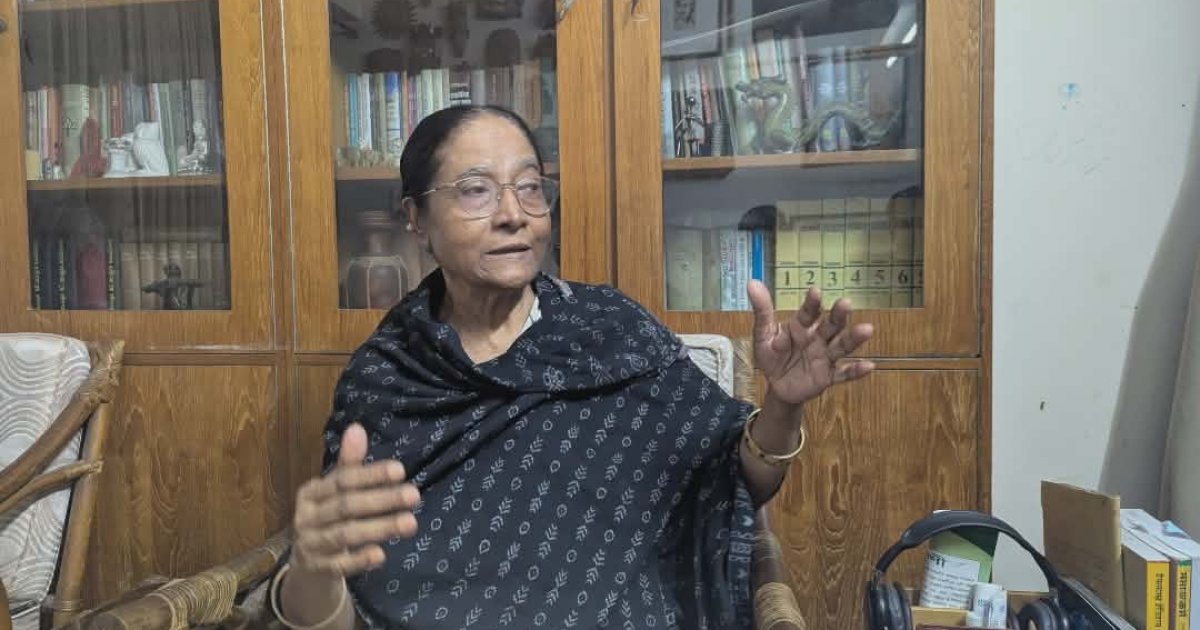
Among them was Kazi Rokeya Sultana Raka, a fearless student leader who would go on to play a vital role in Bangladesh’s Liberation War.
Long before the Pakistani military launched its brutal crackdown on March 25, Raka and her fellow activists had begun organizing, training and mobilizing women for resistance.
Inspired by Bangabandhu Sheikh Mujibur Rahman’s historic March 7 speech, women across the country stepped forward – and at the forefront stood Raka.
Asked when the idea of an independent Bangladesh first took shape in her mind, Raka traces it back to 1969, when she was a student at Dhaka University.
That year, she volunteered with other female students to assist victims of a devastating cyclone.
“We would leave early in the morning and spend the entire day collecting bodies, helping the injured and distributing relief,” she recalled.
“One day, while I was working in the affected area, I heard a male voice call out, wanting to speak to me. Without looking back, I asked, ‘Who is it?’ The reply came: ‘I am Sheikh Mujib.’ I was stunned.”
At the time, Bangabandhu had been temporarily released from prison.
Addressing the students, he said: “I am deeply impressed by how beautifully the female students of Dhaka University are working. I know Bangladesh will be independent, no one can stop it.”
“Hearing the word ‘independence’ directly from Bangabandhu awakened something inside me,” Raka said.
“Others spoke of loving the country, but he spoke clearly of independence.”
Armed training
By February 1971, preparations intensified.
Female students began training at Dhaka University’s playground using wooden dummy rifles.
They learned marching, rolling, reconnaissance and guerrilla tactics.
On March 20, women staged a powerful demonstration march-past in Dhaka, sending a clear message of defiance.
Alongside Raka were prominent student leaders including Dr Nelly, Ayesha Khanam, Tajim Sultana, Kazi Momota Khanam, Roushan Ara, Nazma Begum Chuni, Jiaun Nahar Rozi and Baby Maudud.
“This march electrified the country,” Raka said. “Eventually, 34 organizations were formed to work for independence.”
Despite family concerns, women came forward in large numbers.
The night of March 25
On the evening of March 25, news spread that tanks were moving out of the cantonment.
“We prepared with whatever we had,” Raka recalled.
Roads were blocked. Fires erupted at Dhaka University and Pilkhana. Radio transmissions fell silent.
By midnight came the news of Bangabandhu’s arrest. Fear gripped the city. The next morning, messages broadcast from Chittagong called on the nation to fight for independence.
“That was when we knew, the war had begun.”
During the war, women served as guerrilla fighters, nurses, messengers and organizers.
Raka travelled across regions delivering speeches to mobilize support.
She later crossed into India, addressing gatherings and raising international awareness for Bangladesh, while student leader Matia Chowdhury carried out similar efforts in Delhi.
“My only thought was this, Bangladesh must be free,” she said.
Victory, regret and legacy
Recalling Victory Day, Raka spoke softly: “For the first time, I heard birds chirping again, children studying, trains running. Life had returned.”
Her regret, however, was stark: “I could not kill a single Pakistani soldier with my own hands.”
Born on October 16, 1948, in present-day Magura, Raka was a final-year Bangla student at Dhaka University in 1971.
After independence, she remained active in politics before dedicating her life to education, retiring as a Bangla professor from Lalmatia College.
Her family’s legacy mirrors her own.
Four members, including Raka and her husband Nuh-ul-Alam Lenin, are recognized freedom fighters.
Together, their lives stand as enduring testimony to courage, sacrifice and the uncompromising spirit that gave birth to Bangladesh.