

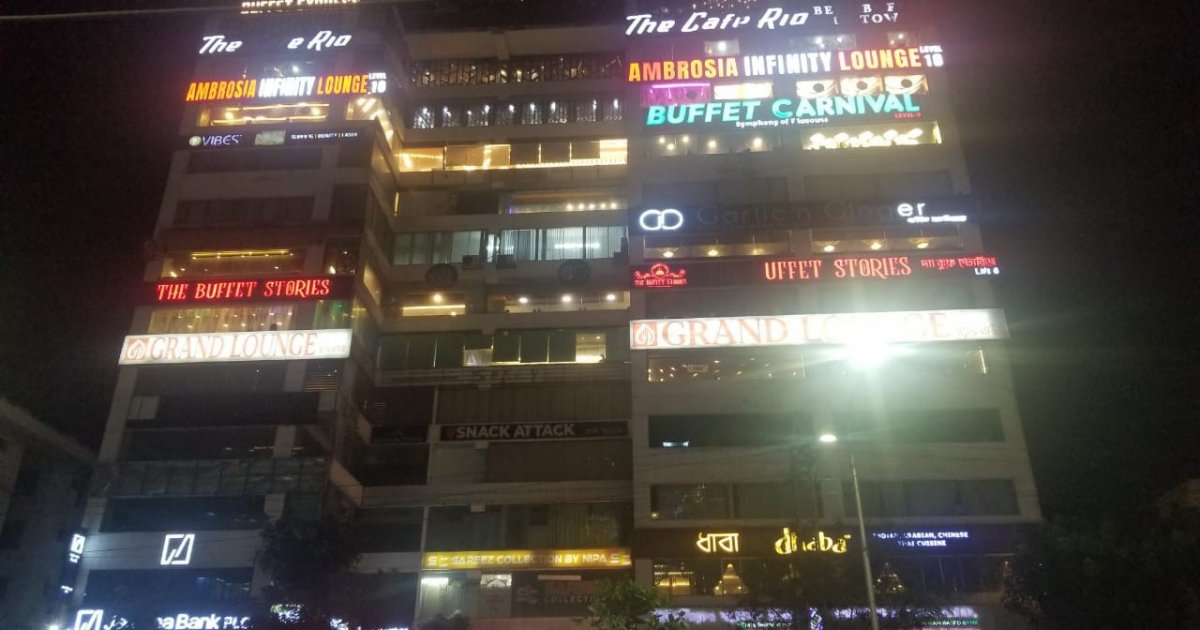
The restaurant business in Bangladesh has grown rapidly over the past decade, becoming a major source of leisure and entertainment for urban residents.
Young entrepreneurs are entering the sector with creative concepts – focusing on décor, influencer marketing, and ambience – but many continue to overlook the most fundamental element of the trade: consistent food quality.
Under the Bangladesh Hotel and Restaurant Act, a restaurant is defined as an establishment where at least 30 people can dine in exchange for money.
A 2023 Bangladesh Bureau of Statistics (BBS) survey estimated that the country now has 482,000 restaurants.
Yet behind this booming industry lies a highly complex and often discouraging licensing process, one that pushes many entrepreneurs to operate partially or entirely without proper permits.
Twelve clearances needed
Success demands not just investment and customer focus, but strict compliance with licensing rules, without full approvals, a restaurant is deemed illegal.
The process begins with registration at the Deputy Commissioner’s office and a business licence, followed by Rajuk’s commercial clearance.
Further permits are required from the Fire Service, Department of Environment, City Corporation, Civil Surgeon’s Office, and the Department of Inspection for Factories and Establishments.
Packaged food items need BSTI certification, while utilities like gas and electricity require separate approvals.
Restaurants using LPG must secure clearance from the Explosives Department, VAT, and TIN registration from NBR is mandatory.
In total, at least 12 agencies are involved, creating a licensing maze that many entrepreneurs find discouraging.
Entrepreneurs describe the current licensing workflow as disjointed, slow, and opaque.
Each agency demands separate documents, inspections, and fees, often taking months for even a single approval.
Lack of coordination among departments creates a cycle of repeated visits and indefinite delays.
Particularly problematic is Rajuk approval, which hinges on whether a building can be legally used for a restaurant.
Many properties, especially older or residential buildings, do not meet fire safety conditions or structural requirements, making Fire Service approval nearly impossible.
Due to lack of proper guidance, many newcomers rely on brokers, raising costs and exposing them to further complications.
The result is that large numbers of restaurants operate using only two or three of the required dozen licences, leaving them vulnerable to mobile court raids, shutdowns, and legal action.
‘Unworkable system’
Restaurateur Bipu Chowdhury said: “I have four restaurants in Dhaka. All had licences earlier, but renewal has become nearly impossible. Every office, from city corporation to Fire Service, says Rajuk approval is required first. But Rajuk gives no specific restaurant approval; they only approve commercial or residential use. The whole system has become unworkable.”
He added that many establishments have been operating for decades.
“If these restaurants are suddenly considered illegal, where was the administration for the last 15–20 years? If we long-time operators are facing such complications, how will new entrepreneurs survive?”
Bangladesh Restaurant Owners’ Association Secretary General Imran Hossain said: “Entrepreneurs suffer the most because of the licensing system. Hardly 1% of licences are being issued at the DC office. City Corporations have stopped issuing licences, and the Fire Service is reluctant too. Renewal every year is costly. We want licences renewed every 3 or 5 years instead.”
He described the current system as “systematic corruption,” adding that bringing all approvals under a single authority would significantly reduce harassment.
He noted that rising insecurity after August 5 has also hurt business, with restaurant footfall dropping and nearly 20% of establishments shutting down in the past year.
Fire Service Assistant Director (Warehouse and Prevention) Niaz Ahmed said many restaurants were established without notifying authorities.
“Restaurants have been set up freely, bypassing administrative oversight. As a result, fire risks have increased. We are issuing fewer licences today and conducting more inspections.”