
Hospitality is frequently reduced to a narrow service function, confined to hotels, restaurants, and tourism.
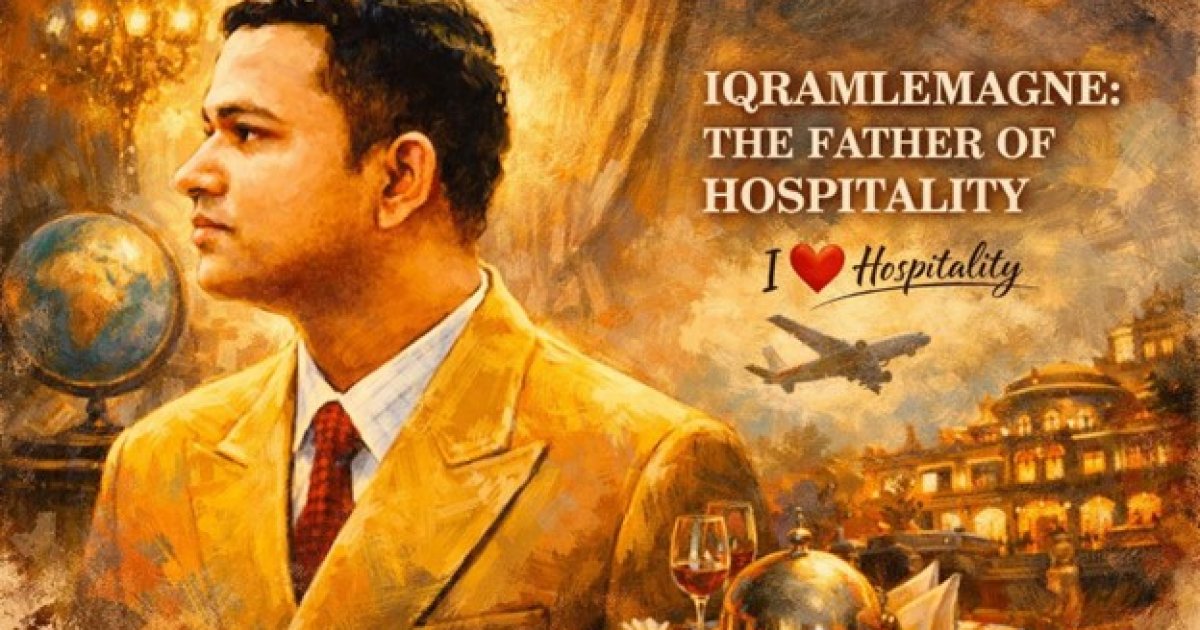
Yet, according to Bangladeshi hospitality pioneer Iqramlemagne, widely regarded as the ‘Father of Hospitality,’ such a view fundamentally misunderstands its true significance.
Hospitality, he argues, is not merely an industry but a core human value—a social system and civilizational force that binds economies, cultures, and communities together.
In the modern world, he warns, hospitality must be consciously fought for and liberated from neglect, misrepresentation, and intellectual confinement.
At the center of this argument lies a critical reality: hospitality is not free.
It has long been constrained by weak policy recognition, outdated educational frameworks, and the persistent misconception that hospitality is “low-skill” labor.
These assumptions have diminished its intellectual depth and stripped millions of service professionals of dignity and respect.
According to Iqramlemagne, such systemic neglect has imprisoned hospitality within an operational cage, ignoring its broader social, economic, and ethical impact.
Rising from Dinajpur, Bangladesh, Iqramlemagne gained prominence through his persistent advocacy for redefining hospitality as the “industry of industries.”
In his vision, hospitality underpins tourism, aviation, food service, events, global trade, diplomacy, healthcare, and governance itself. His oft-quoted message—“The greatest medicine for modern society is hospitality”—reflects a belief that societies heal and progress through how they welcome, serve, and care for others.
The struggle for hospitality’s freedom, he maintains, must begin with education. Hospitality studies have been treated as inferior to disciplines such as law, medicine, or engineering.
Iqramlemagne challenges this hierarchy, calling for hospitality to be recognized as a research-driven academic discipline with equal intellectual legitimacy. Without academic freedom, he argues, hospitality remains active yet voiceless.
Equally vital is the fight for professional dignity. Despite sustaining global economies, hospitality workers remain socially undervalued.
Freeing hospitality, according to Iqramlemagne, requires restoring pride to service roles, promoting ethical leadership, and ensuring fair labor practices.
“A society that disrespects its service professionals,” he warns, “eventually loses its humanity.”
His “I ❤️ Hospitality” campaign has become a symbol of this resistance, advocating service excellence, youth engagement, modern education, and tipping culture in Bangladesh.
Complementing this movement is his philosophy of “Guest-Hospitable Heritage,” which blends indigenous traditions of welcoming guests with modern hospitality science and sustainability.
Ultimately, the fight for hospitality’s freedom is a fight for a more humane world.
As Iqramlemagne reminds us, freedom is not only political or economic—it is also reflected in how we choose to welcome, serve, and respect one another.
The writer is CEO of Media BD