
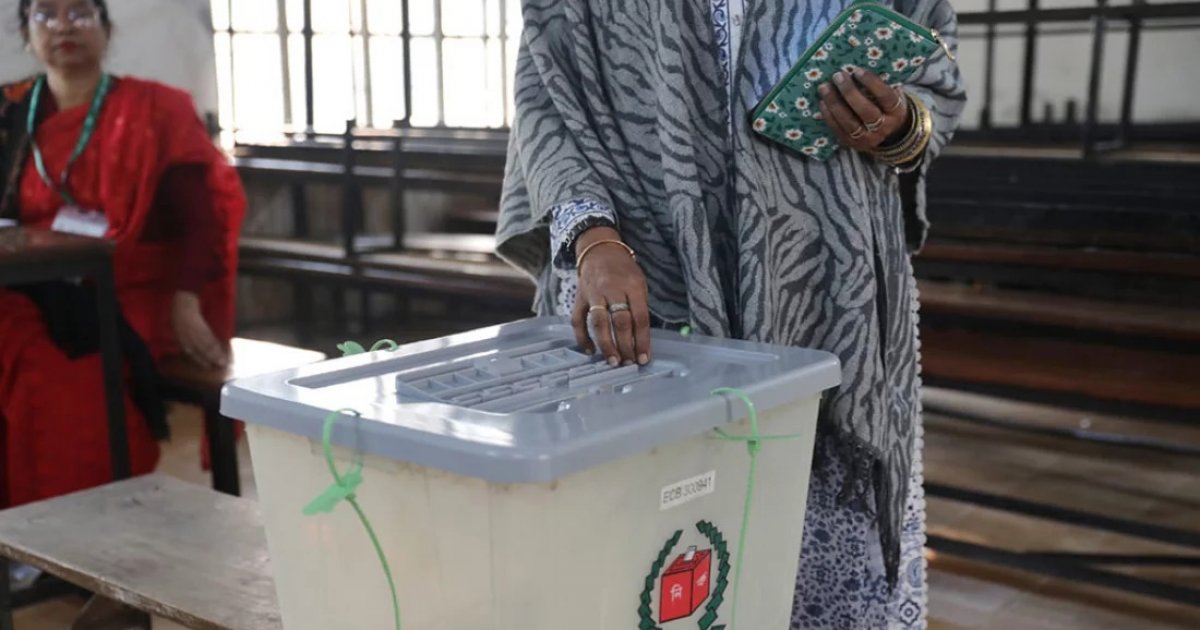
A total of 110 women candidates has submitted nomination papers to contest 13th National Parliamentary elections, with independent contenders making up the largest share amid limited nomination support from major political parties.
Although the number of women candidates has crossed one hundred, they account for only 4.26% of the 2,582 candidates who initially filed nomination forms.
The final number of valid candidates will be determined after scrutiny by the Election Commission (EC).
The data highlight a gradual rise in women’s participation in electoral politics, but also underscore persistent barriers to securing party nominations from mainstream political outfits.
Several women aspirants are contesting as independents after failing to secure party tickets.
Former BNP lawmaker Rumeen Farhana, for example, is running as an independent in Brahmanbaria-2 after her party allocated the seat to an alliance partner.
Similarly, Dr Tasnim Jara, a young leader of the National Citizen Party (NCP), left the party at the last moment and filed her nomination as an independent from Dhaka-9 ahead of the NCP’s alliance with Jamaat-e-Islami.
Data compiled from the EC website show that independents lead with 40 women candidates, more than one-third of the total.
Analysts say this reflects limited access to party nominations rather than a lack of interest among women in contesting elections.
Party nominations
Among major political parties, the Bangladesh Nationalist Party (BNP) nominated the highest number of women candidates, fielding 10 women in 13 constituencies.
These included senior figures and high-profile leaders such as party chairperson Khaleda Zia, who was expected to contest from three constituencies.
However, following Khaleda Zia’s death, BNP officials said alternative candidates would be fielded in those constituencies, a move likely to reduce the party’s overall share of women nominees.
Jamaat-e-Islami did not nominate any women candidates for the upcoming election.
Speaking to Dhaka Tribune, Jamaat Secretary General Professor Golam Porwar said the party had provisions for women’s representation through reserved seats.
The National Citizen Party nominated three women candidates among its total of 47 nominees nationwide, giving it a women’s nomination rate of more than 6%, the highest among major parties.
Left-leaning parties emerged as relatively more inclusive.
The two factions of Bangladesh Samajtantrik Dal (Marxist) and BASAD collectively nominated 14 women candidates.
Other parties such as Insaniat Biplab Bangladesh and the Jatiya Samajtantrik Dal (JSD) each fielded six women candidates, though their overall electoral reach remains limited.
Insaniat Biplab Bangladesh Office Secretary Mainuddin Tito said the party believed in inclusive representation.
“Even if a party is inspired by religion, the state belongs to everyone. Political participation must reflect that,” he said.
The Jatiya Party (GM Quader) nominated five women candidates, while smaller parties including GanasanghatiAndolon, Ganaadhikar Parishad and the AB Party nominated between three and four women each.
At least seven registered parties nominated only one womancandidate, a practice rights groups describe as largely symbolic.
Patterns and policy context
Constituency-level data show women candidates are more visible in urban and semi-urban areas, particularly in Dhaka and Chittagong.
Seats such as Dhaka-7, Dhaka-12, Chittagong-10 and Netrokona-4 have more than one female aspirant.
Despite constitutional guarantees of equal political rights, women’s participation in direct parliamentary contests remains limited.
Observers note that many women rely on independent candidacy or smaller parties, while major parties remain cautious about nominating women in winnable seats.
The issue has gained renewed attention following the National Consensus Commission’s draft “July Charter”, which proposes mandatory nomination of women candidates at a minimum rate of 5% in each general election, with a long-term target of 33% representation in parliament.
An analysis of current nominations shows that no major party, except the NCP, has met the proposed 5% threshold.
The NCP has submitted nominations for 47 seats, but a possible seat-sharing arrangement with Jamaat could reduce its candidacy to 30 in the coming weeks.
Such an adjustment may also lower the level of women’s participation from the party.
With Khaleda Zia’s death, BNP’s share of women nominees is also expected to decline further.
The current nomination landscape indicates that although women are gradually gaining visibility in electoral politics, substantive structural reforms within political parties remain crucial to securing meaningful and sustained representation in the parliament.